Ancient wildfires in the Levant may have inspired Neolithic pottery-making, Israeli study suggests
Pottery appeared in the region during roughly the same broad period in which fires, erosion and clay deposition reached their peak.

Pottery appeared in the region during roughly the same broad period in which fires, erosion and clay deposition reached their peak.


The appearance of the two dieties on the tombstones points to joint Greek and Roman influence on ancient Egyptian heritage and funerary practices.

A week after the coins were found, the Times of London learned that the mystery benefactor is believed to be a leather-clad biker.

The bridge, commissioned by Emperor Constantine I and inaugurated in 328 CE, linked the ancient city of Ulpia Oescus with Sucidava in what is now Romania.

Leithy added that the layer is marked by remnants of ancient Cypriot pottery and Greek amphorae, confirming that settlement of the site began before the construction of the bathing complex.

An unfinished statue of the Greek goddess Aphrodite, a limestone gravestone depicting a seated man holding a bird, as well as the remains of a plaster sphinx statue were also found at the site.

The mosaic's design closely resembles one previously discovered in a firefighters' barracks in Ostia, the ancient port of Rome, about 30 km from the capital, the archaeological office said

Vilnius was a major center of Jewish thought, famed for both its religious tradition and modern secular Jewish culture. It was home to the 18th-century Vilna Gaon, a highly influential sage.

Tower of David Museum Chief Curator Eilat Lieber said that "the discovery of the first mold for producing figurines dating to the First Temple period has generated tremendous excitement."

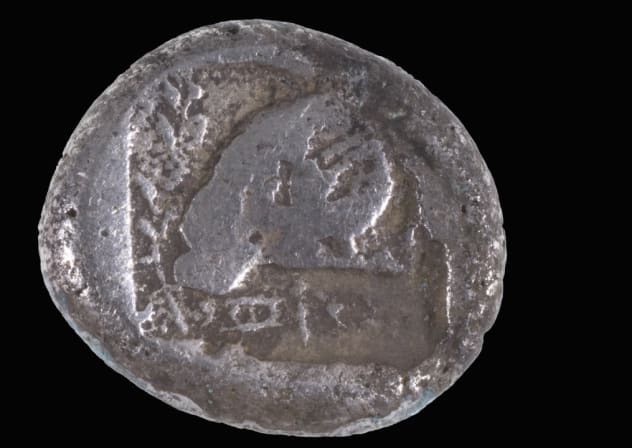
The approximately 2,500-year-old coin was located by Ashdod Beaches Department Deputy Director Avi Chaprak during a search to locate objects lost by visitors to the beach.
Inscriptions found within the tomb bear the name of its owner, “Paser,” as well as wall paintings depicted Paser worshipping the shrines of several deities.
