Archaeologists unearth medieval convent’s heating system during renovations in Switzerland
Gnadental convent was built outside Basel's city wall for Franciscans around 1231, later becoming a temporary home for several orders.
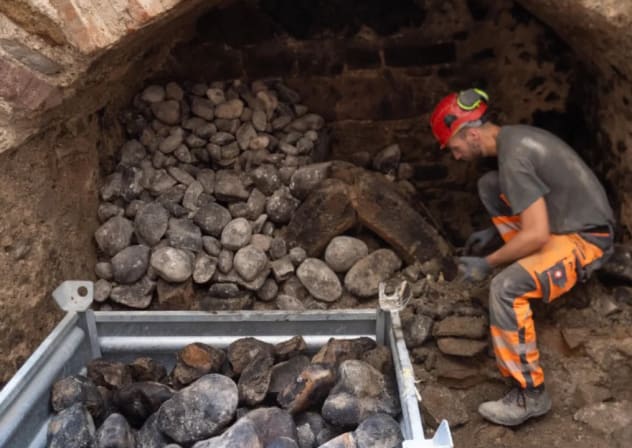
Gnadental convent was built outside Basel's city wall for Franciscans around 1231, later becoming a temporary home for several orders.


Sukkot, echoing Smotrich’s words, calling the neglect of Herod’s Pools “an injustice,” noting that he is pleased with Smotrich’s and the Settlement Administration’s “swift response.”

Its 19-lines of ancient Greek text is written in red ink, dedicated to a person named "Pesikhtis," who, according to preliminary study, may have held the position of judge.

According to AA, an initial survey of the necropolis identified at least 30 rock-cut tombs and chest-type graves scattered across the site. As of now, only 10 have been fully uncovered.
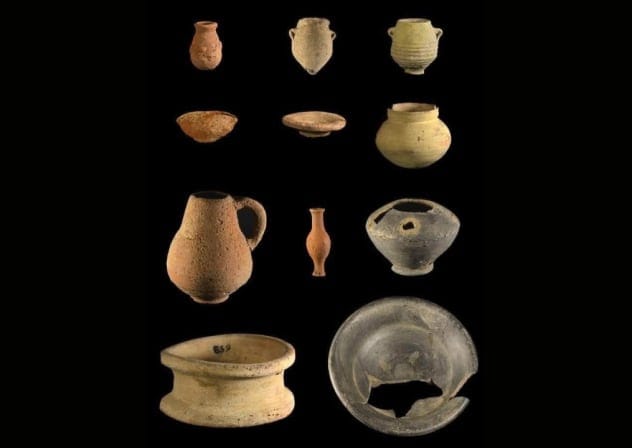
The coins are of the pre-1916 denga denomination, and were found hidden within a small, ceramic jug decorated with engobe buried in a shallow pit near the city’s trading district.

Researchers say new radar scans reveal features they believe could indicate a man-made structure beneath the controversial Durupinar Formation, claimed to host the remains of the biblical Ark.

Also found at the site were a number of scarabs, some bearing the names of Kings Ramesses II and Seti I, while others carry the names of several deities, including Amun, Sekhmet, Ptah, and Set.

The fragment, found at the ancient Hittite capital of Hattusha, contains provisions on people fleeing between Egypt and Hatti and the protection of their homes.

The circular enclosure measures 230 meters in diameter, featuring a ditch over 2.5 meters deep and 12 irregularly spaced entrances that align with key solar and lunar cycles.

The discovery was made during five seasons of excavations, directed by Prof. Uzi Leibner and Prof. Orit Peleg-Barkat of the Hebrew University of Jerusalem’s Institute of Archaeology.

Additionally, the mission found the remains of a mudbrick residential complex in the area surrounding the temple, along with a series of stone blocks and statue fragments.