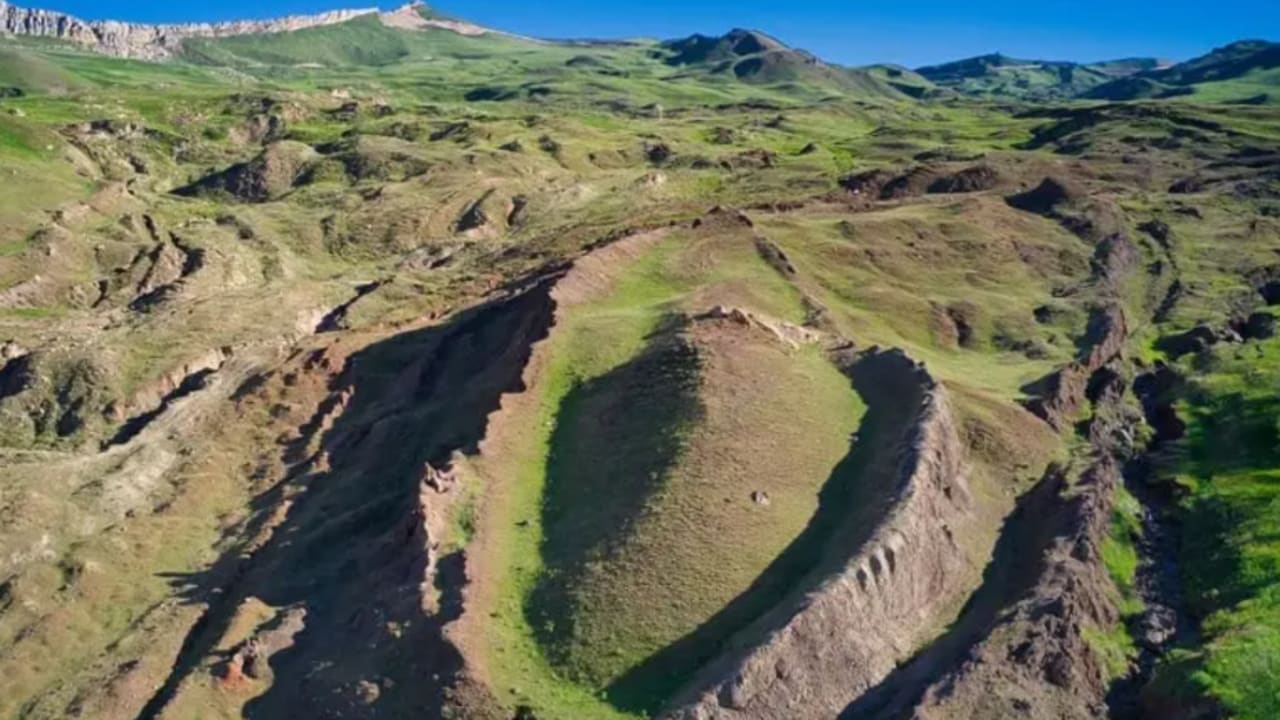
Pottery fragments unearthed near the Durupinar Formation on Turkey’s Mount Ararat have reignited debate over the Biblical Ark’s final resting place, Professor Faruk Kaya of Agri Ibrahim Cecen University stated on Friday.
According to UK-based news site Metro, the shards, exposed during road work by the Dogubayazit site in Agri province, indicate human presence between 5500 BC and 3000 BC, according to Kaya.
He urged authorities to safeguard the area amid reports of visitors removing stones and marked fragments, which researchers say could damage an important archaeological and religious heritage site.
The material was discovered close to the outline long touted by Ark enthusiasts at the boat-shaped Durupinar mound. Kaya said the dating of the ceramics broadly aligns with traditional estimates for the era associated with Noah.
Kaya warned that tourists have been taking stones and other materials, including pieces bearing markings, and called for formal protection of the formation and its surroundings. “This formation and its surroundings must be protected, and the removal of stones, rocks, or similar material from the site must be prevented,” he said.

Site of Noah's ark was first identified in 1959
First identified in 1959 by Turkish captain Ilhan Durupinar, the structure drew wider attention after rains and earthquakes eroded surrounding soil, revealing its ship-like outline. Its proximity to Mount Ararat, Turkey’s highest peak, and dimensions, which some say echo Genesis (Bereshit), have kept the site in the spotlight for decades.
The Torah recounts that the Ark came to rest on the “mountains of Ararat” after 150 days of floodwaters. Advocates note that Biblical cubit measurements roughly correspond to the formation’s scale, though many scholars remain cautious pending peer-reviewed excavation results.
Scientific interest intensified in recent years. A joint Mount Ararat and Noah’s Ark Research Team, established in 2022 by Agri Ibrahim Cecen University and Istanbul Technical University, collected rock and soil samples for laboratory analysis. Researchers said the results suggest sustained human life in the region from the Chalcolithic period onward, reinforcing arguments that the area could match the Biblical setting.
The latest pottery finds, Kaya said, underscore the need for controlled research and site protection. He added that removing even small marked stones risks erasing evidence that could clarify the region’s ancient human footprint.