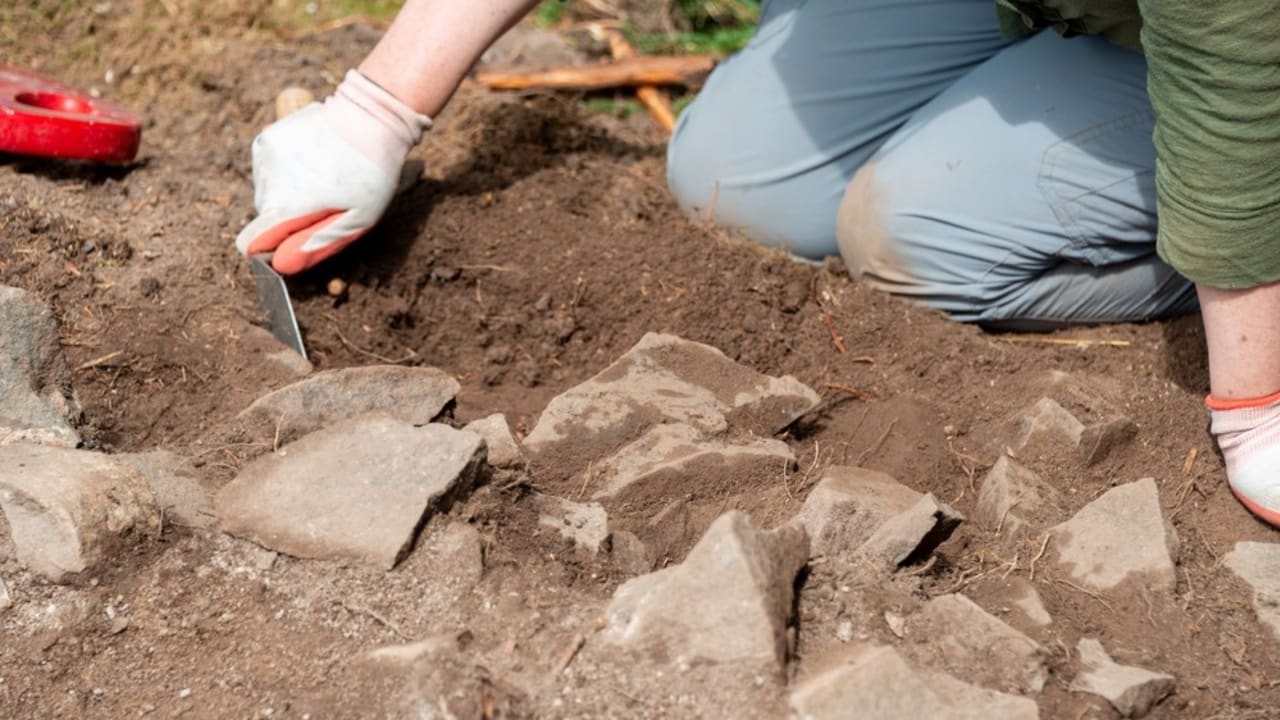
Archaeologists in southern Turkey uncovered the Temple of Zeus in the ancient Lycian city of Limyra, ending decades of speculation about its location, reported Anadolu Agency.
“The front facade of the temple is 15 meters wide,” said Associate Professor Kudret Sezgin, who directs the excavation in cooperation with the Austrian Archaeological Institute.
“We also know from written sources that during the Hellenistic and Roman Empire, the main god of the city was Zeus. It is known that there was a temple, but the location was still unknown,” he added.
Archaeological evidence led the team to identify the exposed structure as the classical-period temple. A wall once thought to be a Hellenistic fortification is now viewed as the sanctuary’s perimeter. “We concluded that the wall structure, known as the Hellenistic city wall, served as the protective perimeter wall of the temple,” Sezgin explained.
Monumental gates earlier found beneath the Roman street were reinterpreted as the propylon that marked entry to the sacred precinct, and the dig revealed the main entrance and portico walls on the eastern side.
Ceramic finds within the precinct indicated habitation dating back 5,000 years and urban development about 2,400 years ago.
Part of the cella lies under an orange grove outside the current trench. “The sacred room has remained under a private property orange grove, outside the wall. When we complete the expropriation works, we will continue the excavations there,” Sezgin said.
The temple had been known only from inscriptions recorded in 1982, and its discovery requires scholars to rethink Limyra’s urban layout, Sezgin noted.
Limyra, nine kilometers northeast of Finike at the foothills of Mount Toçak, preserves rock-cut tombs, a 6,000-seat theater, Roman baths, a colonnaded street, a mausoleum for Gaius Caesar, and the Ptolemaeion monument.
In the Byzantine era the city became an episcopal center, and later walls were built over the temple when the sanctuary was absorbed into fortifications.
The excavation, part of the Heritage for the Future Project since 2023, has cataloged ceramics from the temple. Sezgin said that once expropriation is finished, work will continue on the cella and associated structures.
Written with the help of a news-analysis system.