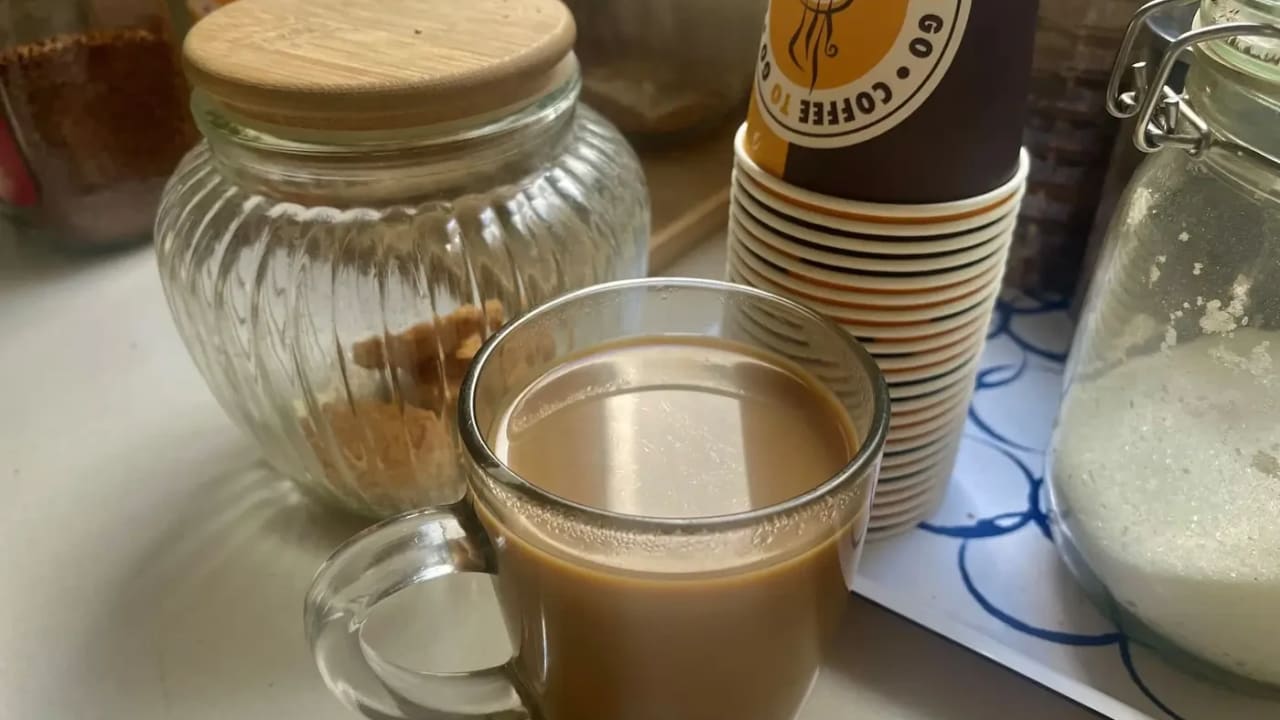
I assume many people feel this in daily life: Coffee or tea with milk “holds” us for a longer time, compared to black coffee or tea, which leave a feeling that “you need something small on the side.” If you’ve noticed this too, it’s worth knowing: It’s not just a feeling—there are explanations for it.
A combination of hormonal and physiological mechanisms operates here to influence appetite in the short term.
But before we begin, it’s important for me to emphasize so the message isn’t missed: Milk is not a miracle cure for weight loss. Combined with our hot drink, it can help reduce snacking.
Here are the main reasons:
For Dr. Maya Rosman’s online diet course – click here
1. Protein
Even a small amount of milk, like the amount we use in instant coffee, adds high-quality proteins to the drink – casein and whey.
There have been quite a few studies published in The American Journal of Clinical Nutrition showing that protein increases the secretion of the hormones GLP-1 and PYY, which are responsible for the feeling of satiety, while at the same time suppressing the secretion of the hunger hormone called ghrelin.
Not only that—the novelty is that whey protein is considered a “fast protein” that rapidly raises amino acid levels in the blood, which causes an almost immediate hormonal response of satiety.
Yes, even a modest addition of protein to a liquid drink changes the body’s hormonal response compared to a drink without added milk/soy drink.
2. The satiating thickness effect
Yes, such a thing exists. It turns out that the texture of a drink affects the brain no less than its calories. Milk makes the drink thicker and creamier, which creates a feeling of “food” and not just “liquid.”
For example, studies published in Appetite are the ones that actually introduced the concept of “Satiety Gradients.” They found that drinks with a thicker or creamier texture trigger an expectation of satiety in the brain and cause people to report a higher sense of fullness, even when the caloric value is exactly the same as a thinner drink.
In these Appetite studies, people who drank a thick beverage reported 40% higher satiety than those who drank a thin beverage with exactly the same calories. What they essentially proved here is that the brain uses texture as an “early signal” for the amount of calories that will arrive. If the drink is thin (like black coffee or water), the brain classifies it as a “liquid for hydration” and does not allocate “satiety resources” to it.
The moment milk is added and a creamy texture is created, the brain changes its classification and activates hormonal satiety mechanisms even before the protein is absorbed.
Surprising, right?
3. Fat and slowing of gastric emptying
The fat in milk (both in 3% milk and in 1%) slows the rate of gastric emptying. When the stomach empties more slowly, the satiety signals sent to the brain last longer.
According to a study in the British Journal of Nutrition, the presence of fat and protein together in a liquid creates a combined response that delays digestion and lengthens the time until the desire for the next meal. Black coffee, on the other hand, passes through the stomach almost as quickly as water.
4. What about plant-based milk?
The effect depends greatly on the type of milk. Soy drink is the closest to cow’s milk in terms of its effect on satiety, because it contains a similar amount of protein. Soy protein is almost as effective as milk proteins in encouraging the secretion of satiety hormones. In contrast, drinks like rice milk or oat milk are very low in protein—they are basically “carbohydrate water,” which can sometimes actually trigger insulin secretion and hunger in some people. Their effect on suppressing snacking will be significantly weaker.
The advantage of soy over rice/oat is not only in the amount of protein, but in its quality (complete protein).

Studies in Physiology & Behavior showed something amazing: When people thought they were drinking a rich beverage, their ghrelin (hunger hormone) levels dropped significantly more than when they thought it was a “diet” beverage—even if the calories were identical.
When we drink a beverage perceived as “rich” (like coffee with milk), the metabolic system prepares for absorption differently than when drinking a thin liquid, which leads to a reduction in food-seeking in the following hour.
To conclude with the recommendation: If you feel the need to snack an hour after your morning coffee, try adding a little milk (cow’s milk or soy). This small caloric addition may save you hundreds of calories of unnecessary snacking later in the day, thanks to the winning combination of protein, fat, and creamy texture.
Another tip from me—drink the coffee calmly, and decide with yourself that if after another 20 minutes, when you finish the coffee, you still want that small sweet on the side—you’ll eat it then. You’ll be surprised how many times you’ll forget that you wanted something at all.