Archaeological study
Ancient wildfires in the Levant may have inspired Neolithic pottery-making, Israeli study suggests
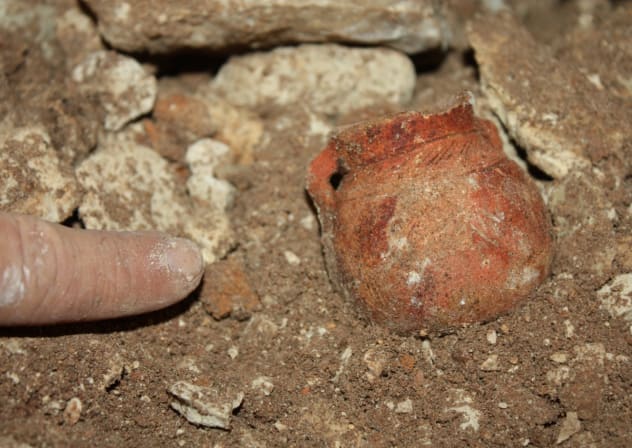
Pottery appeared in the region during roughly the same broad period in which fires, erosion and clay deposition reached their peak.

Israeli researchers use ancient stone tools to trace hunter-gatherer migrations

Prehistoric hunter-gatherers stayed connected across 200 kilometers, Israeli study finds

Is Monte Verde really 14,500 years old? Researchers clash over true age of Chile's ancient site
Ancient wooden tools uncovered in China shed new light on early human diet, cognitive abilities
The tools include digging sticks made of pine and hardwood, hooks for cutting roots, and small, pointed implements for extracting edible plants from the ground.

Prehistoric humans may have used fire to smoke meat one million years ago, study suggests
Over time, as the availability of large game declined, humans had to adapt to hunting smaller animals and using fire more consistently.

1,500-year-old figurines found in Negev point to early Christians in southern Israel
Experts say that the figurines prove that a Christian community lived in southern Israel nearly 1,000 years ago.

Scientists discover new 15 million-year old fish with last meal fossilized inside its stomach
With the discovery of the species, scientists can now properly develop a timeline surrounding the arrival of the fish in Australia and its evolution since then.

Study links Arabian god Kahl to smiting deity tradition
Research connects Qaryat al-Fāw’s patron god to Near Eastern iconography and coinage.

Experts rethink China's Great Wall true purpose
Recent findings suggest the wall served to support pastoralism and control local nomadic groups.

New study shows human ancestor thrived in harsh desert conditions over 1 million years ago
The research challenges the long-held belief that only Homo sapiens had the capacity to thrive in extreme environments.

Archaeologists uncover artifacts from ancient Egypt's 2nd, 3rd, and 18th dynasties in Saqqara
the expedition uncovered over ten burials from the 18th Dynasty, indicating that Saqqara was used as a necropolis during the New Kingdom when Memphis was reinstated as the capital of Egypt.

800-year-old pottery fragment depicting Anatolian leopard discovered in Hasankeyf
The damaged piece showcases the body of a wild animal at the front, though its head is missing. Behind it, the head of a wild goat has been identified.

Different human ancestors walked together, footprints suggest
Study provides first evidence of different bipedalism styles on same footprint surface, attributed to both species.
