Archaeological study
Ancient wildfires in the Levant may have inspired Neolithic pottery-making, Israeli study suggests
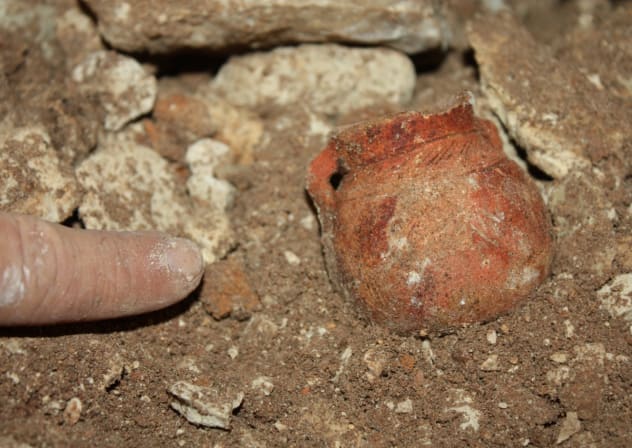
Pottery appeared in the region during roughly the same broad period in which fires, erosion and clay deposition reached their peak.

Israeli researchers use ancient stone tools to trace hunter-gatherer migrations

Prehistoric hunter-gatherers stayed connected across 200 kilometers, Israeli study finds

Is Monte Verde really 14,500 years old? Researchers clash over true age of Chile's ancient site
Humans, not glaciers, brought stones to Stonehenge, study confirms
After analysing over 700 zircon and apatite grains they found that glaciers likely didn’t extend to parts of England as far south as Salisbury Plain during the last ice age.

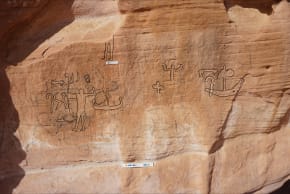
Archaeologists discover 5,000-year-old evidence of ancient Egyptian conquest in Sinai desert
The carving of a boat, erased name of a pharoah, and two depictions of the Egyptian diety Min were also found nearby.
New genetic study pushes Australian settlement back 60,000 years, supporting ‘long chronology’
“This helps refine our understanding of human origins, maritime mobility, and early seafaring narratives,” one of the study’s authors said

Archaeologists uncover 15,000 unexpected artifacts beneath Tulsa cemetery
A routine search for unmarked graves at Oaklawn Cemetery has instead uncovered 15,000 artifacts that reveal a vivid, unexpected picture of early Tulsa.

Possible double-burial of pharaohs in Osorkon II’s tomb, newly discovered statues show
Archaeologists uncovered 225 inscribed funerary statues beside an unmarked sarcophagus in Osorkon II’s tomb, strengthening the case for two royal burials at Tanis, Egypt.

New Israeli technology lets archaeologists see underground without digging
Using muon detectors, the team produced detailed images of underground features, including tunnels and cisterns, based on how soil absorbs cosmic radiation.

Scientists reconstruct face of 900-year-old woman from churchyard skull
Visitors to Holy Trinity Parish Church are invited to pick a name for the medieval woman from a ten-strong shortlist.

Iron Age olive oil center in Beit Aryeh shows Israelite kingdom’s economic power in Samaria
A study published in the Israel Antiquities Authority's latest volume found that olive oil production was a key economic engine for the ancient Kingdom of Israel.

Ancient innovation uncovered: Some of the oldest lamp wicks in history found in Israel
The wicks, preserved in unusual circumstances, are a remarkable discovery given the moist Mediterranean climate, which typically causes organic materials to decompose.

Sonar survey confirms mastodon carving at 9,000-year-old Lake Michigan’s ‘Underwater Stonehenge’
High-resolution imaging shows a human-made mile-long boulder array 12 m under Grand Traverse Bay, predating Stonehenge by 4,000 years.
