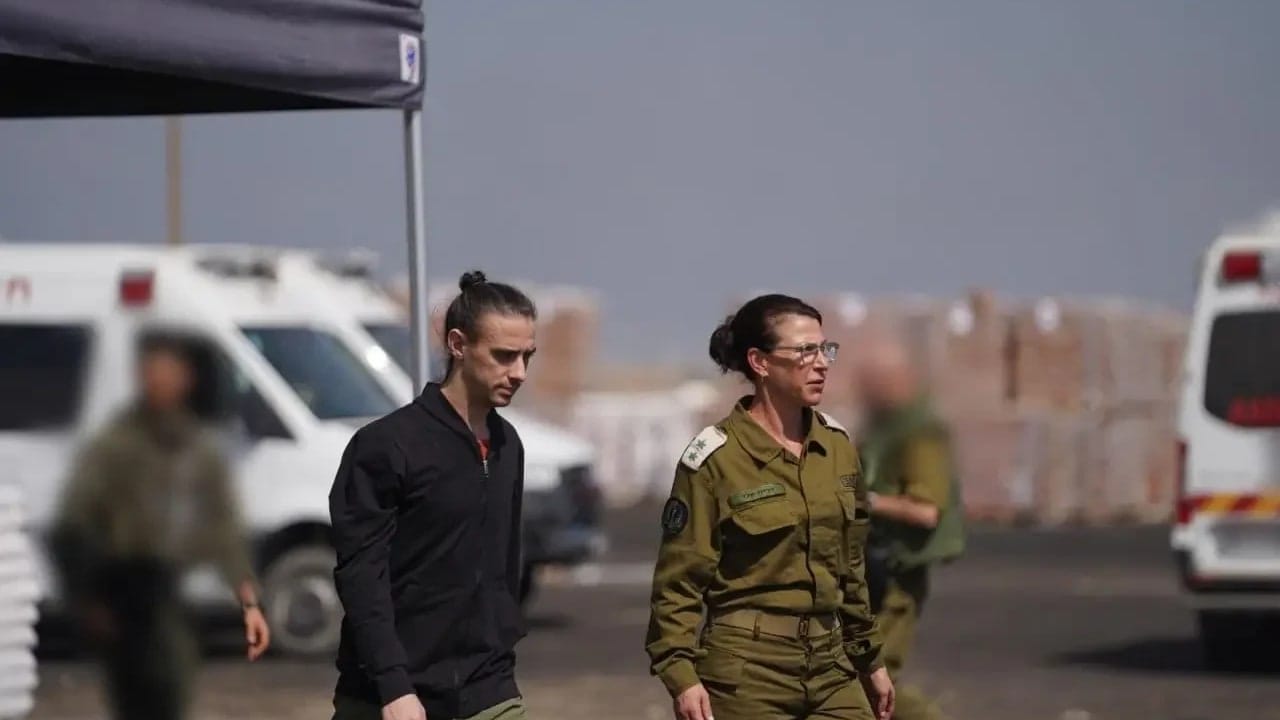
Slowly, we are beginning to learn about the cruel conditions of captivity endured by the hostages who were released last night — the physical torture, starvation, and psychological terror — that almost all of them experienced. For two of them, according to reports, Avinatan Or and Ariel Cunio, there was another element of torment — they were held in captivity completely alone for two years.
Two years of captivity, in tunnels, in darkness, in complete isolation — this is an unprecedented trauma. In fact, prolonged captivity is considered one of the most psychologically traumatic experiences a person can endure, because the captors inflict continuous physical and mental assaults in an attempt to break the victim’s spirit: Torture, humiliation, deprivation of basic needs, isolation, and total helplessness. Our hostages who were held in Gaza’s tunnels experienced an extreme and unique reality: Without sunlight, without any idea when or if they would be rescued, as every day felt like an eternity of fear. It is a slow erosion of the soul, a cumulative damage to one’s basic trust in the world, and a chilling fear that everyone else has moved on.
Research shows that the psychological experience of captivity depends greatly on whether the captive is held in complete isolation or together with others. Prolonged isolation, without any human contact with other hostages, is considered an extraordinary psychological burden — so intense that some researchers have compared the suffering caused by extended isolation to physical torture.
A captive held alone is completely deprived of social support, which can intensify feelings of despair and depression. In contrast, when several captives are held together, they are sometimes able to create a mutual support network among themselves. Observations document how captives in groups formed close bonds and provided one another with emotional support throughout the period of captivity, which helped them better cope with hardships, sustain mutual hope for survival, and later assist in their rehabilitation. Mutual support gives each one the sense that they are not alone in their fate and even allows for some division of the daily emotional burden. Of course, even in group captivity there can be difficult experiences, such as witnessing the suffering of friends or feeling heavy guilt among those who survived while others did not return home. Still, the presence of another person beside you in captivity usually serves as a critical emotional anchor that can somewhat mitigate the psychological damage of total isolation.
Additional research and data collected over the years from prisoners of war and former captives reveal a grim but important picture: Many former captives continue to suffer from post-traumatic symptoms for many years after returning home, at significantly higher rates than people who experienced other wartime events without being captured.
In some studies, it was found that decades after the war, about a quarter of soldiers who had been in captivity still met the criteria for post-traumatic stress disorder (PTSD), compared to only a small percentage among combatants who were not captured. Furthermore, it was found that some captives showed their first trauma symptoms years later — that is, they appeared to function normally in the years immediately following their release, but a decade or two later, their mental state deteriorated, and dormant symptoms surfaced — this time without the extensive support of their surroundings.

The common clinical characteristics among captivity survivors resemble those of “classic” PTSD: Recurring flashbacks and nightmares of the traumatic events, hyperarousal expressed as constant alertness, sleep difficulties, anxiety attacks, and avoidance of anything that triggers memories of the ordeal. However, in prolonged captivity, we often see a phenomenon known as complex trauma (Complex PTSD) — a condition where, beyond the usual post-trauma symptoms, the victim suffers from deeper injuries. Complex trauma manifests in prolonged difficulties with emotional regulation (for example, outbursts of anger or, conversely, emotional numbness), a disturbed sense of self-identity, and problems of trust and interpersonal relationships (even with the closest people — parents or partners left behind). Despite the tremendous Israeli embrace — it is possible that the hostages who have just been rescued carry deep psychological wounds that make it hard for them to feel “safe” or close to us, even long after the physical danger has passed.
Paradoxically, even the sudden improvement in “conditions” does not necessarily bring good news. Captivity in the tunnels did not only frighten — it literally extinguished the light. The mind, in an effort to cope with the absence of stimuli, turns inward to an internal world that can flood frightening images from the past or create an alternate reality. (Not for nothing, we hear from many hostages how they tried to anchor themselves in reality by turning to the songs of Omer Adam or to prayers.)
In addition, the total darkness forces the other senses to become hypersensitive — an extreme sensitivity to noises or light. It is reasonable to assume that it is not at all simple, upon returning, to suddenly experience bright sunlight, people’s voices, and surrounding commotion. Just yesterday, I stood emotionally moved in Hostages Square, as everyone there shouted lovingly and enthusiastically toward the hostages who landed at the Ichilov helipad, “Welcome home!” And I wondered what that stirs in their hearts. For a psyche that lived for two years in silent alertness within darkness, the return to light can trigger anxiety and confusion no less than the stay in the tunnel — and it requires special sensitivity from everyone around them.
Alongside the usual therapeutic triangle I believe in — the combination of biology (they will certainly be offered antidepressant medication and sleep aids, alongside the required physical medical care), psychology (conversations with psychologists to help bridge emotional pain), and lifestyle adjustments (finally, proper nutrition and sleep, moderate physical activity, and a healthy daily routine) — the hostages who spent two years in the tunnels also need much space for legitimacy and “being.” They need reassurance that they have all the time and all the resources to promote their recovery at their own chosen pace. Above all, we must restore to the survivors a sense of control, trust, and emotional safety. This is a slow process, requiring a combination of professional therapy and simple human support. As a society, we can all help — by being there, without pressure, without unnecessary questions, just with empathetic presence.
Alongside this, it is important to recognize early signs of distress: Withdrawal, functional decline, expressions of despair, or alcohol use. These are warning signs that require an immediate response. They have returned from the darkness — now it is our duty to ensure that they truly return to life.
Dr. Ilan Volkov is a psychiatrist and the medical director of the MindMe Center, accompanying survivors from Nova and post-trauma victims from October 7.