Science
'Not a gradual slide': Menopause can reshape women's bodies in a sudden shift, Israeli study finds
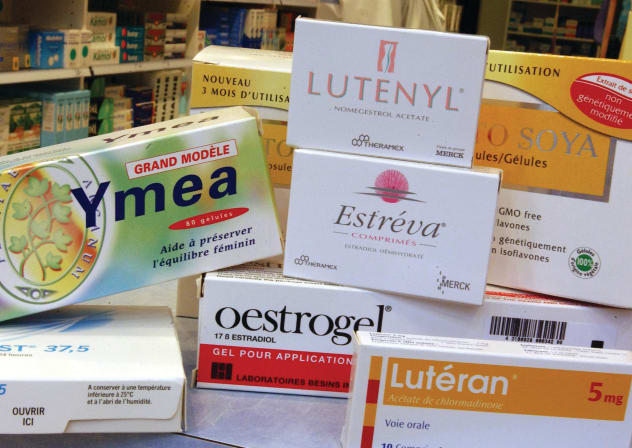
Menopause may be less gradual than previously thought, with abrupt changes in bone health, liver function and cholesterol, Weizmann Institute of Science researchers find.

Using an 800,000-year-old tooth, researchers unlock the secrets of Israel’s ancient elephant haven

Energy ministry calls for billions in nuclear fusion investments to compete globally

Over 700 researchers attend computer science conference at BGU, celebrating 'golden age' of tech
Scientists find proof of brain activity measurably boosting vaccine response
The study suggests that activating the brain’s reward system before vaccination can enhance antibody production.

Israeli scientists create light-activated plastic for safer manufacturing
The Ben-Gurion team essentially embedded an on/off mechanism inside the plastic’s building blocks, eliminating the need for fragile or expensive catalyst systems.

Meet the scholar behind the science of better decisions
'The Scholar' - Insights from the Faculty of the Hebrew University Business School. Maor Zaguri, Acclaimed Israeli Director In conversation with Professor Shoham Choshen-Hillel.

Israeli researchers develop SafeWax coating that could cut pesticide use by 50%
The team concluded that SafeWax is “an innovative technology with the potential to become a breakthrough in the field of sustainable crop protection.”

Grapevine: Commemorating a Chabad giant
Movers and shakers in Israeli society.
Astronomers spot white dwarf star creating a colorful shockwave
In the shockwave, a red hue represented hydrogen, green represented nitrogen, and blue represented oxygen residing in interstellar space.

Bar-Ilan University’s ecosystem: Science, crisis, and institutional responsibility
From the Phantom jet to the helm of Israel’s second-largest university, Prof. Arie Zaban reflects on leadership during war and why universities can’t lose sight of the people they serve

BIU study reveals that origin of sleeping in humans is deduced from jellyfish, sea anemones
A new study from the multidisciplinary brain research center at Bar-Ilan University found that jellyfish and sea anemones were the first to present one of sleep’s core functions.

TAU discovers breakthough mechanism for treating deadliest type of skin cancer
A major achievement with far-reaching implications for treating deadly skin cancer has been discovered by Tel Aviv University scientists and colleagues.

Subtle face movements can indicate your decisions, scientists say
A study challenges the long-held view that facial mimicry functions primarily as a social tool for politeness or empathy, showing instead that it is an integral component of preference formation.
