NASA
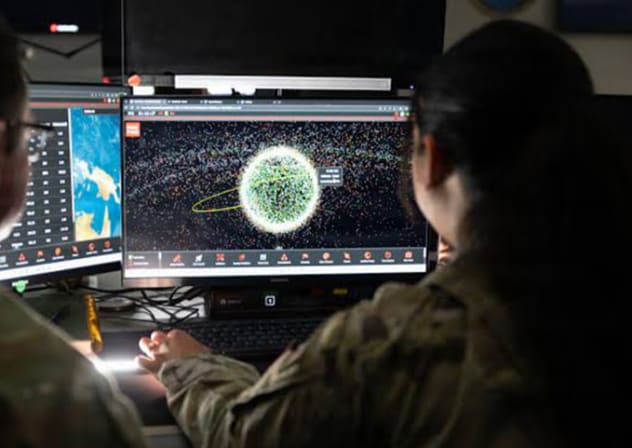
US, China arm for space warfare, raising stakes in race for military control of orbit
A Reuters review found Chinese military-linked researchers are developing satellites designed to pursue and capture other spacecraft, including American

NASA launches powerful Roman Space Telescope, a spy satellite turned to the stars

NASA finds some microbes could survive on moon, raising concerns over unintended life transfer

SpaceX Falcon 9 rocket stage to crash into Moon at seven times the speed of sound
Trump welcomes NASA Artemis II astronauts to Oval Office after Moon mission
“I don’t know how they do it. I wouldn’t want to do it, but it takes people like this to make our country great,” Trump stated in reference to the Artemis II crew.

Asteroid the size of 60 sloths to fly past the Earth tomorrow
Sloths are the slowest mammals of all, but asteroid 2026 HX3 is anything but that – both in terms of being slow and in terms of being mammals.

Jordan joins Artemis Accords, int'l principles for exploring Moon, Mars, space, NASA says
NASA announced Jordan has joined the Artemis Accords, an international agreement covering peaceful and transparent exploration of the Moon, Mars, and beyond.

NASA tracks colossal asteroid on a close approach to Earth
Close approach expected in 2029 at about 32,000 kilometers above Earth; 'something like this has not been recorded in human history'

Water on Mars? Scientists discover 'bathtub ring' which may reveal contours of ancient ocean
Like Earth and the solar system's other planets, Mars formed roughly 4.5 billion years ago. Early in its history, Mars was warmer and wetter than the cold and arid place it is today.
Artemis II astronauts safely back on Earth after trip around moon
It took recovery teams less than two hours to secure the floating capsule and retrieve the crew, ending the first human voyage to the vicinity of the moon in over fifty years.

Artemis II astronauts return to Earth after historic crewed mission to the Moon
After 10 days in space, Artemis II astronauts are set for a splashdown in the Pacific, marking humanity’s return to the Moon's vicinity for the first time since Apollo.

Artemis II astronauts brace for fiery return to Earth
The Artemis II crew, flying in their Orion capsule since launching from Florida last week, are due to splash down off the Southern California coast on Friday.

WATCH: Artemis makes lunar flyby as moon mission breaks record for human distance from earth
The Artemis II crew, flying in their Orion capsule since launching from Florida last week, awoke around 10:50 a.m. for their sixth flight day to a recorded message from late astronaut Jim Lovell.

NASA’s Artemis II mission takes off with four astronauts for historic lunar journey
The mission, a 10-day journey around the Moon, represents the United States' most significant step yet toward returning humans to the lunar surface within this decade.
