Archaeological Site
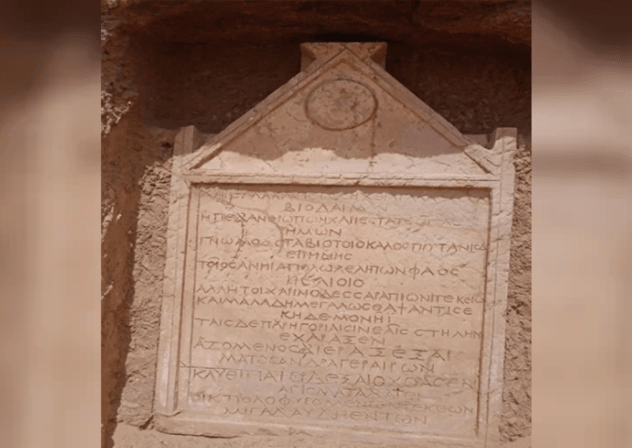
Ancient Greek elegy dedicated to judge found in ancient Egyptian tomb sealed with protection spells
Its 19-lines of ancient Greek text is written in red ink, dedicated to a person named "Pesikhtis," who, according to preliminary study, may have held the position of judge.

Excavations near ancient Turkish port may have found Alexander the Great’s soldiers tombs - report

Noah’s Ark? Researchers claim radar scan reveals 'man-made' structure at Turkey site

Ancient Egyptian fortress uncovers soldiers’ homes, royal inscriptions, and horse burial
Evidence of human sacrifice, inbreeding found at ancient Korean burial complex - study
Additionally, researchers found genetic confirmation that entire families had been sacrificed together as part of sunjang, the ritualistic sacrifice of servants to be buried alongside their superiors

Neanderthal children in central Europe may have hunted turtles for materials, not for food - study
The study also floated the possibility that the turtles had been hunted for “their taste or for an assumed medicinal value.”

Early humans may have begun eating elephants, large animals 1.8 million years ago - study
The fat stored in Elephant bones, which is rich in essential nutrients, is thought to have played a role in supporting the growth of larger brains in the Homo erectus lineage.

Over 20 sarcophagi belonging to ‘Chanters of Amun’ discovered during excavations near Luxor
Eight pieces of papyrus, some with their original clay seals intact, were also found within the chamber.

An ancient Egyptian temple was just found in Sinai after six years of digging
Analysis of the site also shows that the structure had been continuously used from the 2nd century BCE to the 6th century CE, with only minor architectural modifications happening during that time.
Ancient charcoal found in northern Israel sheds new light on how early humans lived - study
Within the charcoal, archaeologists found traces of ash, willow, oak, olive, pistachio, grapevine, oleander, and the oldest known evidence of pomegranate wood in the Levant.

Early humans in South Africa used dedicated quarries for stone as long as 220,000 years ago - study
Based on this, researchers suggest that early homo sapiens planned for the long-term acquisition of resources earlier than previously thought.
Hezbollah rocket hits Byzantine-era church in Nahariya, damages protective structure
Originally destroyed by the Persians in 614 CE, the mosaic was painstakingly restored by the IAA over the course of two years, and officially opened to the public in 2022.
Prehistoric children’s remains show syphilis-like disease spread through ancient Vietnam - study
Researchers have for decades believed that of these diseases, only syphilis could be transmitted congenitally, lending to the assumption that syphilis began with Christopher Columbus’ journeys.

Ashes of Pompeii: New study confirms ancient city's role within Rome’s global trade route
Remnants of a “grape-derived product” was also found within one of the burners, the study noted, consistent with literary and artistic depictions of wine being used for ritual purpose in Rome.
