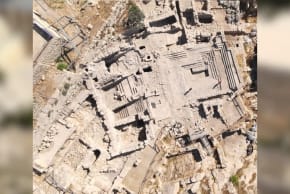
Archaeological Site
Israeli researchers use ancient stone tools to trace hunter-gatherer migrations
The study focused specifically on the late Middle Paleolithic period, when ancient hunter-gatherers attempted to navigate intense environmental shifts in the South Caucasus region.
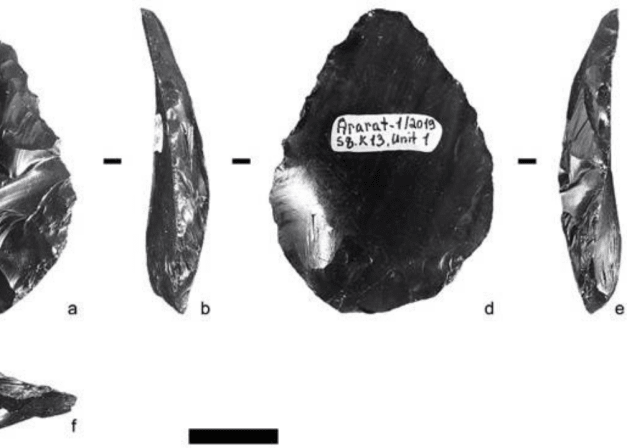

Prehistoric hunter-gatherers stayed connected across 200 kilometers, Israeli study finds
‘We’re all in the same boat,’ Noah's Ark researcher tells ‘Post’ at Turkey’s Durupinar site

Backyard find: Egyptian farmer unearths statue fragments believed to depict Ramesses II
Archaeologists unearth medieval convent’s heating system during renovations in Switzerland
Gnadental convent was built outside Basel's city wall for Franciscans around 1231, later becoming a temporary home for several orders.

Israel unearths 2,000-year-old section of Jerusalem aqueduct that brought water to Temple Mount
The aqueduct was part of a sophisticated ancient water system that carried spring water from the Gush Etzion area to the Temple Mount in Jerusalem through Solomon’s Pools.

Archaeologists discover lost temple to war god near abandoned Roman military fort in Germany
Alongside the temple’s remains, archaeologists found inscribed two votive stones, a statuette of the goddess Victoria, and additional statue fragments, at the site.

Ancient Greek elegy dedicated to judge found in ancient Egyptian tomb sealed with protection spells
Its 19-lines of ancient Greek text is written in red ink, dedicated to a person named "Pesikhtis," who, according to preliminary study, may have held the position of judge.

Excavations near ancient Turkish port may have found Alexander the Great’s soldiers tombs - report
According to AA, an initial survey of the necropolis identified at least 30 rock-cut tombs and chest-type graves scattered across the site. As of now, only 10 have been fully uncovered.

Noah’s Ark? Researchers claim radar scan reveals 'man-made' structure at Turkey site
Researchers say new radar scans reveal features they believe could indicate a man-made structure beneath the controversial Durupinar Formation, claimed to host the remains of the biblical Ark.

Ancient Egyptian fortress uncovers soldiers’ homes, royal inscriptions, and horse burial
Also found at the site were a number of scarabs, some bearing the names of Kings Ramesses II and Seti I, while others carry the names of several deities, including Amun, Sekhmet, Ptah, and Set.

Turkey uncovers new fragment of oldest known peace treaty between Egypt and Hittites
The fragment, found at the ancient Hittite capital of Hattusha, contains provisions on people fleeing between Egypt and Hatti and the protection of their homes.

Czech Republic's 6,500-year-old sanctuary found to predate Stonehenge by 1,000 years
The circular enclosure measures 230 meters in diameter, featuring a ditch over 2.5 meters deep and 12 irregularly spaced entrances that align with key solar and lunar cycles.

Massive newly-unearthed complex may shed light on how Jewish pilgrims prepared to enter the Temple
The discovery was made during five seasons of excavations, directed by Prof. Uzi Leibner and Prof. Orit Peleg-Barkat of the Hebrew University of Jerusalem’s Institute of Archaeology.