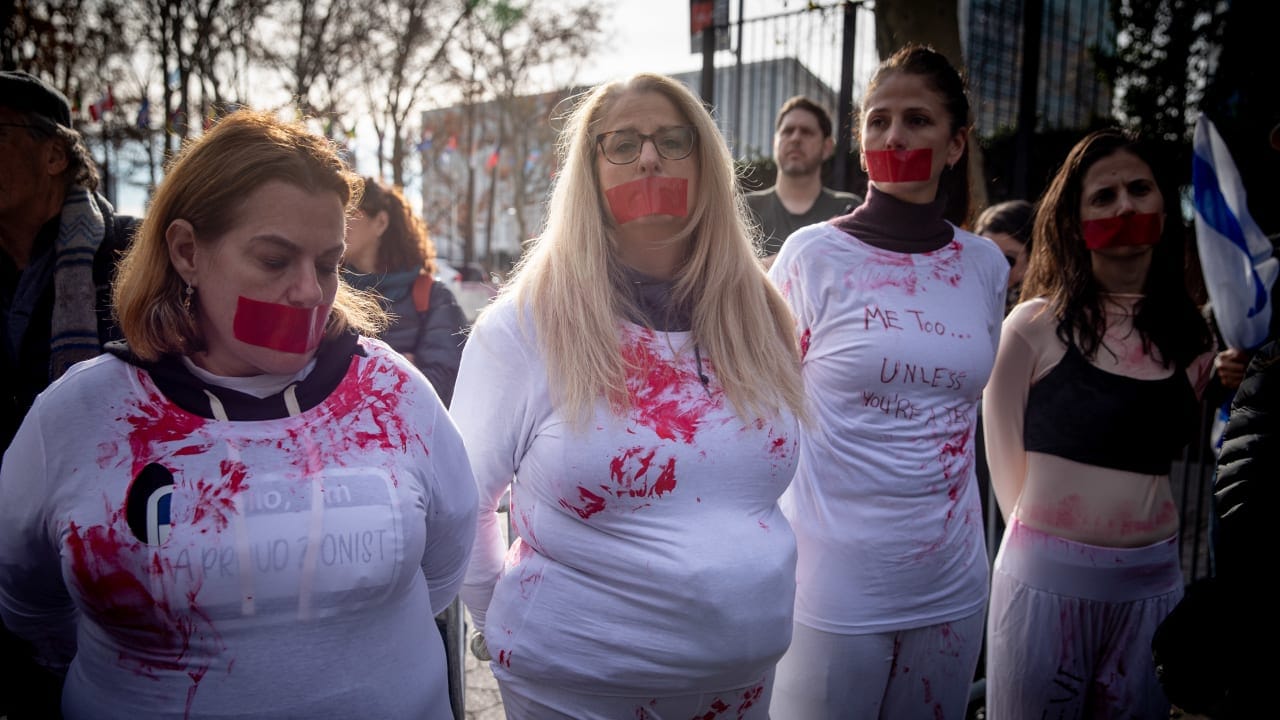
“When October 7 happened, my thought was that this was not a field that I could contribute to, because I’d seen nothing like it before.”
Prof. Yifat Bitton has worked in the field of sexual violence for more than two decades, helping victims seek justice through the legal system. Yet, in the aftermath of the October 7 Hamas attacks, she found herself face-to-face with something for which even her extensive experience had not prepared her.
“It was something no one had encountered in the past: the unimaginable happened to us,” she told The Jerusalem Post this week.
Bitton, president of Achva Academic College and head of the RAIA Project, an Israeli initiative dedicated to documenting and investigating sexual violence committed by terrorists, pioneered the use of compensation lawsuits for victims in Israel and founded the antidiscrimination organization Tmura in 2006.
Her 2024 report “Challenges in Identifying and Documenting Sexual Crimes Committed During A Terrorist Attack” was presented to senior UN officials and has inspired the Foreign Ministry to initiate the development of a first-of-its-kind toolkit alongside the United Nations Office on Drugs and Crime (UNODC).
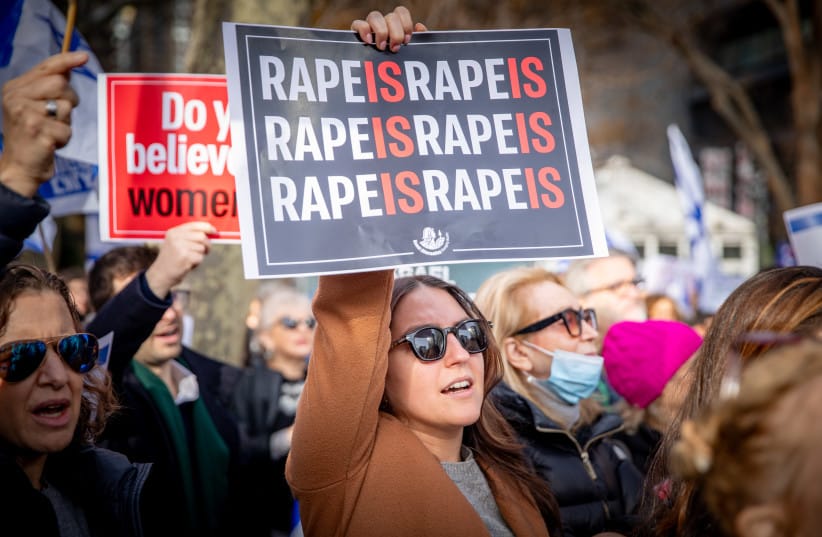
Set for release in the coming months, the toolkit will guide first responders in identifying, documenting, and preserving evidence of sexual and gender-based violence at the sites of terrorist attacks, to facilitate future prosecutions.
For Bitton, the project represents the culmination of years of legal work, but also a response to the extraordinary challenges exposed by October 7.
“I was among the first activists, feminist activists, who started dealing with and attending to the issue of the sexual violence,” she recalled.
She said the authorities in Israel were “overwhelmed” with tasks such as identification, so the activists took it upon themselves to try to explore the sexual violence cases.
“We got a very harrowing picture very early on. Within a few days, we already knew of several cases [of sexual violence]. So it was clear that something happened and took place, that it needed to be contained somehow and investigated.”
Evidentiary collapse in times of chaos
But to understand why such a toolkit was needed in the first place, Bitton explained, it is necessary to look back at what happened in the chaotic days and weeks following October 7.
Dedicated sexual violence forensic teams were never deployed to the Gaza border communities in the immediate aftermath of October 7, 2023. Instead, the region remained an active combat zone for days, and authorities prioritized rapid body recovery, victim identification, and burial over forensic crime-scene preservation.
By the time major crimes units deployed to the area, around six weeks to two months later, most physical biological samples were degraded.
“Evidence is so hard to find under such conditions,” Bitton said. “What forensic evidence can you find after weeks? Barely anything. For example, even if there was a used condom in a room, there is no way of knowing whose it is, and likely it’s been dried or washed off. There’s no chance of collecting evidence under such a circumstance.”
The consequences of this breakdown were not merely theoretical. Bitton recalled speaking to one forensic investigator who had been diverted from crime scene investigation work to help identify hundreds of unidentified bodies down South.
He told her that, while examining a woman’s body, he noticed signs suggesting she may have been sexually assaulted, including what appeared to be dried semen.
However, under normal procedures, only a physician or forensic pathologist could collect a sample from the body. With just six such specialists available in Israel at the time, and identification efforts already overwhelmed, requesting one presented a significant challenge.
The investigator also questioned whether collecting the sample would ultimately prove useful, since the biological material could potentially have come from a consensual partner.
“So I decided not to do anything with it,” the investigator told Bitton.
Bitton stressed that she did not blame him, arguing that the incident demonstrated how existing procedures and overwhelming circumstances could prevent potentially crucial evidence from being collected.
The incident highlighted a dilemma: protocols intended to ensure the integrity of criminal investigations could, under extraordinary circumstances, become barriers to preserving evidence at all.
Preparing for waves of denial
During this time, Bitton also recalls being aware that a “denial wave tsunami” was approaching.
“We were sending letters to allies abroad telling them of the magnitude of what happened and of the sexual violence that was perpetrated. We asked them to stand with us, to be with us, to recognize that. But very disappointingly, we realized more and more that there was a deafening silence on the other side, including in the case of UN Women.”
On December 4, 2023, Bitton was invited to address the UN officials and delegations at the UN in New York.
In her address, she told the UN that the victims were silenced twice: first on October 7 by Hamas, and second, by the silence of the very UN organizations that were entrusted with a mandate of protecting them.
“I remember speaking from my heart,” Bitton reflected. “My heart was always involved throughout these processes. But what actually drove me to speak [at the UN] was my legal mind and my legal analysis. Because very early on, we realized there was an evidentiary collapse under a terrorist attack.”
She explained that the evidentiary collapse she had witnessed over the last two months was not always understood by those accustomed to investigating sexual violence in other conflict settings.
This particularly applied to UN Special Representative Pramila Patten’s visit to Israel from January 29 to February 14, 2024, and the misconceptions of the team regarding what occurred.
“I was sitting with her staff as they were looking for evidence. Those [in Israel] who were involved were trying to do their best, including the police, to provide them with whichever legal evidence that they had.”
But Bitton says she realized that while the UN team is used to entering conflict zones and collecting evidence there, they were not experienced with going to a state like Israel, a sovereign, strong state, and finding little evidence.
“A common logic at the time was that if there’s no evidence, then nothing happened. Because in a state like Israel, with a strong legal system, surely there is no chance that they wouldn’t have the evidence?”
This was when Bitton understood that she had to restructure and reconstruct the perception of what happens during and after a massive terrorist attack, when there is “complete chaos that completely takes away your ability, regardless of how strong a state you are, to collect evidence from the terror scene.”
Reimagining protocols
“I thought to myself that this would be my greatest contribution. I was not myself collecting evidence – that is the job of professional police investigators and organizations – but I could interview those who were actually there.”
Bitton and a small team she put together of three researchers began interviewing first responders and soldiers and those who were there in the immediate aftermath (from the first few hours to two days after October 7).
These were not victim testimonies, but accounts of the first eyewitnesses.
Despite the interviewees not being victims themselves, Bitton and her team decided to apply the Murad Code for interviewing them because of the level of trauma they had experienced.
The Murad Code (officially the Global Code of Conduct for Gathering and Using Information about Systematic and Conflict-Related Sexual Violence) is a survivor-centric framework released in April 2022 to set ethical, safe, and effective standards for documenting and investigating conflict-related sexual violence.
“It was so stressful for them, but at the same time they were eager to talk to us,” she said.
Interestingly, some of those approached told the team that they had not seen anything specific and had nothing to contribute.
But Bitton would insist, believing all information to be vital in its importance.
“I told them: ‘I’m not asking about what you have seen. I want to know what the chaos looked like, how you were functioning in the field.’ And then they would talk to me.”
Many assumed she wanted to ask them if they, for example, witnessed a woman being raped. But her questions were instead focused on feelings, on atmosphere, things that could better prepare future first responders.
“My question was: ‘Did you see anything out of the ordinary for a terror attack scene?’ And then things started popping up.”
The four researchers put all their findings into a report, as well as an annex pertaining to each security, medical, and emergency first responder organization that was in the field. For each organization, they had at least two interviewees, but normally four.
“We got a very holistic view of what was happening, both from the management level and those with boots on the ground.”
The final 100-page report is what Bitton presented to the UN a year later in November 2024.
Then, six months later, in May 2025, she went to Vienna and presented it there. It was in Vienna that the Israeli embassy introduced them to members of UNODC, who would later partner in the creation of the toolkit.
“UNODC realized that this is really professional work being done by an expert and independently. Even though the UN has provided so many tools and has done such important work in the field of sexual violence in conflict zones, there was a blind spot that, up until my work, was not filled and which could be a crucial moment in enabling the legal system to bring justice to these victims.”
Bitton explained that the UN is highly protective of victims and does “amazing work” in understanding the trauma.
“But when you look at the legal system – the international one or even the local legal systems – in terms of being able to prosecute for sexual violence crimes, you see almost complete impunity.”
The main problem, she added, is the problem of evidence. Therefore, her idea of immediately collecting or documenting details that could later on be of great importance to the justice system was “an important revelation” for UNODC.
It was at this point that the Foreign Ministry - especially Sarah Weiss Ma'udi, Israel's special envoy for Women, Peace and Security - came on board to sponsor the project alongside the UN. The team has since partnered with both the German and Swiss governments, as well as Nigeria’s National Counter Terrorism Centre.
“It has been so beautiful to see how all of us understood how important the role of first responders is in evidence collection.”
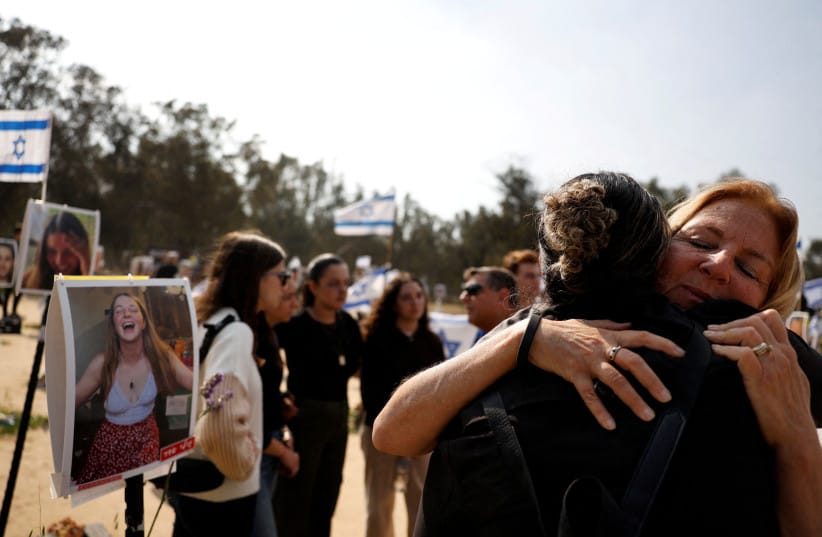
Beyond October 7
There is also a more inverse potential implication of the toolkit.
Although it was developed in response to the sexual violence committed during terrorist attacks, Bitton told the Post that its lessons could also improve how sexual crimes are investigated more broadly.
One example is what she calls the “contaminated crime scene protocol.”
She explained that investigators are generally trained to work with secure, uncontaminated crime scenes, but Bitton argued that valuable evidence can still be recovered even when a scene has been disturbed or compromised.
“Sometimes, when you get into a scene and it’s completely contaminated, it may be deemed less relevant to the investigation,” she said. “I’m trying to say, do not do that. There are other means that you can use to go on with the investigation regardless.”
The toolkit seeks to address exactly these kinds of issues, giving first responders and investigators practical means to recognize and preserve evidence even under chaotic conditions.
And even if the evidence cannot necessarily attribute the crime to a specific perpetrator, it can be used more broadly as an indication to the fact that, for example, Hamas was using sexual violence as a tool of war.
The next challenge, Bitton hopes, will be turning these lessons into an internationally accepted standard.
“First, we want to launch it, but then we want to make sure that it is accepted by as many states as possible.”
Her hope is that the toolkit will eventually become a standard protocol for first responders around the world, ensuring that the lessons of October 7 can help prevent vital evidence from being lost in future attacks.
For Bitton, who initially questioned whether she had anything to contribute in the aftermath of the massacre, her role ultimately lay in reimagining how justice could be pursued when the usual rules of investigation no longer applied.
The goal is not simply to document what happened, but to ensure that the chaos of an atrocity like October 7 does not become another obstacle to justice for its victims.