
My son has no mirrors in his house. He smashed them all. His wife has only a few slivers of her grandmother’s treasured china. That, too, he shattered.
My granddaughters don’t know if they’ll walk into the living room and find their loving Abba (Dad) – the man who cries at National Geographic documentaries – or a violent stranger, who flings a child across the room to defend himself from an enemy who isn’t there.
The warrior who defended the nation for 25 years now times his supermarket trips for 10 minutes before closing, when it’s emptiest. The same man who once searched deserts and cities for missing persons with his rescue dog sometimes doesn’t leave his house at all.
Since 2001, my son has served in miluim (reserve duty), leading dangerous missions as an officer. He injured his knees, his hearing, his right shoulder, his right hip – and now, his peace of mind. His soul.
Alarming rate of PTSD sufferings since start of war
This war has been cataclysmic. We count our dead and wounded, but we too often overlook the ones still suffering in silence. According to the National Center for Traumatic Stress and Resilience, about 12% of IDF veterans may be living with post-traumatic stress disorder. The Helem Club (an organization for PTSD rehabilitation) says the statistics are higher. For veterans, their battle didn’t end with demobilization. They are constantly on alert – for sudden movement, for noise, for threats that don’t exist.
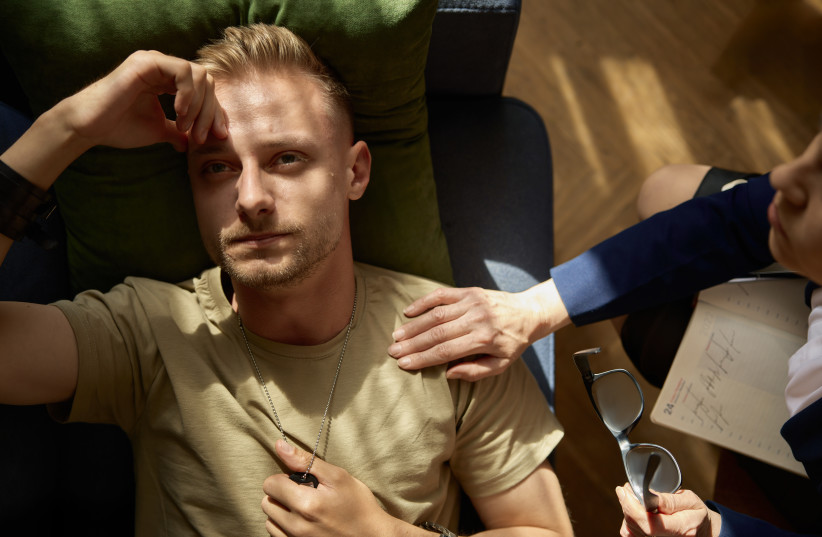
PTSD is not a weakness or mental illness. It’s a brain injury caused by trauma, damaging the mechanism that tells the brain what is dangerous and what isn’t. For PTSD sufferers, their minds are doing exactly what they were trained to do: survive. But now, in civilian life, that same mechanism betrays them.
A slammed door. A traffic jam. An argument. Or nothing at all. Their heart races. Their muscles tense. Their mind screams danger. But there is no roadside bomb, just a child, a spouse, a co-worker. And they break, again and again.
Since the Israel-Hamas War began in October 2023, nearly 50 IDF soldiers – most of them suffering from PTSD – have taken their own lives. Seventeen in 2023. Twenty-four in 2024. And already 17 more in 2025. Each suicide is another silent casualty of war.
PTSD veterans plead to be seen
Right now, a group of veterans with PTSD is standing outside the Knesset, pleading for immediate help. They are asking the defense and finance ministers for services they can use today, therapies they can walk into today. For a list of clinics they can access now. For services that exist outside of waiting lists, bureaucracy, and closed doors.
Yes, the IDF is promoting psychological resilience. Yes, there are committees. But committees don’t save lives. Action does.
Our wounded PTSD warriors are not asking for medals or ceremonies. (They’ve already got plenty of those.) What they want – what they need – is to be seen. Truly seen. By their government. By their fellow citizens. By a society they sacrificed everything to defend.
They are imploring Knesset members to step outside and speak with them face to face. To look into their eyes and acknowledge their pain. They are inviting the public to visit their protest tent, to offer a hug, to hear their stories, to remind them they are not invisible.
We must act now
Because that’s what they fear most now – not injury or death, but erasure.
We need to act now. Our veterans cannot wait for committee meetings or photo ops. They need help today. They were willing to die for this country. They did their job. Now it’s our turn to do ours.
We must give them the care, the treatment, the respect – and the immediate help – they need to live.
Contact the offices of Prime Minister Benjamin Netanyahu, Defense Minister Israel Katz, and Finance Minister Bezalel Smotrich. Urge them to visit the PTSD veterans’ tent and speak to our broken heroes face to face. Tell them help must come now. And go to the Knesset yourself. Spend time with these IDF veterans. Bring them food.
Let them know they are seen, heard, and deeply valued by the nation they fought to protect.
The writer made aliyah in 1992 to Efrat. Two of her sons are officers in the IDF and have served repeated tours of duty since Oct. 7, 2023.