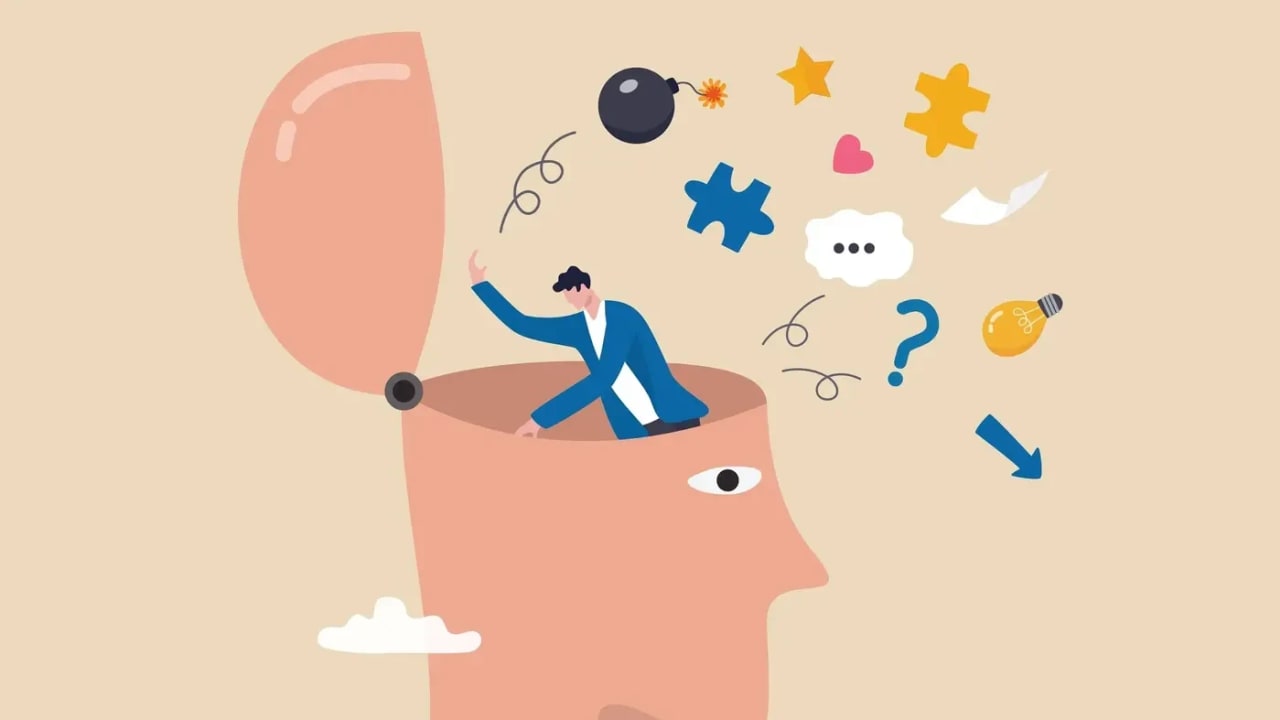
What do we remember from past years? Compared to all the information we absorbed at the time, probably very little. Most of what we take in every second into short-term memory doesn’t get stored in long-term memory. That’s how our memory works. The brain autonomously decides to prioritize only what's important and discard the rest. And yet, when it comes to information we do want to retain, how can we remember it better—while also training and strengthening the brain?
We all know that in the near future we’ll be exposed to a tremendous amount of information, most of which we’ll forget over time. In light of this, we can say that the brain’s default mode for how we absorb and store information is not memory—but forgetting. At the same time, the human brain knows how to prioritize certain memories, stabilize and strengthen them, and sometimes even preserve them for a lifetime.
One of the best ways to deal effectively with this understanding and improve our ability to control and monitor the memories we want to keep is to implement and integrate specific memory strategies into our daily routines—which naturally involve various memory challenges. Being aware that human memory is a mental capability that forms the functional basis for how we use knowledge and make decisions can open up many opportunities to train it—turning our daily activities into a kind of “brain gym” that helps us practice and strengthen memory over time.
Here are a few practical tips and tools that will help you train and strengthen your brain and improve your memory performance now and in general:
<br>1. Listen
Focus on the information you want to remember, think about it in real time, say it to yourself internally, and consciously devote attention to it. Also, repeat it aloud to practice and reinforce it in your memory. For example, if it’s a new name, repeat it: “Hi, Noa, happy holiday.”
Remember: Executive attention is the “bottleneck” to short-term memory. That is, it will be difficult or even impossible to retain a new name if you’re not paying attention to it in real time—and vice versa.
Executive attention helps us consciously eliminate distractions so we can focus on the name we want to remember. Sometimes the brain drifts to thoughts or topics that may seem more interesting (often without us realizing it) but are not necessarily more important than the information we want to remember. So even if a distraction is more interesting, it’s crucial to notice it, neutralize it, and consciously focus on what we want to retain.

2. Remember words, topics, and ideas visually through images
In general, the human brain works in a highly visual way and sometimes remembers images better than words. One example of this is that it’s often easier to recall and recognize a person’s face than to remember their name.
Therefore, when you want to remember verbal information—like a shopping list for the holiday—it’s recommended to also visualize the items, including size, color, shape, and even their location in space. Another example is linking a name to a face. To strengthen name recall, try connecting the meaning of the name to a visual feature of the person—like facial traits or anything distinctive about their appearance. Linking verbal information to visual cues strengthens the brain's associative network for that name, making it easier and more efficient to recall.
<br>3. “My interesting story connection”
Our memory works as a system of connections. Every piece of information stored in memory is always connected to another—and that one to another, and so on. So one way to strengthen memory is to create a strong link between new information we want to remember and existing, well-encoded information in our memory.
How? By creating a short and interesting story (even just a sentence) that describes the connection. To make the link even stronger, it helps to tie that story to ourselves personally. The more the information relates to us (e.g., a beloved figure, a hobby, or a personal interest), the easier it is to remember.
So for every piece of information you want to remember, you can create “my interesting story connection.” In this type of learning, it’s good to incorporate curiosity, humor, suspense, love, empathy, and more. For example, you can associate the name Moshe in various ways—each one leading to an interesting story involving that character (Moshe Sharett, Moshe Dayan, Moshe and a half-chief of staff, Moshe hit the rock and water came out, baby Moshe in the basket, etc.).
<br>4. Use your imagination
Imagination is one of the pillars of memory. The brain’s ability to translate what we remember into pictures is expressed through imagination, which lets us visualize the meaning of information, emotional experiences, and sensory involvement—even if we’re not actually experiencing them in that moment.
A common example of this is when reading a book: We don’t just see black and white text—we also visualize images, and even imagine sounds, touch, tastes, and smells that arise from the text. For instance, to remember names better, you can imagine Aviv eating matzah during the spring holiday (Passover), or Jordan as a rafting instructor with paddles on the Jordan River. Over time, this imaginative approach will help you build a rich and creative association bank that gives meaning to the information, strengthens it in memory, and enables you to retrieve it more efficiently through the context in which it was absorbed.
<br>5. Don’t forget that you forgot
When you experience any kind of forgetfulness, document it so you can learn, understand the issue, and—most importantly—prevent it from recurring. Keeping a written daily log of your memory lapses will help raise awareness, help you identify the types and frequency of incidents, and even reveal whether they occur at certain times of day.
This tracking can help identify the root causes of forgetfulness, allowing you to find suitable solutions and reduce the incidents to zero. For example, if you notice you tend to forget things in the morning, you can better plan your time and organize your morning routine before leaving home.
Relatedly, if one of your common forgetfulness issues is locking the door, you can turn this problem into a daily training exercise: Each morning, consciously practice locking the door, devote a few seconds of selective attention to the task, say it in your head or aloud, or lock the door using your non-dominant hand to stimulate the brain more. The positive engagement you create around every memory lapse, with the aim of learning and improving, helps you become more focused during the task—thus preventing the problem from happening again.
<br>6. Never stop learning
Learning is one of the greatest gifts we can give our brains—and our memory in particular. Choose at least one topic or field that interests you and dive deep into it. This will benefit you in two ways: You’ll gain knowledge in something you care about, and you’ll strengthen your memory.
During learning, we form new neural connections in the brain and simultaneously strengthen existing ones. Our brain is constantly changing, and the clearest expression of that change happens through learning and memory processes. So continual learning is one of the best ways to keep your brain healthy and strong over time.
<br>7. A rich and varied menu for the brain
Give your brain a rich and varied menu of supportive activities that help keep it healthy and strong—and allow it to function optimally in everyday life. In this regard, make sure you get enough high-quality sleep each night, eat a healthy diet, engage in consistent aerobic exercise, reduce stress, maintain social connections, create a sense of purpose in daily activities, pursue consistent learning, and engage in goal-oriented cognitive training.
Metaphorically speaking, the brain can be seen as the hardest-working “employee” in the world—working 24 hours a day, seven days a week, nonstop. Therefore, to keep it running efficiently and energetically, it’s crucial to provide the best conditions it needs and deserves.
Itay Aniel is a brain and memory researcher and a doctoral student at Bar-Ilan University.