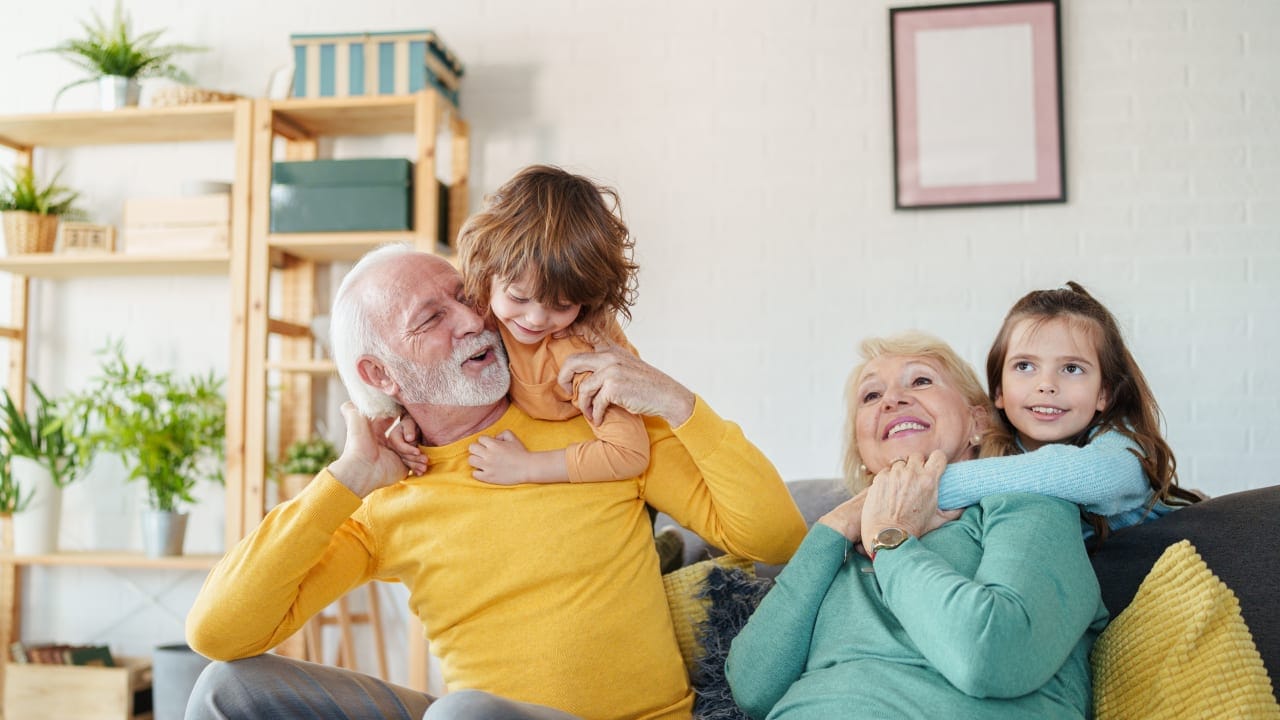

For many Israelis over age 60, the emotional toll of the war has been profound. The fear, the grief, the long nights alone – these have left invisible scars. But in living rooms across the country, something unexpected is happening: Healing is arriving in the form of grandchildren.
Whether it’s holding a new infant, hearing a toddler’s giggle, receiving a teenager’s hug, playing a board game, telling a story, acting silly, taking a trip to the playground, or going out to buy pizza or ice cream, for grandparents, the experience is transformative and calming. Psychologists are beginning to recognize this intergenerational bond as a form of therapy in its own right.
“Children – and grandchildren – are emotional mirrors,” said Dr. Sharona Mital, an Israeli psychologist specializing in trauma recovery. “They feel what we feel, and they respond in return. Their presence can help us reconnect with parts of ourselves we thought were lost.”
Besides the fun we have playing with them, listening to them laugh or tell us about their lives, we can forget for those moments the things happening in our crazy world. And, for elders, grandkids help us forget about the issues, both psychological and physical, of aging.
Oxford’s Journal of Public Health published an article in 2024 titled “Grandparenting as Therapy.” It reported that active engagement with grandchildren reduces symptoms of depression and anxiety in older adults; enhances resilience, cognitive stimulation, and emotional well-being; and the relationship creates a reciprocal healing loop – grandparents feel needed, loved, and mentally engaged.

Importance of grandchildren for grandparents
This grandparent-child connection and interaction is not just sentimental – it’s neurological. Play, laughter, and physical touch act like natural medicine for the brain and the body. They lower stress hormones (like cortisol) and boost “feel-good” chemicals (like dopamine), which improve mood, resilience, connection, and concentration.
The science shows that it’s the simple human truth that matters most: Being needed, being loved, and being part of a child’s world can restore a sense of purpose that trauma often erodes.
Miriam (not her real name), a client of mine, is a 79-year-old woman who lives alone. Her husband passed away three years ago after a long illness. Life has not been easy for Miriam. While I would describe her as a resilient woman, the loneliness and the stress from the war have been emotionally devastating for her.
Every time there was a siren, she had to go from the fourth floor to the basement of her building, where the bomb shelter was located. She was traumatized and unable to sleep, always anticipating a missile attack and siren, and jumping out of bed and quickly making her way down to the bomb shelter.
Living alone for an older person is never easy, but she loves her home and has some very good neighbors. Her two sons – both married and have children – don’t live close by. Miriam told me in one session how she found unexpected healing through daily video calls with her five-year-old grandson in Tel Aviv.
“He shows me his drawings, tells me jokes, and asks me to sing him lullabies,” she said. “During the war, it was the only time I forgot about the sirens; and now that things are quiet, my grandson helps me to forget all of my current worries. It’s magical; simply a blessing.”
Grandchildren don’t erase the pain of war or any other stress in an older person’s life, but they soften its edges. Their laughter echoes through quiet homes, their questions invite stories long buried, and their hugs remind us that love endures. For Israelis over 60, these small moments are not trivial – they are lifelines.
In the words of Dr. Mital: “Their presence can help us reconnect with parts of ourselves we thought were lost.” In the embrace of a grandchild, we find not just comfort but the courage to begin again.
Grandkids benefit, too. When grandparents are emotionally present, children show increased resilience and emotional regulation, creating a mutual healing loop.
My idea about writing this article stemmed from a contact I had with a physician friend. Both of us having children serving in the army, we would ask each other how it’s going and share our feelings. A few weeks ago, she stated that if it were not for her grandkids, she doesn’t know how she would have coped during the war.
For the past three years, my wife and I lived in Jerusalem to be closer to our children and grandkids as we awaited the completion of a building project in Ra’anana. It has been magical and a true gift to all of us. We had so much grandchild contact. During the war, we were there not only to help our children but to be supportive and very involved with our grandkids.
We have since returned to our completed home project. However, I want to say thank you to my children, their spouses, and our grandkids for the opportunity to really be a strong part of their lives. For sure, this will continue with many visits, but like my colleague, I learned firsthand how magical this interaction was for me, my wife, and the grandkids. There is nothing like the smile and laughter or hug from a grandchild.
Enjoy your time together.
The writer is a cognitive-behavioral psychotherapist specializing in adult and couple therapy. He has a sub-specialty in treating anxiety, adjustment, and depressive disorders and addiction. He sees clients in Ra’anana and Jerusalem and is available for consultations and online therapy sessions globally. Email: drmikegropper@gmail.com;
Facebook: facebook.com/drmikegropper