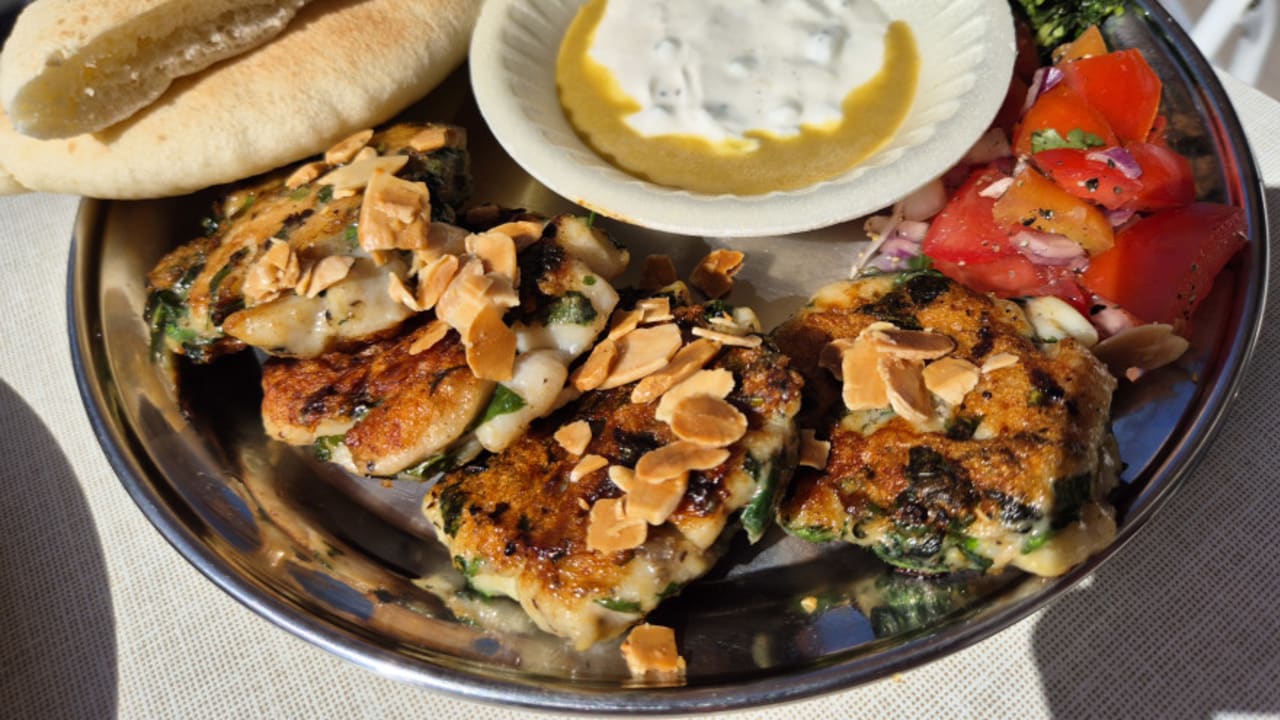
For several months now, there has been quite a buzz around us about Hayerushalmit, until we had no choice but to go and check it out for ourselves. The name may be misleading: That Hayerushalmit is not from Jerusalem at all, but is named after the nearby boulevard and is actually located at 15 Olei Zion Street in Jaffa (though of course those are named after the holy city).
Personally, I thought it would be amusing to entertain the idea that it might be named after the hand-rolled cigarette in old slang, which was called “Yerushalmit” and described, well… you get the idea. Whatever the origin of the name may be, that Hayerushalmit has become so popular among Tel Avivians that we had no choice but to find out if the hype was justified.

If you’re in a hurry, we’ll clarify right away, like Reuven Rivlin in Likud campaign broadcasts where he mocked Shimon Peres, saying: “Yes and No.” These do not cancel each other out, but are simply two parts of the same whole - and we’ll start specifically with the “yes,” of which there is plenty.
Let’s begin with the place’s winning aesthetics: A bar at one end of which stands a grill visible to all behind a glass partition - everything clean, beautiful, and well-lit, in contrast to any preconceived notion one might have about street food.
Why not pita?
The menu is also limited but precise: Veal kebab, seafood kebab, merguez sausages, and another dish or two, including a cauliflower steak for vegetarians, which already hints at the place’s character - aiming both at the current trend of upgraded grilled dishes and at the vegetarian trend.
The service, too, is attentive and polite, bordering on cordial - a kind of hipster cordiality, less folksy: The kind that greets you warmly when you order, but won’t call you “my dear” or “my soul,” nor insist on asking “how was it?” - an approach I respect, if not appreciate.

Even the portioning is nice: Half a portion for NIS 24, a full portion for NIS 45, a tray (plate) for NIS 50. The price (relative to a substantial meat dish) is reasonable, and the presentation is very pleasant. The tray, for example, consists of everything that goes into a pita, including the pita itself, but deconstructed and separated. A very nice concept. There is also a pickle station, as is customary in the genre, a small indoor seating area with high wooden stools, and something like three or four standard tables outside.
Here we made two rookie mistakes: We chose to sit outside, which turned out - despite the pleasant weather - to be exposed to wind that nearly blew away our trays (and the empty drink cans).
The second mistake was not ordering a pita. You might say that all the components (again, including the pita) are on the tray - and we’d be the first to agree. But - and this is a big but: Inside a pita, all the ingredients are compressed in a way that creates texture, especially when dealing with flavor-absorbing meats like kebab (both the meat and the seafood versions). So it happened that although I indulged in trays, I envied my neighbors (apparently more experienced than I) who held a juicy pita in both hands and dove into it with pleasure.

Not a perfect score
If all of that belongs on the “yes” side, why did I sound somewhat reserved until a few paragraphs ago? Because despite the freshness, cleanliness, courteous service, and even the taste, something was still missing to turn a high score of 85 into a perfect 100.
What was missing? Here it becomes a bit elusive: Some kind of spicy kick from seasoning that would remind me I’m not sitting in the Shuster shopping center in Ramat Aviv Gimmel, but on the fringes of the flea market in Jaffa. For example, the only spicy element was a kind of orange chutney served alongside the kebab patties: Juicy and fresh, but lacking that small spark that would make me immediately want to order at least two more portions (this isn’t theoretical - it has happened before…).

The same goes for the seafood kebab, which was served with a yogurt sauce and seemed to crave chili or something that would bring out the taste of the sea and make me certain it wasn’t a previously frozen piece. Even the merguez sausages, a dish that is supposed to be inherently spicy, were halfway between Morocco and Ashkenaz (which may very well have been intentional).
If you like, on the downside one could count a vibe reminiscent of Indian restaurants in London in the 1980s and 1990s: Too adapted to the local palate, too accessible, trying to please instead of delivering a light bite.
It’s possible that what I identified as a drawback might be a blessing in someone else’s eyes - for example, someone who does not like strongly spiced or spicy food. That’s perfectly legitimate, of course, but from Jaffa I expect a less sterile experience.
This caveat exists, but it was not enough to overshadow the enjoyment of the visit. Given that the strength of the winds on Olei Zion Street is unrelated to how the place is run, if the main complaint I have about a very pleasant food stall is the lack of a spicy condiment (even as an option), it’s a sign that everything else was very good.
I must tip my hat to the line that began to form at the ordering counter as the minutes passed. Not only because it’s always nice to see a young business - especially in such a challenging field - doing well, but also because I realized I must take into account that this cuisine, which is supposed to stretch from North Africa to the Balkans, has intentionally taken one more step west. Perhaps that’s the way to the hearts of groups in which at least one person will choose the cauliflower.