Just six steps separate the pedestrian level of Sarona Park in Tel Aviv from the cave of Okoko, and two more steps detach you completely from everyday life, sending you on a fascinating journey through time — backward, forward, and in the present moment. All in one breath.
The project that transformed the area about a decade ago took care to preserve the Templar buildings from 1871 and implement decisions made by a steering committee back in 1978(!), but that history wasn’t enough for them. Here they speak of antiquity and originality, of mythology and primal nature. Outside is Tel Aviv; inside is the Amazon — with words, language, and jargon that will deter or drive away anyone who’s developed hunger and thought to overcome it with something fried.

Deter, drive away — or maybe intrigue. It’s a new year with a blank page — shouldn’t you start it with something good?
Outside is Tel Aviv; inside is the Amazon. Okoko
The Raw Bar (if you prefer the foreign term) of Ohad Duchs and Yonatan Scharf from the wonderful Mae Café knows very well what kind of environment it operates in. It carefully avoids any preachy talk about dieting or trends, and instead offers a complete worldview about what the body should eat, what will make it feel good, and how you’ll feel afterward. In a world where countless Israelis shove — sorry, but that’s exactly the word — giant pitas and plates during their lunch break and then return to be miraculously productive, this is, at the very least, a refreshing message.

It means much less sugar and much more raw material, inside one of the few places in the city that can use that word without making you roll your eyes. It means processes like freeze-drying and natural fermentation, fresh almond milk prepared on the spot, and a large machine greeting you at the counter whose sole purpose in life is to grind fresh cocoa butter and nut butter. One spoonful, and your cynical mind begins to spin. Maybe it’s nature’s chiropractic adjustment.

The menu offers smoothies (NIS 40), natural juices (NIS 20), sandwiches (NIS 28–32), salads (NIS 38–42), and sweets (NIS 12–48). But given that these words have long lost their original meaning, it’s worth immersing yourself and realizing how far and how fast we’ve been willing to go to get something entirely different.
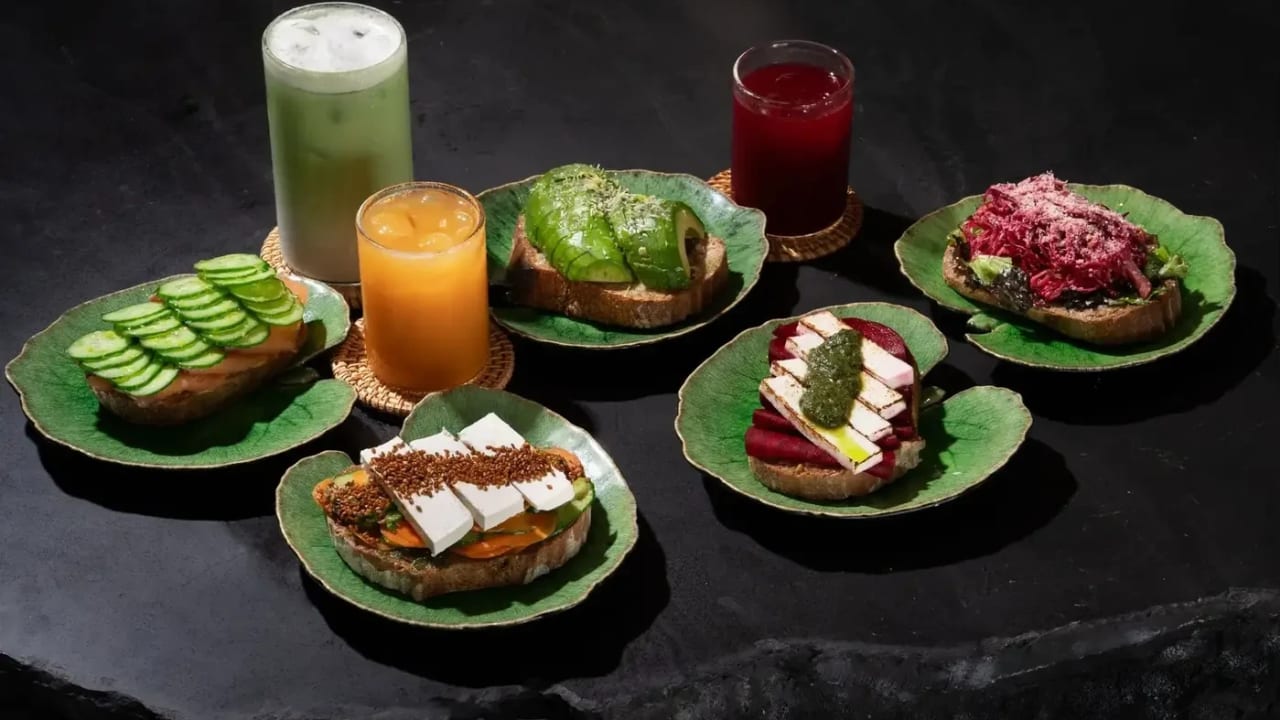
It starts with five thick, well-thought-out, and purpose-driven smoothies — each with its own mission in life. “Glow Up,” for example, mixes kiwi, lemon, melon, honey, chia, coriander, and nut butter into a detoxifying cup that boosts the immune system, while “Okoko” blends nut milk, cocoa butter, crushed cocoa beans, banana, agave, and nut butter into a creamier, more indulgent treat (proportionately indulgent, of course). There are also coffee options (based on Mae’s espresso, naturally), an adventure with Japanese pumpkin and banana, and a superfood frenzy (ground fennel, ginger, and other zesty characters) that promises to refresh you until roughly sunset.
One cup, something on the side — and this is probably the best breakfast you can grab today, and the one that will keep you sane the longest.
That “something” can be one of five open sandwiches, all built on a solid foundation of a thick slice of excellent (gluten-free, of course) bread, and they really elevate it. Salmon, cucumber, lemongrass zest, chopped chives, and lemon juice make for something delicate and balanced. Alongside it are “Chevre Chaud” (tahini, honey, red lollo lettuce, celery, beetroot, apple, and grated hard sheep cheese), “Cado” with avocado at the center (naturally), a feta and za’atar pesto version, and beet with brinza, basil, and that same nut butter.
The offerings expand and twist according to the time of day and your appetite — with standard drinks (Americano, matcha, cold brew) and less standard ones (cordyceps mushroom infusion or an herbal blend of your choice), natural juices (but truly natural, with jalapeño or in old-school grape soda format — though not really like back then), and “wild juices” that fill your body with intriguing words like “vitamins” and rare ones like “calm.” There are also vegetable bowls with an Eastern touch and modest sweet treats — colorful (açaí bowl), elegant (chia pudding), and surprising (a thick “Milky”-style dessert with double creamy-chocolate layers). Something different that stands on its own.
“Not for everyone” is the easiest thing to say about Okoko — and the most misleading. “Yes for everyone” is much more accurate, because I don’t know anyone who wouldn’t use a meal here as a springboard for thinking about what they usually eat — and how much better off they’d be today, here.
The road to that, of course, is long. The tall office towers above Sarona are full of people who never go down for lunch and let lunch come to them — moving the bare minimum and staining, by the end of it, not only their keyboards but also their personalities. Those who do go down head to the nearby market with its countless options, and the cycle repeats. This isn’t criticism — it’s Israeli life.
Here, they offer something different. More morning, fewer heavy meals — but also more depth. They rely on a kind of originality that turns into returning customers, and in the meantime enjoy quite a few guests who prefer to drink here, meet here, experience here. In that sense, the cave established here isn’t just a starting point — it’s a launching pad.
Okoko, Sarona Park, 16 David Elazar St., Tel Aviv