Ancient wildfires in the Levant may have inspired Neolithic pottery-making, Israeli study suggests
Pottery appeared in the region during roughly the same broad period in which fires, erosion and clay deposition reached their peak.

Pottery appeared in the region during roughly the same broad period in which fires, erosion and clay deposition reached their peak.


The blackened, fragile scrolls cannot be physically opened without severe damage. Researchers have instead used high-resolution scans and computational techniques to "virtually unwrap" them.

Researchers explained that when bones exposed to high levels of heat are illuminated with specific light wavelengths, they light up with a distinctive glow.
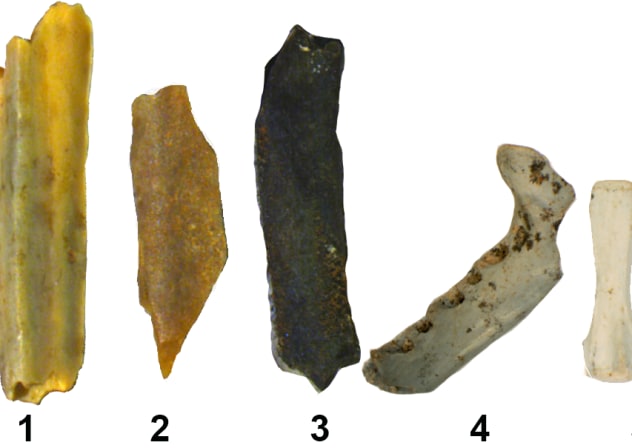
The stream valley lies between the villages of Sleen and Oosterhesselen, and is currently under redevelopment to make space for nature and water.
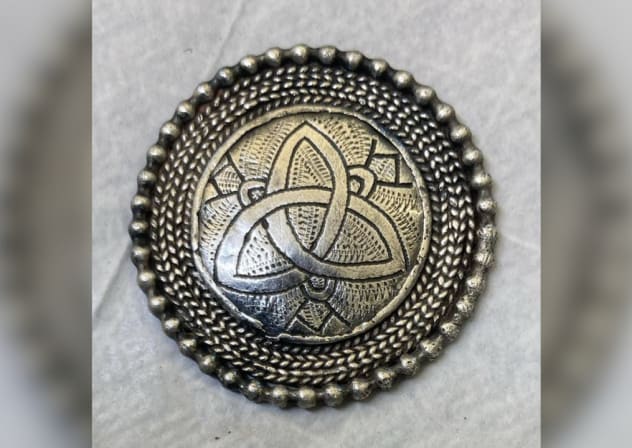
The artifacts were received in Cairo on June 5 before being transferred to the Egyptian Museum for further examination, documentation and restoration ahead of their display in the museum.

The work, which includes genetic analyses, dating, and material studies, began in 2024 and will continue until May 2027 as part of the monastery’s 700th anniversary celebrations.

“This is a once-in-a-lifetime discovery,” added Oren and Reiss. “It was very unexpected, but somehow, the really big discoveries always turn up on the excavation’s very last day.”

Archaeologists have also uncovered the foundations of houses and rooms belonging to a Roman villa used between the 3rd century BCE and the 4th century CE.
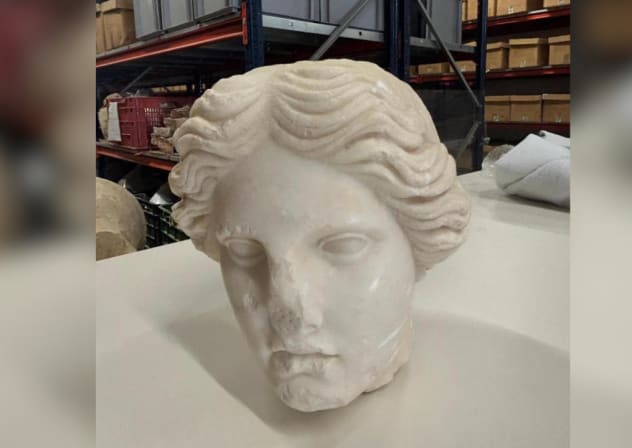
Several painted plaster and barrel-shaped pottery coffin, among those most common coffin types in the Ptolemaic period, were also found at the site.

In the Tanach, Shiloh served as one of the ancient Israelites’ central locations of worship and housed the biblical Tabernacle.

The cave dates back to 400,000 and 250,000 years ago, to the time of the Acheulo-Yabrudian culture – a collection of archaeological cultures in the Levant from the end of the Lower Paleolithic era.
