Neanderthals
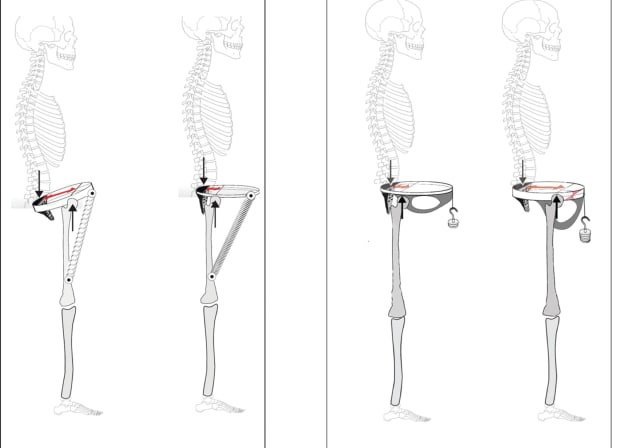
Modern human men evolved unique hip 'spring' for efficient walking, Israeli-led study finds
A new Tel Aviv University study challenges assumptions about the Neanderthal pelvis, finding that modern human males evolved a distinct walking mechanism.

WATCH: A Paleolithic time capsule: Rare prehistoric cave discovered near highway outside of Haifa

Neanderthals' ancient toolkit included hammers, blades made from rhino teeth, study finds

Neanderthal tooth from Siberian cave shows signs of earliest-known invasive dental surgery - study
Neanderthal genetic variant raises risk for COVID-19, protects from HIV - study
"Bad news if a person contracts COVID-19, good news because it offers protection against getting infected with HIV."

New evidence shows history of human species more complex than thought
The most ancient human species includes fossils that date to the time at which our lineage separated from the lineages leading to chimpanzees and bonobos.

French cave reveals evidence of first modern humans in Europe
Sandwiched between archaeological layers of Neanderthal remains early human child’s tooth confirms both early hominins lived there at the same time.

Oldest known prehistoric footprints found in Crete
The six-million-year-old footprints may challenge beliefs about the evolution of humanity.

40,000-year-old sealed cavern in Gibraltar gives new insight into Neanderthal life
Vanguard Cave is one of four caves that make up the famous Rock of Gibraltar and a nine-year-excavation project led researchers to a sealed chamber with evidence of long-gone Neanderthal life inside.

Prehistoric cave paintings in Spain show Neanderthals were artists
Wall paintings made by prehistoric modern humans, such as those found in the Chauvet-Pont d’Arc cave of France, are more than 30,000 years old.

German researchers uncover Neanderthal hunting tool in rare find
This is the first time a leaf point has been found in a modern excavation, as the last was uncovered in 1936.

Israel is a crossroads for human evolution
ARCHAEOLOGICAL AFFAIRS: Archaeologists find that the Holy Land’s 1.5 million-year-long human presence still has secrets to reveal.

How a bone puzzle helped identify new type of prehistoric human in Israel
Some 17 fragments of a mandible, a tooth and a piece of skull were the key to allow researchers to find out about the ‘Nesher Ramla Homo.’

China's 'Dragon Man' may be an undiscovered ancient relative of humans
The discovery of a new hominid species itself is incredible enough, but the story of Homo longi is especially unique due to the circumstances of its discovery.
