Joint arab list
What I learned speaking to Arabs voting in Israel's election - reporter's notebook
People were passionate about politics. Around 4,300 people voted in Abu Ghosh, which is 78 percent of the population. In Gilo, around 15,000 people voted, or 65-70 percent.

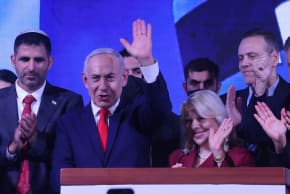
Israel election results signal political deadlock, raising three possible post-election scenarios

Eisenkot leads Netanyahu but deadlock looms, election polls show two days before Israelis vote

Most young Arab Israelis are willing to vote for non-Arab parties, demand solution for crime - poll
Hadash elects former MK Yousef Jabareen as party chairman, ousting Ayman Odeh
"We will do everything to prevent the Netanyahu, Ben-Gvir, and Smotrich government from continuing for another term," he said in a statement published by Hadash.

New right-wing parties keep failing to unseat Likud - opinion
Many have tried unsuccessfully to challenge Benjamin Netanyahu and the Likud from the Right, but a more realistic goal would be to take votes away from Naftali Bennett.

Return of Arab Joint List takes seats from opposition while Likud strengthens - poll
The revived Joint List would win 13 seats, up from the 10 currently projected when the parties ran separately. The seats came at the expense of Yesh Atid, Naftali Bennett, and Gadi Eisenkot.

On a tightrope: Israel’s Arab citizens and the war with Hamas - opinion

The Joint Arab List split up alters the political landscape - analysis
Balad, which was one of three parties in the Joint Arab List broke away from the other two, making it less likely that they will pass the electoral threshold.

The changing status of Israel’s Arab population - opinion
This complicated reality is undoubtedly reflected in the new political constellation created by Israel’s 36th government, and the way the Jewish opposition speaks of and relates to the Arab MKs.

Tibi leaves Holocaust commemoration event as Ben-Gvir reads victims' names
Tibi, who opposes Israel as a specifically Jewish state, is fiercely antagonistic towards Ben-Gvir and his far-right, ultra-nationalist party which seeks to encourage Arab emigration from Israel.

Likud MKs fight over potential cooperation with United Arab List
While some Likud members of Knesset see a potential in the Arab party Ra'am, that managed to reach the threshold, others cannot fathom such cooperation.

Mansour Abbas - From pariah to powerful? - analysis
The Arab sector in Israel has consistently seen unity in the sector as a top priority.

Election survey: 87% of Israeli Arabs support entering or supporting gov't
Whether enough Jewish parties would be willing to sit with Arabic parties in order to form a government however, remains a different question altogether.
