Jerusalem archaeology
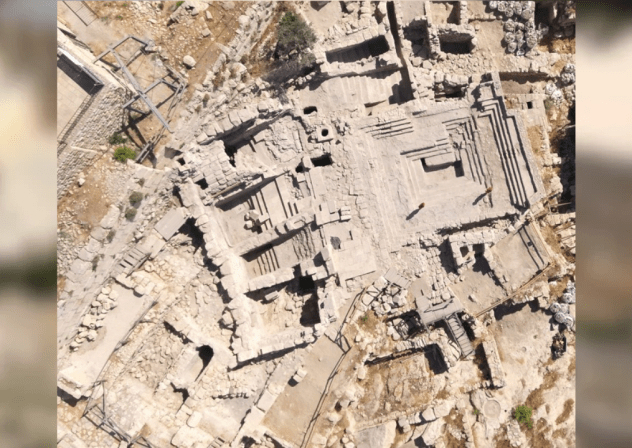
Massive newly-unearthed complex may shed light on how Jewish pilgrims prepared to enter the Temple
The discovery was made during five seasons of excavations, directed by Prof. Uzi Leibner and Prof. Orit Peleg-Barkat of the Hebrew University of Jerusalem’s Institute of Archaeology.

Border Police discover Second Temple-period burial cave during operations in eastern Jerusalem

First Temple-era figurine mold unearthed in Jerusalem's 'most significant excavation' in decades

Days before Tisha B'Av: Charred wooden beams from First Temple’s destruction unearthed in Jerusalem
Inside the tragic, decades-long mystery of Qumran's lost Second Temple incense
The vast majority of material was lost after a 2025 murder. All that remains is a small amount of dust collected from the floor and a few samples preserved by the Jones family.

Ancient tunnel with unknown age, purpose found near Kibbutz Ramat Rachel ahead of Jerusalem Day
After descending a set of ancient stairs from the surface, archaeologists found themselves standing at the hewn opening of the tunnel, found to be filled with hundreds of years of ancient sewage.

US returns two rare, ancient coins to Israel following joint antiquities theft investigation
One of the coins, depicting the Temple's seven-branched menorah, was minted in Hasmonean-ruled Jerusalem, while the other, the second of its kind ever found, was minted in ancient Ashkelon.

IAA reveals new study focused on ancient Jerusalem bullae in honor of Israel Excellence Week
According to the IAA, the study aims to examine Jerusalem's administrative systems from the First Temple period through the end of the Second Temple period.

Israel uncovers Second Temple-period mikveh beneath Western Wall
The ritual bath was found sealed beneath a layer of destruction dated to 70 CE, in which researchers found burned ash and numerous artifacts that offer a snapshot of life just before the city fell.

Ancient lead menorah pendant sheds light on Jewish presence in Byzantine Jerusalem
Cast almost entirely of lead, the pendant is decorated on both sides with an identical image of a menorah framed within a circular border.

Hasmonean era 'first wall' section revealed at Tower of David museum excavation - interview
Israel’s Heritage Minister, Rabbi Amichai Eliyahu, called the discovery: “tangible and moving evidence of Jerusalem’s might and stature during the Hasmonean period.”

New Israeli technology lets archaeologists see underground without digging
Using muon detectors, the team produced detailed images of underground features, including tunnels and cisterns, based on how soil absorbs cosmic radiation.

New digital archive gives global access to Israel’s archaeological treasures
The Israel Antiquities Authority has launched a new database holding over three million historically significant records.

What’s in a name? Diving into the ancient names of biblical Israel
Ancient name data reveals Israel was more diverse than Judah, offering new insight into biblical-era societies through a modern statistical lens.
