Ancient Egypt
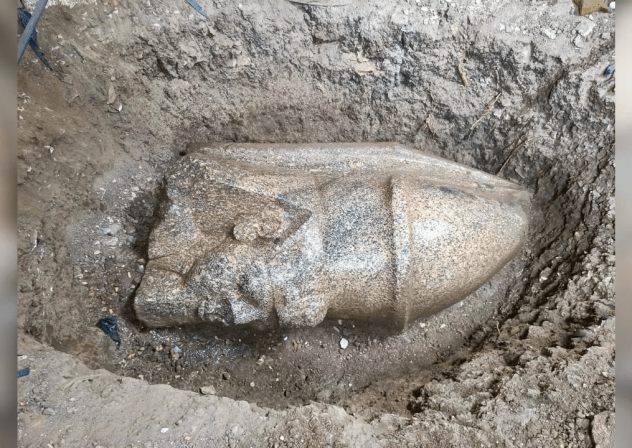
Backyard find: Egyptian farmer unearths statue fragments believed to depict Ramesses II
Alongside the statue fragments, a pink granite block bearing several hieroglyphic inscriptions, including two of Ramesses’ titles: “Nesu-Bity,” meaning “King of Upper and Lower Egypt,” and "Sa Ra."

Ancient Greek elegy dedicated to judge found in ancient Egyptian tomb sealed with protection spells

On This Day: Jean-Francois Champollion announces his success at decoding the Rosetta Stone

Ancient Egyptian fortress uncovers soldiers’ homes, royal inscriptions, and horse burial
Ancient water reservoirs discovered at Red Sea's Port of Aydhab site near Egypt-Sudan border
Archaeological surveys of the site also revealed the foundations of residential buildings, watchtowers, and service facilities located nearby.

Collection of ancient Egyptian, Greek, Roman-era artifacts discovered at Egypt’s Heracleopolis
The finds include the ruins of a Roman basilica and Doric temple, the head of a marble statue of the Greek goddess Aphrodite, several cartouches, and molds used to mint coins in the Roman period.

First near-complete ancient Egyptian funerary set discovered at Heliopolis necropolis site
In antiquity, Heliopolis served as a primary religious center for the worship of Ra - indicated by the Al-Masalla obelisk of the Temple of Ra-Atum.

Korean, Egyptian archaeologists find ancient temple gate blocks during restoration work in Luxor
The Ramesseum, located in a necropolis near Luxor, serves as a religious and political record of Pharoah Ramesses II’s reign. It is the second largest temple in Egypt.

Over 30 mummified cats, ancient Egyptian tombs, coffins discovered at Luxor necropolis site
According to preliminary studies, four of the coffins date to the 18th Dynasty, including one bearing the name of Merit, believed to be a chantress of Amun.

Egypt exhibits rare artifact from King Tut's tomb, two restored New Kingdom tombs in Luxor
The tombs that were opened are those of Rabuya and his son Samut from the 18th Dynasty, the first of the New Kingdom dynasties. Rabuya and Samut served as door keepers of the deity Amun.

US repatriates over 300 artifacts to Italy, including ancient Roman funerary stone found by FBI
Among the most significant items unveiled at the ceremony were a marble head of Alexander the Great dating to the first century CE, which was stolen from a Rome museum in 1960.

Mummy CT scan reveal ancient Egyptian might've suffered from osteoperosis
The discovery comes as part of an ongoing study using CT scans to order to analyze the remains of six different mummies, the oldest of which dates back approximately 2,300 year.

Great Pyramid of Giza was built over course of 20 years, using multiple ramps, new study claims
Roig’s model found that using a single ramp would have been insufficient and would have required nearly half a century of construction to reach the pyramid’s completion.

Partial statue of Ramesses the Great found in ancient Egyptian capital city along Nile
Ramesses II (“Ramesses the Great”) is believed by many to have been the pharoah in the biblical story of the Exodus.
