The Kurdistan Region of northern Iraq is facing a new political crisis as tensions grow between its two largest political parties, the Kurdistan Democratic Party (KDP) and the Patriotic Union of Kurdistan (PUK).
This is seen as potentially weakening and dividing the semiautonomous Kurdish Region in northern Iraq at a time when it can least afford to be divided. The region faces threats from Iran and needs to negotiate with Baghdad.
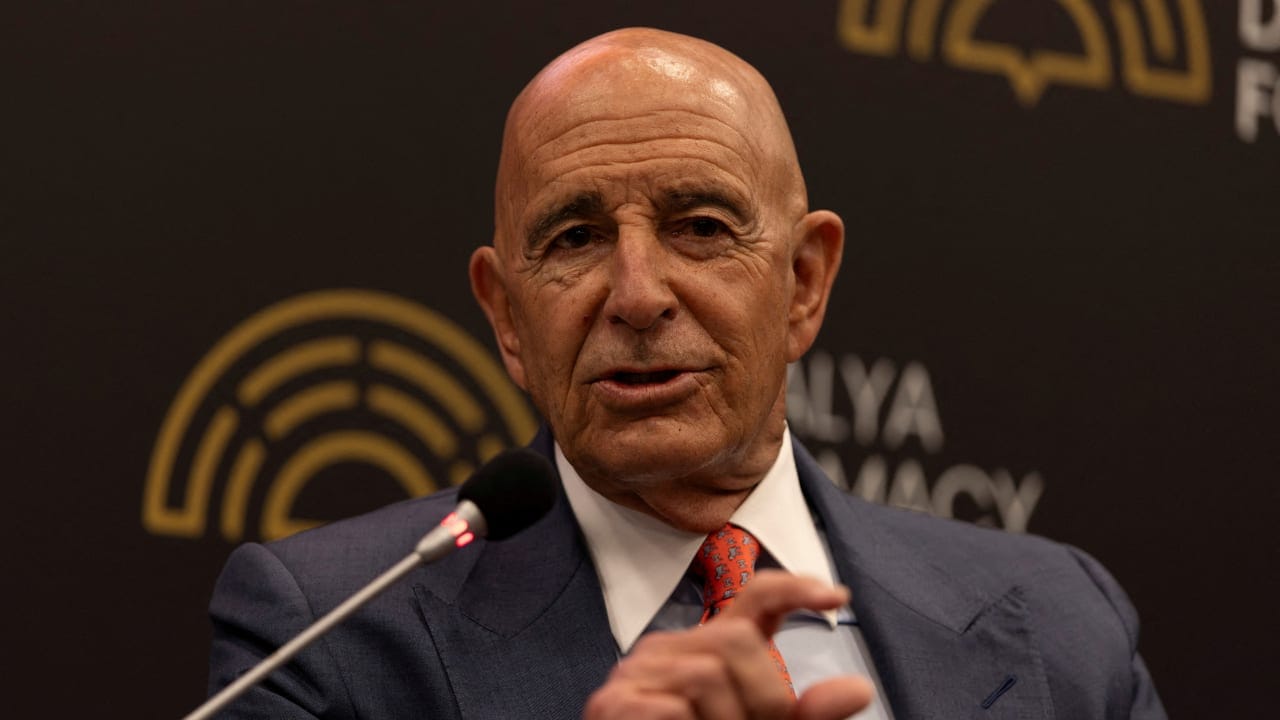
The crisis has drawn attention from the United States. US Ambassador to Turkey Tom Barrack, who is the US envoy to Syria and Iraq, has been emphasizing the importance of a strong and united Kurdistan Regional Government (KRG).
The KDP and PUK have dominated Kurdish politics in northern Iraq for decades. The KDP, led by Masoud Barzani, is traditionally strongest in Erbil and Duhok. The PUK, led by Bafel Talabani, is based primarily in Sulaimani, a region and city near the Iranian border.
Both parties maintain extensive political and security networks and have historically competed for influence within the Kurdistan Region. The KDP is generally seen as closer to the US and the West, while the PUK is seen as closer to Iran and also has historic ties with the UK and the West.

Their rivalry dates back decades, including a period of armed conflict in the 1990s. Between 1998 and 2006, the Kurdistan Region effectively operated under two administrations, with the KDP controlling Erbil and Duhok and the PUK administering Sulaimani.
The parties eventually reached agreements to reunify the government, but their rivalry has continued to shape Kurdish politics. It has also affected the KRG’s Peshmerga internal security forces, meaning many of its units are divided as well. Despite attempts at reform, this has remained an issue.
The latest crisis emerged after the KDP moved to reactivate the Kurdistan Parliament following almost two years of legislative paralysis. The parliament had remained largely inactive since the October 2024 regional elections because the parties could not agree on forming a new government.
The KDP won 39 seats in the 100-seat parliament, while the PUK secured 23. Neither party has enough seats to govern alone, making negotiations over senior positions and cabinet portfolios essential.
The KDP secured the attendance of 52 lawmakers, narrowly surpassing the 51-member quorum required to convene parliament, Kurdistan Region-based news channel Rudaw Media Network reported.
The session included KDP lawmakers, minority representatives, members of smaller parties, and several legislators who broke ranks with their parties, including three PUK members.
Lawmakers elected KDP politician Vala Farid as parliament speaker, Christian representative Rami Noori as deputy speaker, and Turkmen representative Muna Qahwachi as parliament secretary.
The PUK rejected the move. PUK leader Bafel Talabani described parliament’s resumption as “illegal, far removed from the principles of genuine partnership, and it is an attempt to impose the will of a single party.”
Tensions in region date back years
The tensions go back years. During the 2017 crisis, after the KRG held a referendum on independence, Bafel Talabani was accused of agreeing to a controversial deal to hand over Kirkuk to Baghdad. This led to a collapse of the Peshmerga lines and the swift conquest of Kirkuk by Iraqi federal forces and Iranian-backed militias.
Bafel Talabani recently announced that the PUK would withdraw its officials from the KRG cabinet.
“This government has failed,” he said in a video statement, according to Rudaw. “Therefore, the first decision of the PUK leadership following this thing [parliament reactivation] is that we will immediately withdraw from this failed government, which calls itself the government of Kurdistan.”
The PUK also said it would not recognize the reactivated parliament or participate in future sessions.
Bafel Talabani has consolidated his position within the PUK. Lahur Talabani and his brother were pushed out, and they were arrested after an armed clash last year.
The dispute in the KRG reflects disagreement over how the Kurdistan Region should be governed. The KDP argues that parliament should resume its legislative responsibilities independently of negotiations over forming a new cabinet. The PUK maintains that the parties must first reach an agreement on senior government positions and power-sharing arrangements.
A lot of these disagreements can be bridged, but the fundamental divisions won’t change.
“I was pleased to speak with [Barrack] following my visit to Baghdad,” Kurdistan Region Prime Minister Masrour Barzani said on Monday. “We agreed that the KRG must remain strong and unified, and that our disputes with the federal government must be resolved in accordance with the Iraqi Constitution.
“To that end, we both welcomed today’s progress with [Iraqi] Prime Minister [Ali al-Zaidi] and his team on the federal budget law, and we look forward to finalizing an agreement on oil and gas... during the call, we also reaffirmed the already strong KRG-US partnership.”
Barrack shared his statement and said unity was important for stability in Iraq.
The PUK’s withdrawal has raised concerns about a possible return to the two-administrations system. This would weaken the KRG and basically divide it, making it easier for Iran and others to influence the region by using a kind of “divide and conquer” strategy to play the Kurdish parties against each other.
The Kurds know this, and they have dealt with this challenge for years.
In many ways, the KRG now has opportunities to make progress despite the crisis. For instance, the PKK has a new peace process with Turkey, which has reduced tensions in the KRG. Turkish forces are redeploying and reducing their presence.
Erbil crisis could weaken Kurdish political institutes
Nevertheless, the crisis in Erbil has ramifications. “They appoint the president of the region; we appoint the president of the region,” Rudaw quoted Talabani as saying. “They appoint the prime minister; we appoint the prime minister. They appoint a minister; we appoint a minister.”
As noted, this could weaken the Kurdistan Region’s political institutions and complicate relations with Baghdad at a time when the region faces major economic and security challenges. Nevertheless, there have also been efforts to reduce tensions.
On Monday, KDP leader Masoud Barzani called for renewed dialogue with the PUK.
“The interest of the people of Kurdistan is greater than any other interest or objective,” he said.
“On this basis, I call upon our brothers in the Patriotic Union of Kurdistan to sit down together with the Kurdistan Democratic Party, resolve the issues, and put an end to the political crisis in the Kurdistan Region,” he added.
KDP spokesperson Mahmoud Mohammed welcomed the initiative.
“In light of His Excellency the President’s [Barzani] initiative, we are ready for dialogue and meetings with our brothers in the PUK to resolve issues and end the political crisis in the Kurdistan Region,” he said.
The dispute is also closely connected to longstanding disagreements over the distribution of revenues and public-sector salaries.
On Wednesday, Barrack reported about a meeting with key officials.
“Today, Darbaz Rasool, member of the PUK Political Bureau, and Ahmed Mufti, Deputy Minister of KRG Natural Resources, joined me for a discussion on the Kurdistan Region’s future,” he posted on X/Twitter. “The US supports a strong, united Kurdistan Region that reflects the Region’s diversity. As we discussed, lasting unity can only be achieved by devolving authority, empowering local government, strengthening institutions, and promoting greater transparency.”