The reported kidnapping and killing of former Iraqi parliamentarian Ahmed al-Alwani in Beirut has shocked the region and generated intense interest.That a former member of parliament was kidnapped and killed has led to articles that focus on the crime’s drama. The case has attracted attention in Iraq, the United Arab Emirates, Lebanon, and numerous Arab media outlets.
New details are emerging about Alwani’s arrival in Beirut, the apartment where his body was reportedly discovered, and the mysterious movements of several individuals before his disappearance.
Alwani was a prominent Sunni politician from Iraq’s Anbar Province who spent more than a decade in prison under a death sentence before being released in April 2025. His political background, opposition to former Iraqi prime minister Nouri al-Maliki, and the circumstances of his imprisonment have added to the questions surrounding his reported killing.
Alwani’s imprisonment in 2013 came during the era when Iraq was divided by sectarianism. Maliki was seen as suppressing Sunnis. Within that context, ISIS rose in Iraq in 2014.
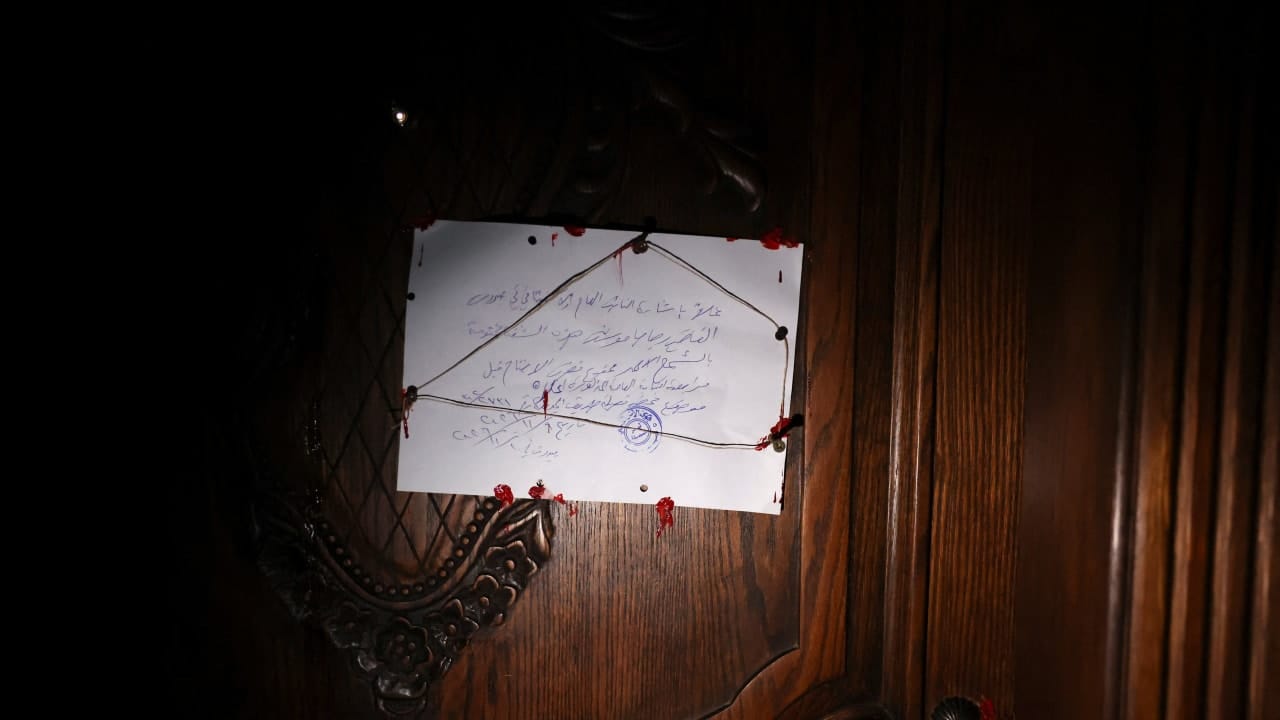
A body believed to be that of Alwani was found in an apartment in Beirut’s Tariq al-Jadida neighborhood, Lebanese media outlets reported on Tuesday. Subsequent reports, however, raised questions about the identification of the remains.
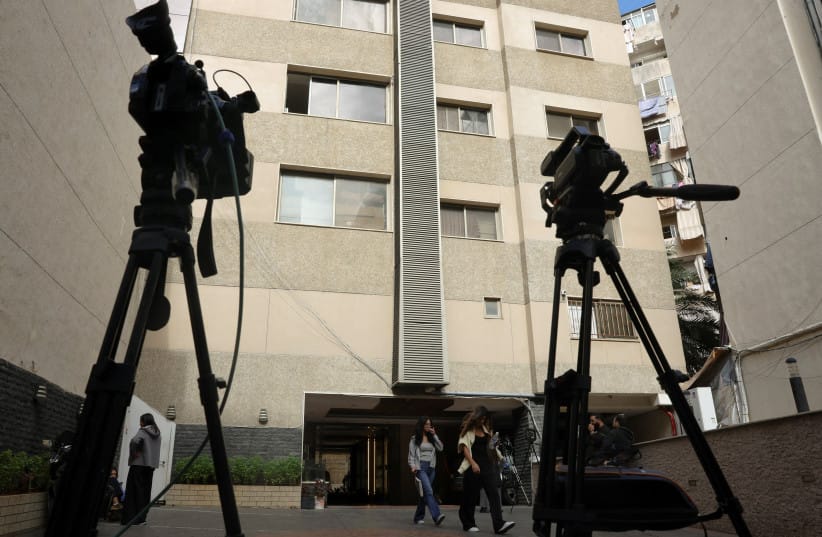
On Wednesday, the Iraqi Embassy in Beirut said DNA testing was needed to confirm the identity of the body because of its condition, UAE-based news site Al-Ain News reported.
Iraqi Ambassador to Lebanon Mohammed Reda al-Husseini said Lebanese authorities had opened an investigation and appointed a judge to oversee the case, the report said.
“We are in contact with the Lebanese security services to follow up on the circumstances of al-Alwani’s murder, and we are waiting for the final report from the Lebanese security services to announce the circumstances,” he said.
Conflicting reports emerge over al-Alwani's movements in Beirut
The uncertainty over the identification of the body is one of several elements that have made the case particularly intriguing.
Alwani’s family had informed the Iraqi Embassy in Beirut that they had not heard from him for four days, Saudi Arabia-based newspaper Arab News reported. His phones were switched off, and his companions reportedly did not know his whereabouts. The family raised the alarm before reports emerged that his body had been discovered.
Alwani was believed to have been lured to the apartment where he was subsequently killed, the report said. Security forces had arrested one person suspected of involvement in the killing, a person familiar with the matter said.
Lebanese authorities, however, have not issued an official statement identifying suspects or detailing the circumstances of his death. Investigators were reportedly seeking to establish why Alwani went to the apartment and what happened before he was killed.
Alwani’s media office on Wednesday had issued a statement calling for a comprehensive investigation, Beirut-based newspaper Al Akhbar, which is pro-Iranian and considered close to Hezbollah leaders, reported. Alwani had arrived at
Beirut’s Rafik Hariri International Airport on November 5, the office said.
According to the statement, surveillance footage showed several people leaving an apartment associated with Alwani about 14 minutes after his plane landed. The timing has raised questions about whether those individuals knew about his arrival in advance.
Alwani’s media office called on investigators to identify the people in the recordings and find their connection to the apartment and the suspected crime. It also urged authorities to examine airport surveillance footage, building cameras, and recordings from surrounding roads, as well as flight information and entry records.
Considering Lebanon’s usual slow-paced investigation of crimes and its inability to prosecute Hezbollah members, it remained unclear how professional the investigation will be.
“According to the information available to us, Ahmed al-Alwani was not in any hotel on the day of his arrival in Beirut,” the former Iraqi MP’s office said, Al Akhbar reported.
This appears to contradict other accounts of his movements. UAE-based news site Al-Ain News, citing an Associated Press report based on Lebanese security and judicial sources, said Alwani initially had booked a hotel room in Beirut’s Hamra district before moving to an apartment in Tariq al-Jadida.
According to the report, three individuals, two Syrians and a Lebanese citizen, had rented the apartment for two days for $200.
The real-estate agent reportedly attempted to contact the occupants after the rental period expired but received no response. Police subsequently entered the apartment and discovered the body.
Initial reports indicated that the victim had suffered a blow to the head before being strangled. Alwani apparently had been strangled, Arab News reported.
Could the killing have political or sectarian motives?
These details have fueled a media frenzy and speculation about whether the incident involved a planned kidnapping.
There are questions about whether this was politically motivated. Does it have a sectarian side to it? Is this about Iraq? Is it possible that Kataib Hezbollah in Iraq worked with Hezbollah in Lebanon to target him?
None of these possibilities has been explained by investigators, and no conclusions have been provided to the media.
Lebanese authorities have placed the case under judicial supervision. Judge Ahmed Rami al-Hajj, the public prosecutor at the Court of Cassation, was personally overseeing preliminary investigations conducted by the Internal Security Forces’ Information Division, Al Akhbar reported.
The involvement of senior judicial officials reflects the significance of a case involving a former Iraqi parliamentarian whose political career was marked by controversy.
Alwani emerged as an influential Sunni politician in Anbar Province during the years following the American withdrawal from Iraq in 2011. He was associated with the protest movement that developed in late 2012 and continued through 2013 against the government of Nouri al-Maliki.
Protests at the time reflected broader tensions between Baghdad and Sunni communities in western Iraq.
Alwani became one of the political figures associated with the movement.
In December 2013, Iraqi security forces raided his home in Ramadi. His brother and several others were killed, and Alwani was arrested. He was subsequently sentenced to death in 2014.
Alwani’s detention became an international human-rights issue, with the Inter-Parliamentary Union (IPU) – currently comprising the national parliaments of 183 countries, with 15 associated members, mostly regional parliaments – campaigning for his release.
After more than 11 years in detention, Alwani was released in April 2025 following legal proceedings and developments connected to Iraq’s general amnesty law.
His murder in Beirut less than two years later has brought that history back into focus.
There is also a wider regional dimension.
Iraq’s Sunni political landscape has changed considerably since the protests of 2012 and 2013. Meanwhile, Iranian-backed factions have expanded their influence within Iraq’s political and security institutions, and tensions over their role continue. Iraqi Prime Minister Ali al-Zaidi has been trying to rein in the militias.
Alwani’s past opposition to the Maliki government and his prominence in Anbar mean the killing has potential wider implications. His political background alone, however, does not establish a motive for the crime.
Some regional coverage has raised questions about Hezbollah. Al-Ain News cited separate investigations involving five alleged Hezbollah members arrested near Batroun in northern Lebanon. The information provided does not establish any connection between those arrests and Alwani’s case.
Many questions remain about his movements and how he was kidnapped. There are also questions about the surveillance footage showing people around the apartment.
The reported arrest of a suspect should provide investigators with information, but it remains unclear what role the individual played in the incident.
The contradictions between accounts of Alwani’s whereabouts raise questions.
For Lebanon, the case raises questions about security and the ability of investigators to establish what happened to a foreign political figure in Beirut.