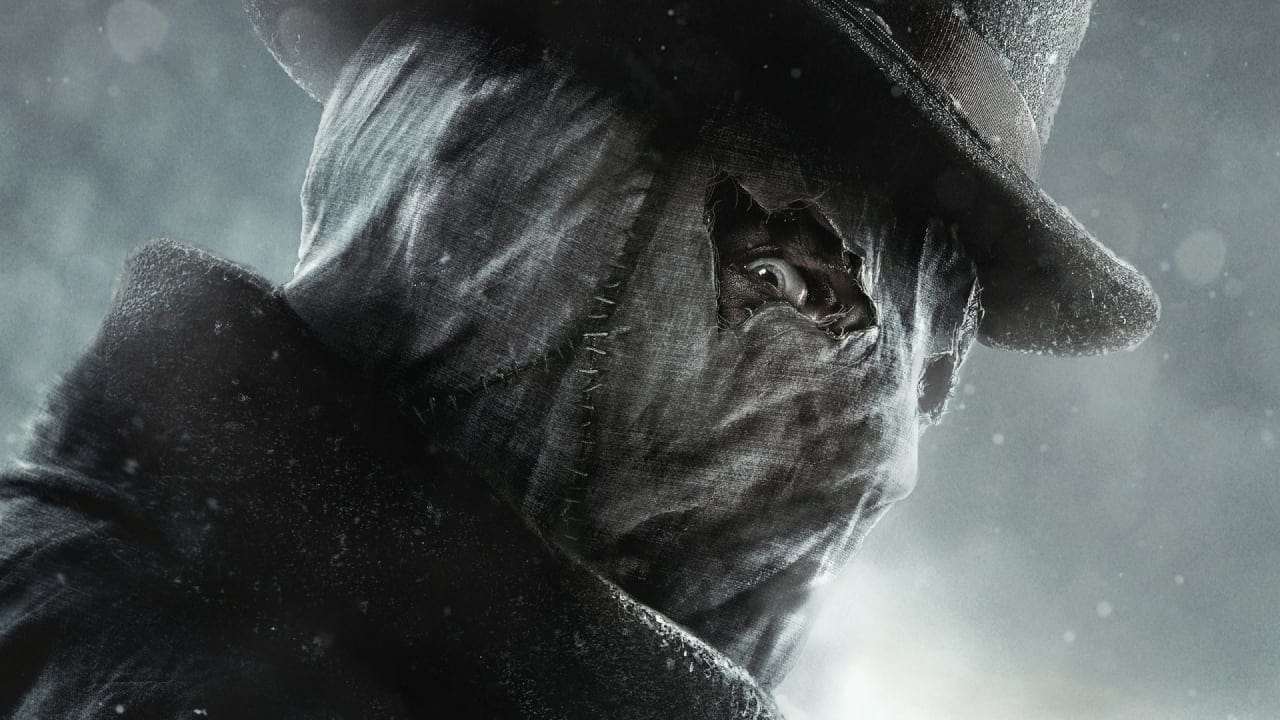
A British historian claimed he had conclusive evidence that a Polish-Jewish barber named Aaron Kosminski was behind the crimes of Jack the Ripper, the notorious serial killer who terrorized the streets of Whitechapel, London, more than 130 years ago.
Historian Russell Edwards has recently renewed his efforts to have a formal inquest into Kosminski’s involvement in the Ripper murders.
In a book published last year, Edwards asserted that Kosminski was responsible for the murders, basing his theory on forensic testing of a shawl said to have been found near the body of Catherine Eddowes, one of the Ripper’s so-called Canonical Five victims.
Edwards purchased the shawl in 2007. He later commissioned a forensic analysis of blood and semen traces found on it, comparing the results to DNA samples from living descendants of both Eddowes and Kosminski. Speaking to NewsNation, Edwards said, “Oh, without a doubt, 100% it’s him.”

Jack the Ripper, prolific serial killer
Jack the Ripper operated in Whitechapel in 1888. His five official victims – prostitutes living in the impoverished East End – were murdered with exceptional brutality. The killer mutilated the bodies and removed internal organs, leading investigators to believe he had anatomical or surgical knowledge.
Initially, the H Division of the Metropolitan Police investigated the murders, but Scotland Yard soon took over the case. Despite intensive efforts, the killer was never caught, and the case remained unsolved – hindered by limited evidence, rudimentary forensic techniques, and the lack of a credible witness or suspect.
Who was Aaron Kosminski?
Kosminski, a Polish immigrant and barber, lived in Whitechapel at the time of the murders. He was committed to a psychiatric asylum in 1891 after threatening his sister with a knife. According to records, he suffered from auditory hallucinations and paranoia and refused to eat food not prepared by himself.
Although the police suspected him, he was not viewed as violent and spent the remainder of his life in institutions. He died in 1919.
Previous claims that the case was solved
The claim that Edwards has solved the Ripper case is not the first to rely on genetic evidence.
In the early 2000s, American crime writer Patricia Cornwell funded an analysis of DNA samples from letters allegedly sent by the Ripper. Based on the findings and other clues, she concluded that the murderer was British painter Walter Sickert.
In 2006, an Australian scientist analyzed the same letters and claimed the Ripper may have been a woman.
Some are sceptical of Edwards’ research
While Edwards insisted the DNA results are conclusive, many experts remain skeptical. The mitochondrial DNA (mtDNA) testing used in his analysis identifies maternal lineage and is often employed in cold cases in which nuclear DNA is degraded. However, mtDNA does not offer the specificity needed to positively identify a suspect.
Dr. Hansi Weissensteiner, an expert in mtDNA at Innsbruck Medical University in Austria, said, “Based on mtDNA, one can only exclude a suspect,” emphasizing that while the DNA might match Kosminski’s maternal line, it could also match many others.
Compounding the doubt is the shawl’s provenance. It was never preserved as official evidence and has changed hands multiple times over the last century, raising the likelihood of contamination.
Geneticists have previously criticized Edwards’s work for methodological flaws and for overstating the statistical certainty of his findings.
Case closed?
While Edwards remains confident he has uncovered the truth behind one of history’s most infamous serial killers, many in the academic and forensic communities disagree.
After more than a century, with evidence degraded and sources uncertain, it is unlikely the mystery of Jack the Ripper will ever be conclusively solved.