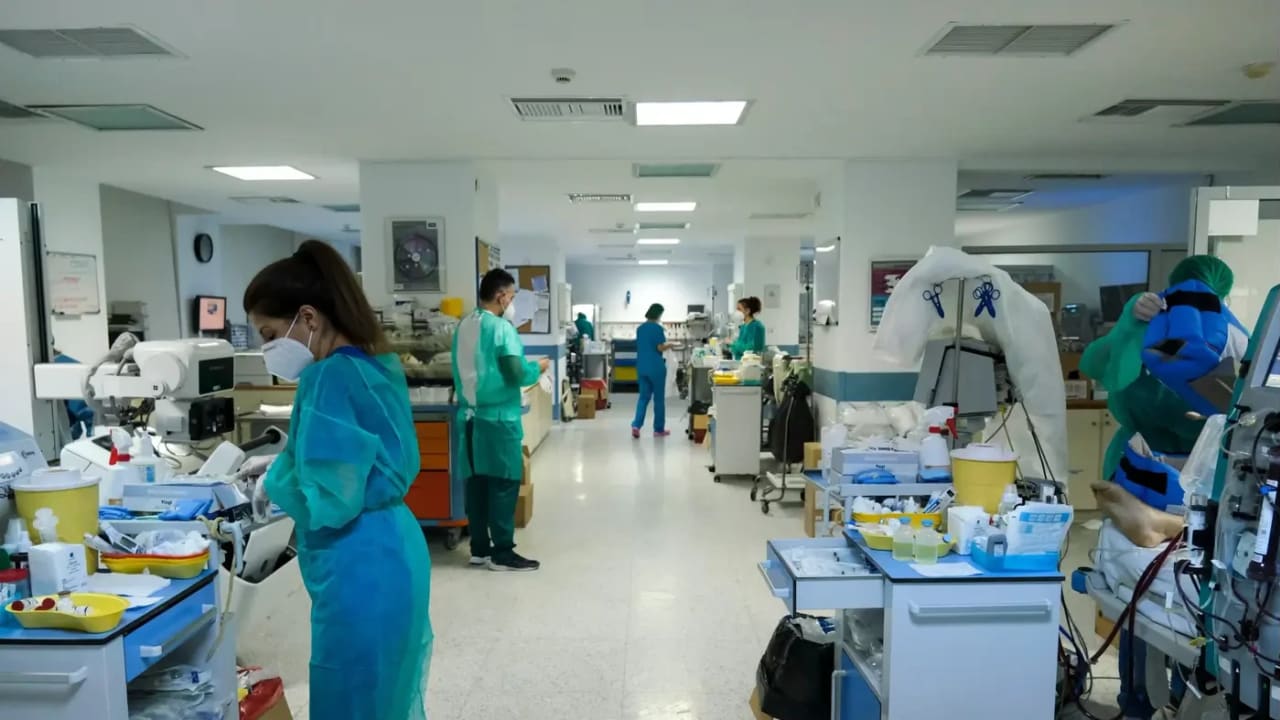
Two years after the Swords of Iron war, and despite the hospital’s significant challenges during the war — even before the Iranian missile strike — Soroka Medical Center was chosen as the top-ranked tertiary hospital in the national Health Ministry survey on patient experience.
The survey findings show that the hospital in southern Israel leads with an 85% satisfaction rate for the hospitalization experience, above the national average of 82%. Other major tertiary hospitals follow: Sheba, Ichilov, and Beilinson with 83%, Rambam with 81%, and Hadassah with 80%.
Among the large hospitals, Meir Medical Center in Kfar Saba tops the list with 84%. Shaare Zedek follows with 82%, Shamir Medical Center with 78% along with Wolfson Hospital, and Nahariya closes the list with 77%.
Among medium-sized hospitals, Carmel Hospital scored 85% satisfaction, Bnei Zion 84%, Emek 83%, Kaplan 80%, Barzilai 79%, and Hillel Yaffe in Hadera 75%.
Regarding smaller hospitals, Laniado in Netanya leads with 88%, the Scottish Hospital with 87%, the Holy Family Hospital with 86%, Mayanei HaYeshua with 86%, Yoseftal Hospital with 86%, Ziv Medical Center with 85%, Assuta Ashdod with 82%, Hasharon 82%, Hadassah Mount Scopus with 75%, and Poria with 74%.
A total of 11,553 respondents participated in the survey, conducted by telephone up to two weeks after hospital discharge. The survey was conducted in Hebrew with 67% of respondents, Arabic 17%, Russian 6%, other languages 6%, and 4% refused to answer.
The age range was from 18 to over 75. 31% of respondents were over 75, and 11% were aged 18 to 34. 57% were men and 43% women. 89% were patients, and only 11% were companions. 93% reported they did not stay in a corridor, compared to 7% who did. Additionally, 65% of respondents had been hospitalized more than once at the hospital. The survey included patients and companions from inpatient departments — internal medicine, surgical, and other inpatient wards — but did not include maternity, pediatrics, intensive care, rehabilitation, psychiatry, women’s health, day hospitalization, emergency, or outpatient clinics.
86% of respondents answered “to a large extent” or “to a very large extent” when asked: “To what extent did you feel during hospitalization that you were in good hands?” The attitude index received a score of 84%, the discharge index 83%, the ease-of-care index 78%, and the conditions index 76%.
Hospitals operated by Clalit lead with 83% patient satisfaction, compared to government hospitals with only 80%.
What do hospitals need to improve?
In the attitude index: Privacy received a very high score of 89%, response to pain 85%, personal attention 83%, and introducing oneself by name and position 77%.
In the conditions index: Cleanliness received only 78%, companion conditions 77%, sanitary conditions in rooms and showers 75%, and quiet in the ward only 73%. The discharge index stood at 83%.
In the open-ended question, “What do you think should be improved?” consensus was found around cleanliness and sanitation, with 16% mentioning it. 13% focused on physical conditions and facilities, and another 13% on staff and patient interactions.
Other responses mentioned hospital food (11%), staff shortages (11%), room overcrowding (7%), quiet and noise (6%), and waiting times (5%).
The older you are — the more satisfied you are
The first factor examined was where the patient was hospitalized — in a room or in a corridor. Among those hospitalized in corridors, only 67% were satisfied, compared to 83% satisfaction among those in rooms.
Another interesting finding: Patients were more satisfied (82%) than their accompanying family members (74%). Internal medicine departments showed lower satisfaction (76%) compared to other departments. The older the patient, the higher the satisfaction: 85% among those aged 55 and above, compared to 78% among those aged 25 and up. Additionally, English speakers were more satisfied than speakers of other languages.
These findings illustrate the exceptional dedication of medical teams to providing humane and professional care in every situation and reflect the central importance of the personal connection between caregiver and patient. Analysis of the survey indicates that the quality of human and professional interaction is the most influential factor in patients’ hospital experience — an especially encouraging finding that proves that even under challenging physical conditions, the human element has the greatest impact on shaping patient experience.
On the national level, the “good hands” measure received the highest score — 86%, followed by the attitude index at 84%, discharge index at 83%, ease-of-care index at 78%, and the conditions index at 76%. Departmental results show that internal medicine wards received lower scores in most parameters compared to surgical and other departments.