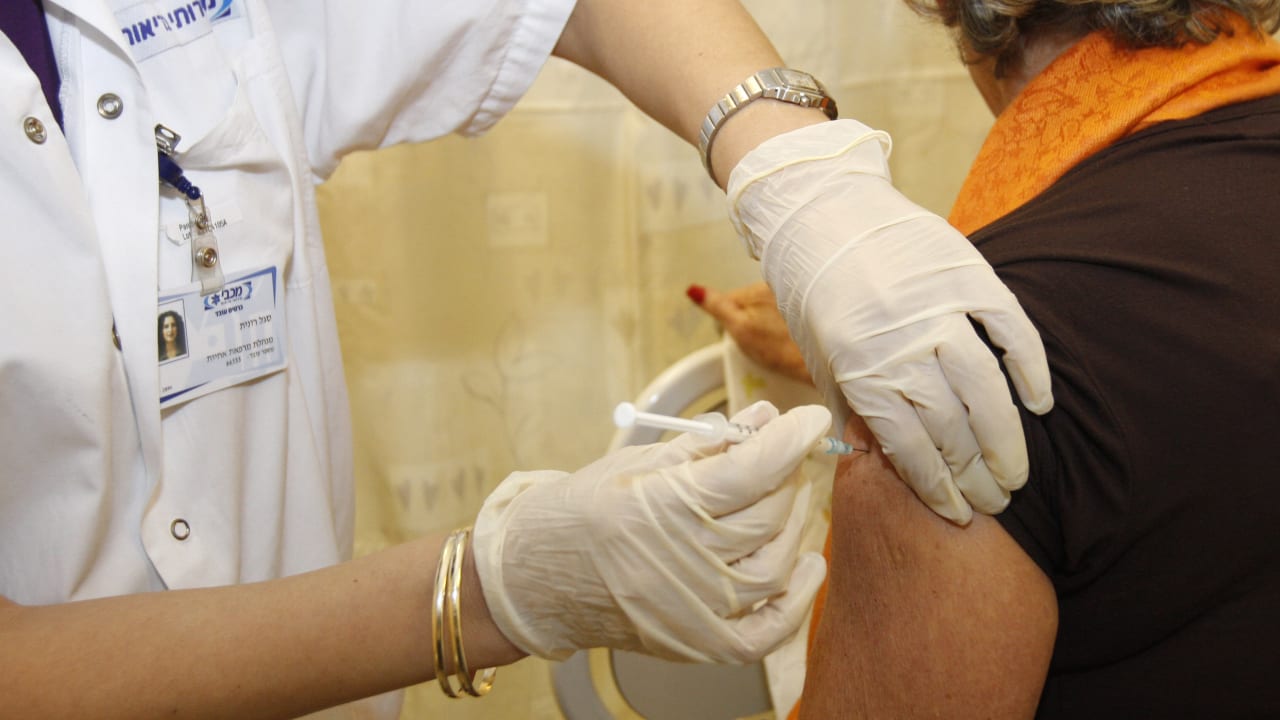
Amid severe seasonal morbidity and a poor public response to flu vaccinations, health fund leaders and officials clashed on Sunday at the Friends for Medicine National Conference on Pharmaceutical Security over whether to impose penalties on those who refuse to be vaccinated.
While some called for economic penalties, others advocated for a softer approach, emphasizing public education and easier access to vaccines. The debate unfolded as Health Ministry data revealed that only 17% of the population has received the flu vaccine this winter.
Leumit Health Services CEO Haim Fernandes said that people who refuse vaccinations should face consequences.
“Penalties need to be imposed on those who do not get vaccinated,” Fernandes said. “This can be addressed through child allowances or restricting benefits, so people understand that their choices carry economic implications.”
Baruch Liberman, CEO of the nonprofit Friends for Medicine, stressed the daily struggles faced by vulnerable populations.

“We meet patients every day who have to choose between food and medicine,” he said. “We help thousands continue their lives. We are not replacing the state, but we are here for the patients.
We feel like another health fund. We thank the pharmaceutical companies and the health system, especially the health funds, which operate despite the difficulties. We are all Friends for Medicine.”
MK Yonatan Mashraki, a member of the Knesset Health Committee and its former chairman, noted the organization’s critical role in providing medicine.
The responsibility for pharmaceutical security lies with the state
“More than 7,000 patients receive medications from Friends for Medicine. Without it, they would be left without treatment,” he said. “Since October 7, the organization has handled over 10,000 requests. The responsibility for pharmaceutical security lies with the state, not with individual organizations.”
He added that the government must develop a mechanism to ensure that the annual update to the state-subsidized drug basket happens regularly without renewed battles each year.
Health Ministry Director-General Moshe Bar Siman Tov said the system continues to face exceptional pressure following the war.
“We are proud of our health system, which deals with challenges that other countries do not even consider,” he said. “Only we are handling the aftermath of October 7, treating wounded soldiers, launching mental health initiatives, and more.”
Bar Siman Tov noted that while the drug basket receives praise, many patients still lack access to needed medications. He said the ministry is working to identify gaps in coverage, reduce co-payments, and assist chronic patients.
“Friends for Medicine plays an important role in advancing justice, equality, and mutual aid. That is what makes Israeli society work,” he added.
Health Minister MK Haim Katz, who did not attend the event, sent a recorded greeting.
Dr. Eran Rotman, deputy CEO and head of the Health Division at Maccabi Healthcare Services, said vaccination among medical staff should not be voluntary.
“A medical staff member has a duty to get vaccinated. There is no question here at all,” he said. “A parent who refuses to vaccinate a child endangers the child and everyone around them.”
Maccabi reported a 40% increase in flu vaccinations this year compared to the same period last year, although overall rates remain low.
Prof. Doron Netzer of Clalit Health Services called for stronger regulations and referenced international models.
“In parts of Europe, unvaccinated children are not allowed to attend school. We need to implement similar rules,” he said. “We did this during the COVID-19 pandemic. This current situation is a failure of the Health Ministry.”
The head of Meuhedet Health Services, however, warned against punitive measures, especially among sectors that require tailored outreach.
“Sanctions don’t work in Israel,” he said. “What is needed is accessibility and understanding. We’ve succeeded in raising vaccination rates in the haredi community through walk-in vaccinations and community outreach.”
The debate takes place amid an alarming rise in flu-related hospitalizations and deaths. Since the start of the flu season, the Health Ministry has reported 70 deaths within 30 days of diagnosis, including five children, three of whom had not been vaccinated. Sixty-five of the fatalities were among people aged 65 and over.
As of Sunday, approximately 3,000 flu patients were hospitalized, including 978 children. Fifty-one patients were in serious condition in intensive care. Health officials say the main cause of the widespread infections is a mutant sub-strain of influenza A(H3N2), known as the “K strain,” which emerged last summer and is more infectious than strains in previous seasons.
Hospitals are also facing an increase in cases of respiratory syncytial virus (RSV), which primarily affects infants. The ministry confirmed 160 cases and one death linked to RSV, a one-year-old child.
Despite public health warnings, the response has remained muted. As of the end of December, only 1.64 million Israelis had received the flu vaccine, with a vaccination rate of just over 50% among those aged 65 and above, down from 55% last year.
Prof. Netzer said the strain is being felt outside hospitals as well.
“We have seen a 20% increase in home hospitalizations due to winter illnesses,” he said.
The Health Ministry continues to encourage the public to get vaccinated, stating that the vaccines currently available offer strong protection against the dominant strains.