
Norway must strengthen teacher training to tackle antisemitism, a European human rights watchdog said on Wednesday, warning that Jewish pupils have faced increased harassment and bullying since October 7, 2023.
The European Commission against Racism and Intolerance (ECRI), established by the Council of Europe, is an independent human rights monitoring body specializing in preventing and combating racism, intolerance, and related discrimination.
The recommendations of its sixth report on Norway were adopted in December 2020, and since then, ECRI said, the nation has made progress in a number of fields. Its seventh report was released Wednesday.
A lot of its discussion revolves around Roma people, Romani/Tater population [a Roma subgroup in Scandinavia], and LGBT+ individuals; however, there are also notes on Norway’s policies toward Jews and Muslims.
ECRI wrote that recent surveys suggest that antisemitic attitudes are not widespread in Norway. Nevertheless, a 2024 survey conducted by the Norwegian Center for Holocaust and Minority Studies revealed that there was an increase in negative attitudes toward Jews following the Hamas attacks of October 7, 2023.
According to recent statistics on hate crimes published in the police’s annual hate crime report, 2024 saw 45 incidents of antisemitic hate crimes.
ECRI also noted reports of increased antisemitic harassment and bullying in schools following October 2023. Several NGO representatives who met with ECRI’s delegation indicated that Jewish pupils felt increasingly unsafe in school.
The watchdog commended several existing programs in Norway designed to combat antisemitism, including the federal Action Plan Against Antisemitism, the Jewish pathfinder scheme in schools, and Democratic Preparedness Against Racism and Antisemitism (Dembra), a program for schools the prevents racism, group-based hostility, and anti-democratic attitudes.
Dembra’s website provides teaching materials dealing with anti-Muslim racism, antisemitism, hate speech, and extremism. Schools, as part of their participation in Dembra, can also visit the Norwegian Center for Holocaust and Minority Studies (HL Center).
Nevertheless, ECRI recommended, “as a matter of priority,” that the authorities strengthen the capacity of the educational system to deal with sensitive societal issues related to antisemitism and anti-Muslim racism by providing teachers and school principals with compulsory and practical training, together with appropriate support material.
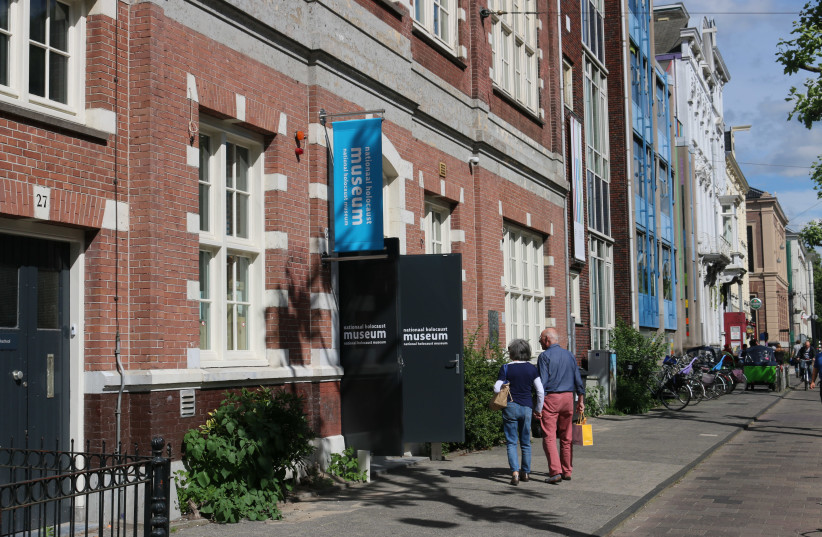
HL CENTER has been in the news this week after its director resigned following a turbulent term at the helm. Jan Heiret, who took over the position in 2024, will resign from the role with immediate effect, citing a lack of support from the board.
“In the situation that has arisen, I feel that the board no longer supports me. Without such support, it is impossible to do a good job as the head of the center. Therefore, I have come to the conclusion that I have to step aside,” Heiret said.
Difficult relationship developed between director, Norway's Jewish religious communities
Chairman of the Board Hans Petter Graver noted, “Over time, a difficult relationship has developed between the director and Jewish religious communities in Norway. The HL Center is dependent on the trust of these institutions, which helped establish the center as a research and dissemination centre with a broad mandate.”
Heiret will move to a research position at the center, and Graver will act as interim director.
The director’s exit follows extensive efforts by the Jewish community to oust him over, among other things, his views on the Israel-Hamas War and his calling it “genocide.”
In June 2025, Heiret told Aftenposten that “Based on the fact that leading researchers are increasingly in agreement, it is likely that a genocide is taking place in the Gaza Strip, at least in a political and social sense.”
Additionally, Heiret chose to mention Gaza during his speech on International Holocaust Remembrance Day 2025, which Louise Kahn, founder of Kos & Kaos: The Nordic Jewish Network, and Robert Hercz, the head of B’nai B’rith Norway, both condemned as “distortion.”
“Many saw this as inappropriate, revitalizing the Holocaust and feeding the dangerous narrative that equates Israel with perpetrators of genocide,” Kahn told The Jerusalem Post in August 2025, during a visit to Oslo.
When interviewed by the Post at the time, Heiret said he considered it his duty under the center’s mandate to discuss modern genocide and modern risks of genocide.
“We have a very broad mandate. Of course, Holocaust and antisemitism, that’s why we are here, but at the same time, we work with all kinds of racism, such as Islamophobia.”
Heiret said he did not claim that Israel is committing genocide, but that it’s “important for the international community now to try to stop what’s going on in Gaza.” He did, however, accuse Israel of “ethnic cleansing” in the Strip.
In terms of Zionism, the center “defends Israel’s right to exist.” However, Heiret said, “Zionism is a very difficult concept; there are very many definitions, and some of them are difficult to defend.”
At the end of the conversation, he encouraged the Post to speak to the anti-Zionist pro-Palestinian Jewish group.
Heiret’s stance angered many in the Jewish community who felt he was taking their funding (the center was established with restitution funds) and using it to “stab the Jewish community in the back.”
Norwegian B’nai B’rith sent a letter to the board of the HL Center in January 2025, asking it to reconsider the director’s position, arguing that the community no longer “had confidence in Heiret’s ability to convey the real story about the genocide in the Holocaust.”
Another letter, sent in April 2026, was also viewed by the Post.
However, on Wednesday, John Arne Moen, a journalist and the leader of the Jewish Community in Trondheim (DJST), wrote in a statement that the claims of Heiret’s departure being connected to the war in Gaza are “entirely false.”
While Moen said he is fully aware that some individuals within the Jewish community have expressed criticism over the HL Center’s attitude toward the State of Israel, he said this “has not been an issue for [the Oslo Jewish Community (DMT)] and DJST.”
Instead, he said that “for a considerable period, we have expressed concern that the center’s leadership – and above all its director – has been remarkably passive at a time when we are witnessing and experiencing increasing antisemitism in society.”
“Like leading politicians, Heiret has made general statements about antisemitism, but at the same time, we have experienced a marked reluctance to address specific incidents, statements, and actions,” Moen said.
He acknowledged that Heiret had assumed the position of director of the HL Center without professional knowledge of antisemitism but said that the lack of confidence of both DMT and DJST in the director comes from “concerns that [the Jewish community] is not being heard.”
“We did not demand that Jan Heieret resign; what we have stated is that DMT and DJST cannot have confidence in the center’s leadership when it comes to combating antisemitism in Norwegian society as long as Jan Heieret remains director. We therefore believe that Jan Heieret was wise to conclude that this had placed the center in a situation best resolved by his decision to step down,” he said.
Moen nevertheless emphasized, “We have complete confidence in the research conducted by the HL Center itself.”