An ancient Egyptian pleasure boat measuring 35 meters in length and matching a description by first-century CE Greek historian Strabo was discovered by archaeologists off the coast of Alexandria.
The boat, known as a thalamegos, had been described by classical sources but had never been found until this recent excavation by the European Institute for Underwater Archaeology (IEASM) and Oxford Centre for Maritime Archaeology, according to Archaeology News Online Magazine.
The excavations were conducted underwater near the sunken island of Antirhodos, which used to be part of Alexandria's Portus Magnus (Great Port).
According to the magazine, the wreck consisted of "remarkably well-preserved wooden timbers."
The archaeologists also found Greek graffiti on the vessel's central structure, dating to the period, and indicating that it was built in Alexandria.

Strabo described the role of thalamegoi in his writings, speaking of "cabin-boats used in festivals, leisure, and religious ceremonies along canals lined with dense vegetation," according to the magazine.
Wreckage could have sunk during ancient earthquake, researches hypothesize
The wreckage was found less than 50 meters from the remains of the Temple of Isis, with its location and dating leading researchers to hypothesize that the vessel may have sunk in approximately 50 CE, when earthquakes and tidal waves severely damaged Alexandria's shoreline, including palaces and temples collapsing into the sea, the magazine noted.
Another hypothesis is that the barge may have been part of a ritual process within the temple.
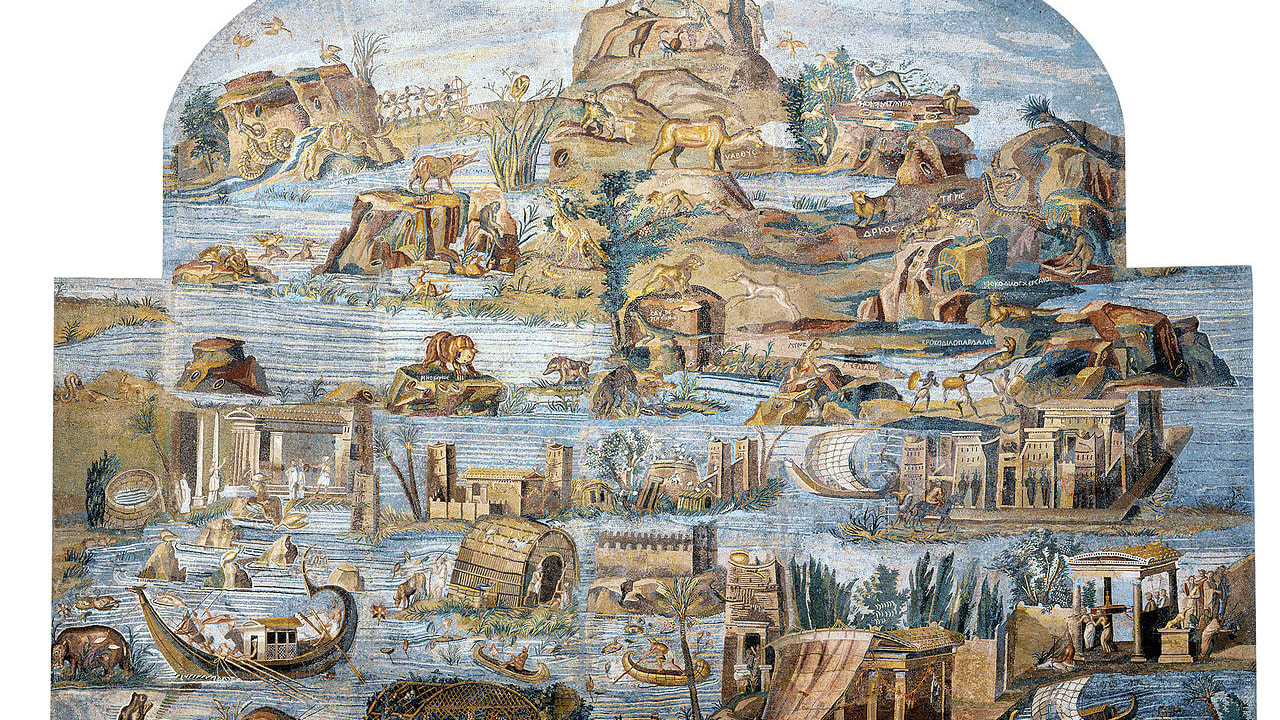
"It’s extremely exciting because it’s the first time ever that such a boat has been discovered in Egypt," IAESM founder Franck Goddio told The Guardian. "Those boats were mentioned by different ancient authors, like Strabo, and they were also represented in some iconography – for example, in the Palestrina mosaic, where you see such a boat of a much smaller size with noblemen hunting hippopotamuses. But [an actual boat] has never been discovered before."
"It’s a type of ship that’s never been found before. While we can read about cabin-boats in ancient texts and see them in the artistic record, it’s phenomenal to have the archaeological correlate," Oxford Centre for Maritime Archaeology director Prof. Damian Robinson added.
The vessel's wreckage will remain on the seabed for conservation purposes in accordance with UNESCO guidelines, Goddio clarified to The Guardian.