Ein Hod, one of Israel's oldest yet surprisingly under-discussed villages, gently demands that every visitor slow down the moment they arrive. Quite literally: Cars are left at the entrance parking lot, leaving you to explore entirely on foot. Just a few minutes into climbing the stone-paved alleys, your phone is naturally forgotten in your pocket. The air carries the delicate scent of blossoms, a chubby cat slumbers on a sunlit step, and a small handwritten sign announces that a nearby studio is "open, sort of."
Ever since 1953, when a collective of artists led by Marcel Janco settled in and painstakingly restored the ancient stone houses, the village has insisted on moving at its own rhythm. Today, it encompasses around 230 households, sits directly along the route of the Israel National Trail, and commands sweeping views of the Mediterranean Sea on clear days. Having not visited Ein Hod in many years - perhaps not since distant childhood - it felt as though the entire community had been preserved in a time capsule: Unchanged, unhurried, and refreshingly free of drama. Setting out on a day trip, I returned with a distinct impression: You don't merely visit Ein Hod - you meet it.
Morning on the Israel trail: Lev Hashvil 26
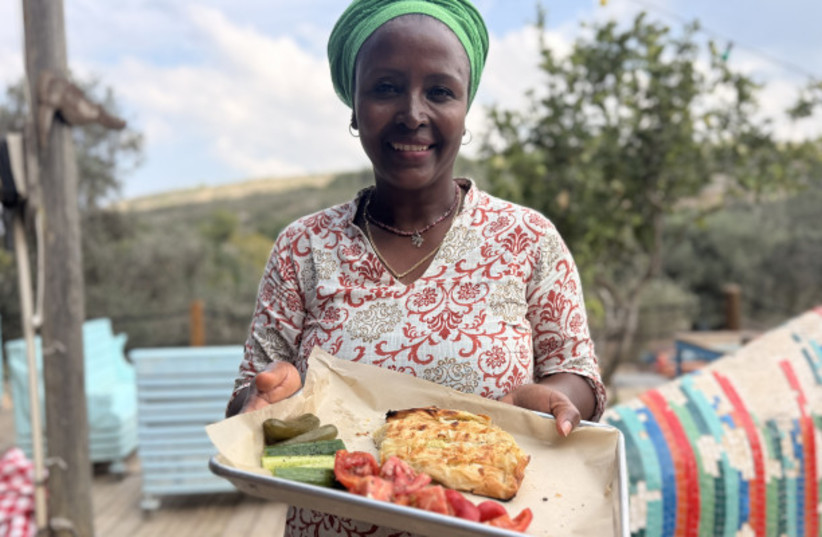
Our morning began at a quiet haven that most visitors driving up to Ein Hod pass right by without a second glance. Nestled among ancient olive groves with panoramic views of the Carmel Range, right at the start of the footpath climbing up into the village, lies a charming rural compound built by Hed and Batya Shmueli. Hed, a veteran of the Shayetet 13 (Navy Commando unit), is a gifted artist whose sculptures and memorials grace sites across the country. Batya immigrated from Ethiopia roughly 50 years ago. Together, they have hand-crafted a space that functions seamlessly as a coffee shop, art studio, and trail shelter.
It all originated with the Israel National Trail, which cuts straight through the property. About 20 years ago, moved by the sight of weary backpackers trekking past, the couple opened a free hospitality station. Over time, they expanded the site to include an overnight campsite, spotless restrooms, fresh drinking water, hot showers, and wholesome food. Since October 7th, soldiers have also turned to this sanctuary to rest and recharge. Batya herself was called up for reserve duty along the border defense line, making her essentially the only observant religious woman in this role. When she speaks of "connection," she isn't invoking a buzzword; she is describing the very table where hikers, off-duty soldiers, couples on dates, and local villagers sit side-by-side.
The culinary offerings are kosher, fresh, vibrant, and prepared with genuine love. The menu features rich goat cheese sandwiches, crisp Mediterranean salads, artisanal sourdough pizzas, savory spinach pastries, and delicate sweet treats, served alongside fresh smoothies and rich coffee. The food truck is managed by their eldest son, a young artist and poet. Tables are scattered across broad stone terraces overlooking the olive groves, inviting guests to shed their schedules and downshift effortlessly. On Wednesdays, the compound hosts a farm stand selling organic vegetables cultivated by students from the nearby Yemin Orde Youth Village ecological farm. On Thursday evenings between 6:00 PM and 10:00 PM, the compound comes alive with traditional Ethiopian dinners accompanied by music. Mark your calendar for November 12th, when they will host a festive Sigd holiday celebration featuring live music and local artists.
Lev Hashvil 26: Open Tuesday–Thursday 9:00 AM–4:00 PM, Friday 9:00 AM–2:00 PM. Kosher.
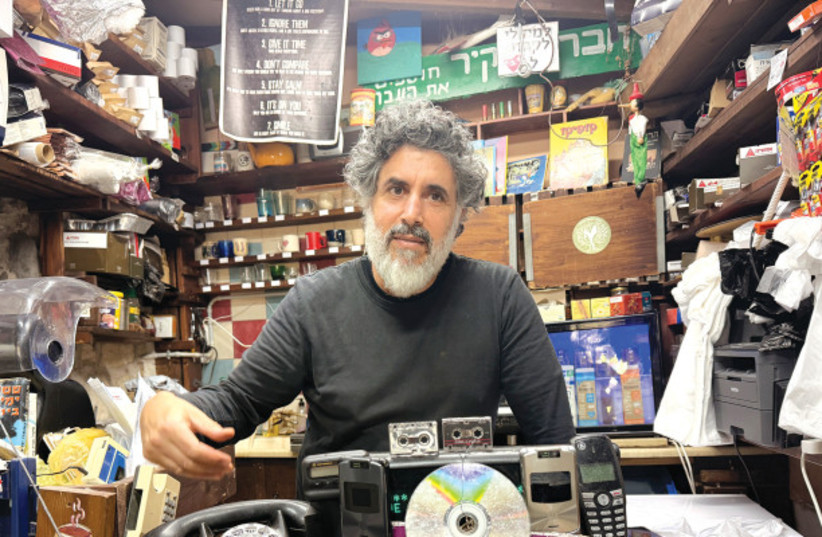
The grocery store: The heart of the village
There are places where time seems to stand still - decidedly for the better. Ein Hod Grocery Store first opened its doors in 1981 and has grown organically ever since. Yaniv has greeted customers behind the counter for 15 years. Here, tabs are still written on credit, customers can still ask for half a loaf of bread, and Yaniv instinctively knows what regulars need before they even ask. The wooden shelves stock everything from steaming soups and fresh produce to meats and pantry staples, but no one drops by strictly for shopping.
The grocery store serves as the de facto village café and public square. Throughout the day, local "parliaments" cycle around its outdoor tables: The morning crew reading newspapers over coffee, studio artists taking a mid-day break, and neighbors stopping by "just for a second" only to stay for an hour. Conversations drift lazily between national politics, recent gallery openings, and the delayed winter rains. Among those seated, sharp-eyed visitors might recognize prominent local residents such as Dan Chamizer and Shlomo Artzi, relaxing unpretentiously alongside their neighbors. Grab an espresso, linger nearby, and you will quickly discover that this is the truest way to grasp the spirit of Ein Hod.
Ein Hod Grocery Store: Open daily from 8:00 AM to 6:00 PM.
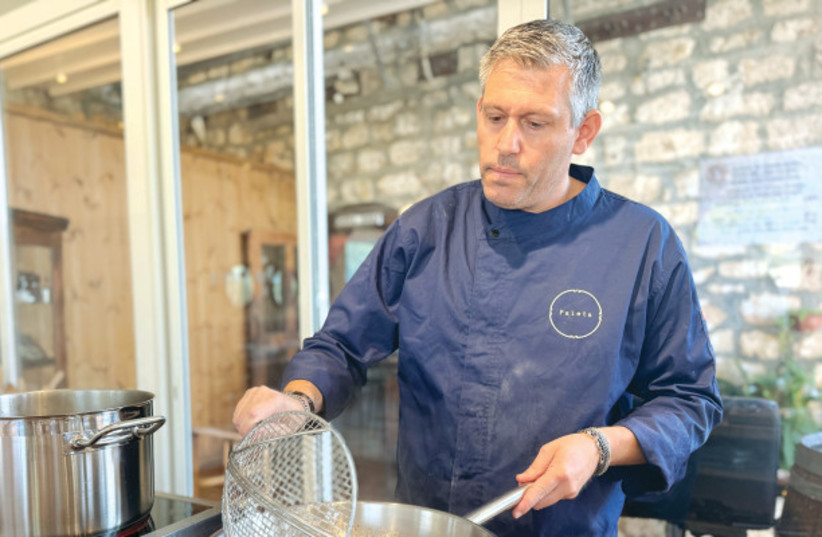
Paleta: The village on a plate
Following our morning coffee and an aimless wander through the stone alleys, it was time to roll up our sleeves. At "Paleta," an immersive culinary workshop studio founded by the team behind the acclaimed Dona Rosa restaurant, guests don't merely sit back and wait to be served - they actively create the meal.
The masterclasses are led by Chef Sagi Steinfeld, who helmed the Dona Rosa kitchen for five years. The concept behind the studio's name (Paleta = Palette) stems from the idea that every region possesses its own distinct color palette - a principle that took on a literal form during our Italian culinary workshop. We began with vibrant, multi-colored pasta dough, which we kneaded, rolled, and shaped by hand into stuffed ravioli and delicate fettuccine, paired with artisanal sauces worthy of a fine dining establishment.
Chef Sagi’s approach is remarkably hands-on. Moving effortlessly between workstations, he refines techniques, assists with stubborn ravioli seals, and weaves engaging stories about the village and its culinary history. With a crisp glass of white wine in hand, awkwardness quickly dissolves; within half an hour, station partners are chatting like lifelong friends. That is the true magic of Paleta: What starts as an instructional cooking class evolves naturally into a lively dinner party.
The experience culminates in a feast around a long communal table, enjoying the fruits of our labor: An array of handcrafted pastas, rich sauces, and fresh salads. There is an undeniable satisfaction in devouring homemade ravioli, even those that turn out slightly asymmetrical. The studio's culinary team includes four master chefs, who were recently joined by a pastry chef offering specialized workshops for dessert enthusiasts. It is an ideal outing for couples, friends, or anyone seeking an experiential gift.
Paleta: Kosher. Three-hour workshops, up to 16 participants, NIS 330–400 per person. Held Friday mornings and mid-week evenings.

Between the studios
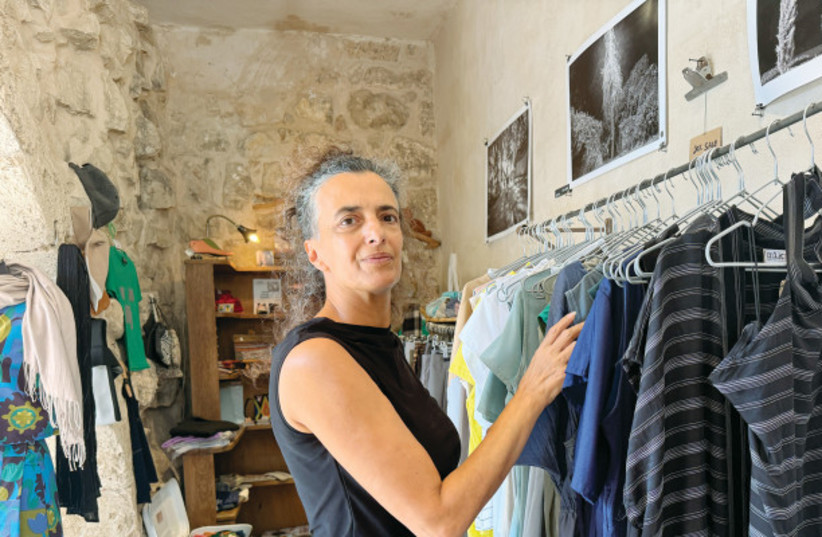
The highlight of any excursion to Ein Hod is simply surrendering to the maze of pathways and gallery-hopping at your own pace. Positioned just above the Ein Hod amphitheater, jeweler Tamar Navama operates a studio showcasing two distinct creative avenues: Exquisite fine jewelry crafted from high-karat gold, diamonds, and precious gemstones, alongside bold, expressive statement pieces featuring organic shapes and vivid hues. Beyond crafting custom designs and restoring heirlooms, she recycles gold and hosts hands-on goldsmithing workshops for pairs and groups of up to 30 people.
A short walk away lies the atelier of Mirik Hamami, who relocated from Tel Aviv to focus on "slow Fashion", designing bespoke garments tailored for women of all ages. Nearby, multidisciplinary artist Karin Jan exhibits prints of her original paintings alongside an eclectic curated collection of vintage treasures.
Tucked between the classic stone structures, a striking bright red shipping container immediately catches the eye. This repurposed container serves as the creative sanctuary for Shira Melamed, a multidisciplinary designer who sculpts objects, crafts ceramics, and creates brand identities for small businesses. Shira conducts intimate, hands-on clay workshops suited for all skill levels. Participants begin by learning foundational ceramic techniques - such as slab construction, coil building, and hand-sculpting - before bringing their own imaginative ideas to life under her guidance. Work produced is unlimited, dictated only by individual pace.
Container Studio - Ein Hod: 2-hour private workshop (3–6 participants): NIS 280 per person (includes raw materials, two kiln firings, wine, coffee, and refreshments). Open studio session: NIS 200 per person (materials included). Details and booking.
Continuing along the path, we reached the Ein Hod Art Gallery, which showcases rotating exhibitions by resident village artists every three months, alongside a museum shop filled with functional artwork. An adjoining gallery wing currently houses the Mentoring exhibition, pairing emerging talents with veteran artistic mentors.
Art Gallery Ein Hod: Open Saturdays 10:00 AM–4:00 PM; Weekdays (except Sunday) 10:00 AM–2:00 PM.
Adjacent to the main gallery space is the "Lev Hashvil" (Heart of the Trail) gallery, opened in 2025 within the restored Cultural House. Serving as the flagship anchor for an initiative connecting the village to the Israel National Trail, it presents curated art inspired by the trail's terrain and local communities. Surrounding these artistic hubs are vintage boutiques, fashion ateliers, and artisan jewelry stalls, all located within brief steps of one another.
Peigam: A meal facing the sunset
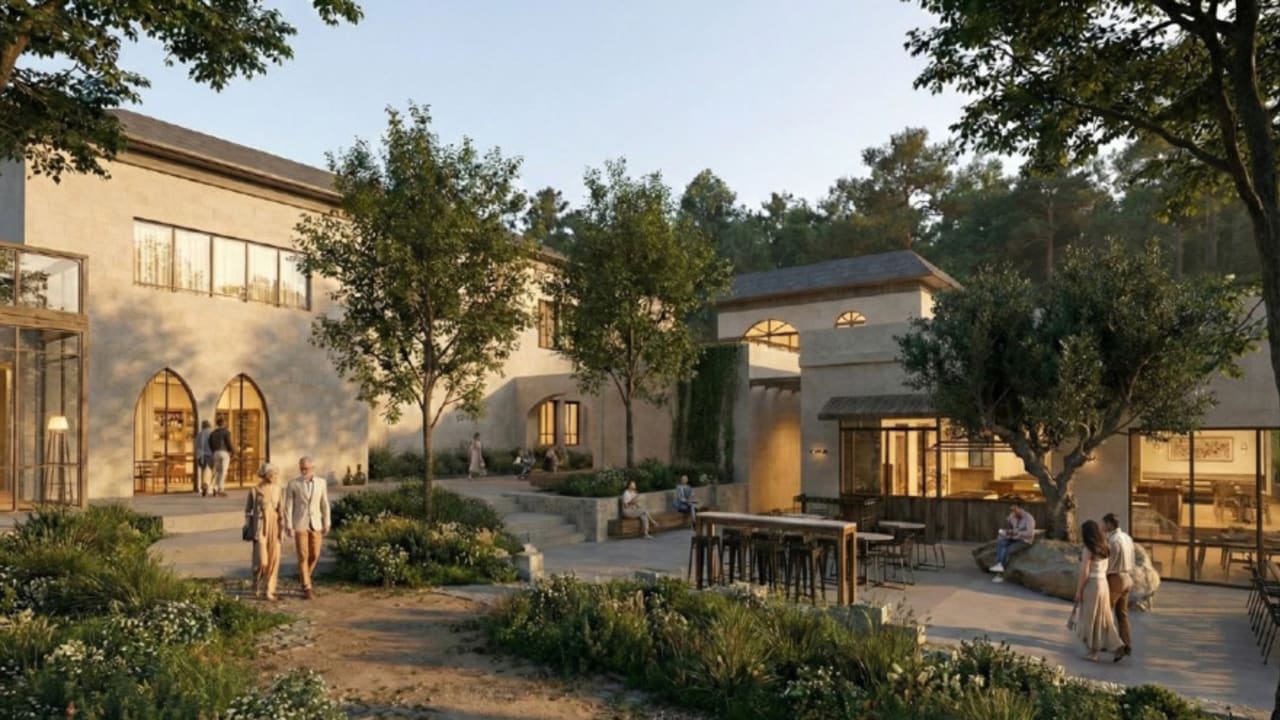
We brought our journey to a close at a culinary gem that feels remarkably undiscovered. "Peigam" occupies a beautifully restored stone building overlooking the village amphitheater, featuring an expansive dining terrace with sweeping views of the Carmel Mountains and the Atlit coastline. As late afternoon turns to golden hour, it offers one of the most magnificent sunset panoramas in northern Israel.
Chef Dan Zoaretz presents a Mediterranean menu deeply tied to the local terroir, relying heavily on seasonal regional produce. Sauce preparations feature wild herbs foraged directly from the surrounding mountainsides; fittingly, the restaurant takes its name from Peigam (rue), a fragrant native wild plant. The dining experience centers on an array of seasonal mezzes, ordered by appetite in selections of four, six, or eight plates.
Every course arrived as a visual masterpiece. A crisp cucumber salad featuring fakous (Armenian cucumber), rich jibneh cheese, and aromatic duqqa offered a light, refreshing start. The warm goat jibneh, paired with blistered tomatoes and mountain herb oil, captured the essence of the surrounding landscape on a single plate. The charred eggplant sinia, drizzled with raw tahini and rich grape molasses (dibs), delivered a satisfying balance of savory and sweet flavors. For mains, the juicy beef and lamb kebabs - accented with halloumi and roasted pistachios, served over fresh milk and black seed pita - were impeccably executed. Throughout the meal, seasoning remains refined and understated, elevating the natural flavor of the ingredients.
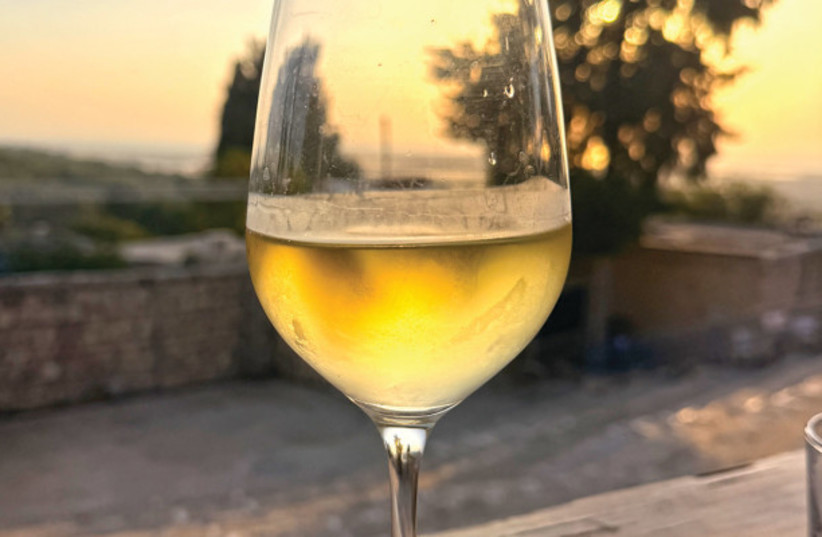
The bar features an extensive, globally sourced arak selection. Sipping a chilled glass of wine or local arak while watching the sun sink into the sea, after a full day exploring stone alleys, makes it immediately obvious why visitors to Ein Hod are so reluctant to leave.
Peigam: Located above the Ein Hod amphitheater. Mezzes: 4 for NIS 144, 6 for NIS 216, 8 for NIS 280. Main dishes: NIS 86– 124. Open Wednesday–Thursday 12:00 PM–3:00 PM, 6:00 PM–10:00 PM; Friday 12:00 PM–10:00 PM; Saturday 12:00 PM–6:00 PM. Phone: 04-8204288. Not kosher.
Staying in the village: Villa Hod
Ein Hod reveals its true magic only after the day-trippers depart. By evening, the alleys quiet down, the setting sun paints the sky over the sea in deep shades of orange, and a tranquility settles over the village that is virtually impossible to find elsewhere in central Israel. However, overnight accommodations are limited: With most historic homes occupied by permanent residents, only around 20 guest rooms exist in the entire village. Among the most enchanting is Villa Hod, owned and operated by Gili Oridge.
As a professional event producer, Gili's eye for design is evident in every detail. She designed her family residence in the upper district of the village - a sanctuary offering vistas of Ein Hod's tiled rooftops and the ocean on one side, and wild mountain terrain on the other. At the base of the property, she has crafted two distinct, self-contained guest suites.
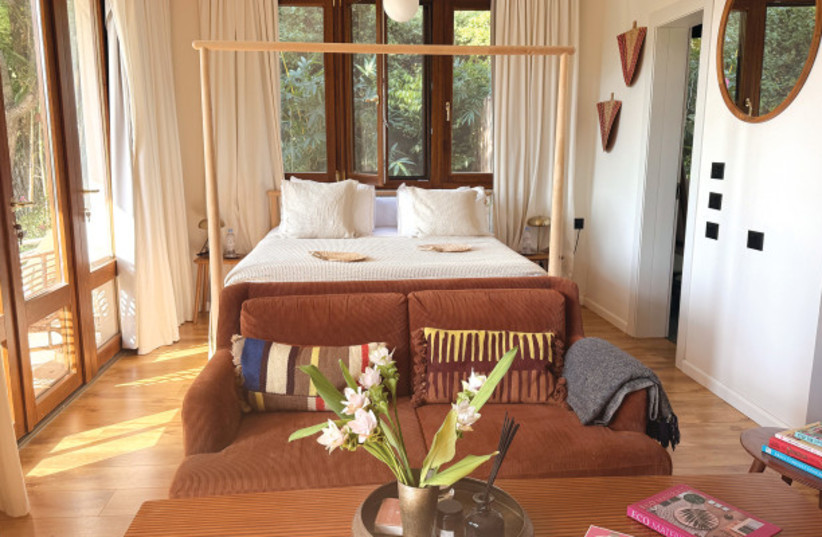
The couples' suite is a chic, intimate ~50 sq m studio featuring a private terrace overlooking the mountain ridge. Its standout feature is an outdoor private hot tub, heated to a cozy 38°C (100°F) in winter for stargazing, and converted into a cool plunge pool during summer months. Outfitted with a fully equipped kitchen, a dedicated coffee station, and plush bathrobes, it provides a seamless retreat for a weekend getaway.
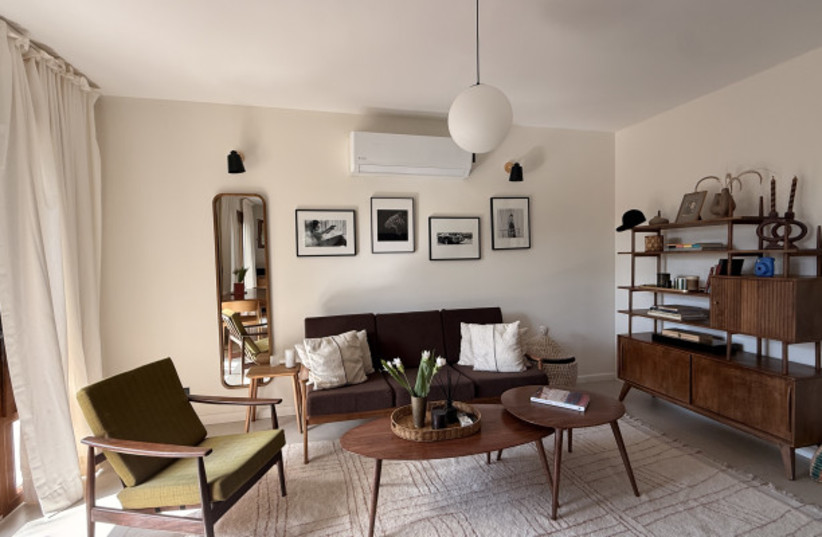
The ~60 sq m family suite comfortably accommodates a family or two couples, offering two private bedrooms, a sunlit living room, a convenient kitchenette, and a private balcony overlooking a lush garden. The thoughtful touches stand out: A vintage record player, a curated library, and classic board games, encouraging guests to enjoy an evening free from digital distraction.
For larger groups, there is a rare opportunity: On select dates - primarily during holidays and summer breaks when the family travels - Gili rents out the main private residence. Spanning ~240 sq m, this luxury villa accommodates up to eight guests, boasting an expansive living room, a gourmet kitchen, and beautifully appointed lounge areas. Outdoors, an infinity pool overlooks the Carmel ridge and the Mediterranean coast, complemented by a dedicated BBQ station, sun loungers, and relaxing hammocks. It represents an exceptional sanctuary for extended family gatherings or multi-family retreats.
Villa Hod: Guest suites start at NIS 1,400 per night for a couple (minimum two-night stay on weekends). Gourmet breakfast available by prior arrangement for NIS 350 per couple. The complete private villa is available on select dates (minimum two-night stay).