
Europe is not always fair to Israel, which sometimes is judged by standards not consistently applied to bloodier regimes, more reckless armies, or states that make no effort to preserve democratic life under existential threat.
But not every crisis that lands on Israel’s doorstep was delivered there by foreign bias.
The European Union’s decision this week to advance sanctions against violent West Bank settlers, alongside sanctions against senior Hamas figures, is being denounced in Jerusalem as distorted moral equivalence.
That criticism is justified. Israeli citizens, even those accused of grave crimes, are not Hamas terrorists, and the Jewish communities of Judea and Samaria are not terrorist organizations. Jewish historical and religious attachment to the land is not a crime, and neither Europe nor anyone else gets to erase it with a sanctions list.
That being said, Israel still has to acknowledge what is happening inside its own house.
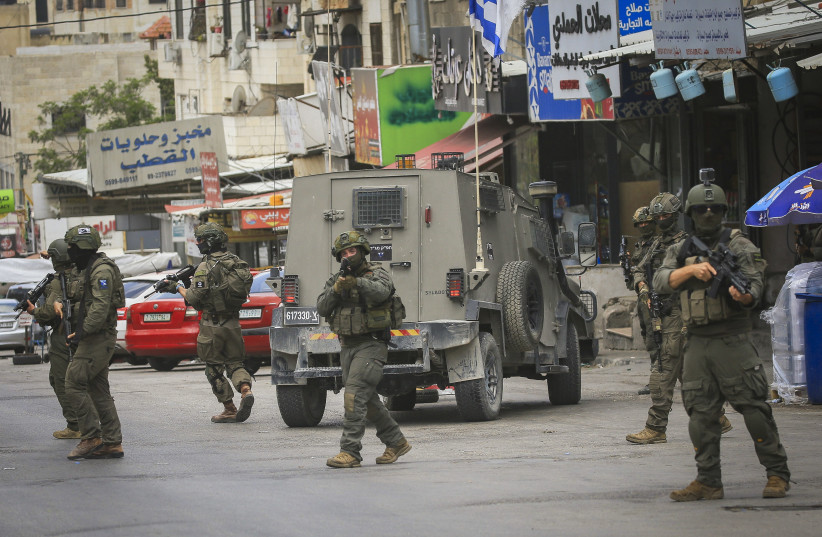
Extremist violence becomes a national issue
For years, Jewish extremist violence against Palestinians in the West Bank was treated as a marginal irritant, a fringe embarrassment, or a public-relations problem.
It is now a strategic-security problem, a moral problem, and a Jewish problem.
The IDF in January acknowledged it had failed to sufficiently reduce Jewish extremist violence against West Bank Palestinians in 2025. It reported 867 “nationalistic” Jewish incidents that year, up from 682 in 2024.
Former Shin Bet director Ronen Bar reportedly told Israeli leaders the language of “nationalistic crime” was no longer adequate, adding that it had to be called Jewish terrorism.
Those words should have shaken the country. Instead, too much of the political system treated them as another front in the war between “Left” and “Right.”
And this is exactly the trap. Condemning Jewish terrorism is not left wing. Demanding that Palestinian civilians not be assaulted, expelled, harassed, shot at, or terrorized in the name of Israel is not anti-settlement; rather, it is the bare minimum of Jewish sovereignty.
A state that cannot enforce laws against its own extremists forfeits moral authority. A government that tells the world it is fighting barbarism while allowing masked Jewish youths to burn fields, attack villages, intimidate shepherds, or clash with soldiers is weakening Israel’s case with its own hands.
Israel has seen this danger before
This is not new. Israel has seen where this poison leads. Baruch Goldstein's 1994 massacre of Muslim worshipers in Hebron should have been enough to burn Kahanist glorification out of public life forever.
The 2015 Duma arson attack, in which Ali Dawabsheh and his parents were murdered, should have been enough to end every excuse about “isolated youth.”
Each time, after the shock and condemnation, the country found a way to move on. That pattern has helped the problem endure.
The usual sentence, that these extremists “do not reflect the broader community,” may be true, but it is no longer sufficient. If the broader community does not reflect them, then the broader community must help defeat them.
Rabbis, council heads, cabinet ministers, educators, police commanders, and parents must say not only that such violence is wrong; they must say it is a desecration of Judaism and a threat to Israel’s security.
Elections and accountability
This matters especially ahead of elections. Israeli voters will be asked again to choose not only policies, but also a moral direction. Politicians who excuse, minimize, fund, embrace, or wink at Jewish extremism should have to answer for it.
National Security Minister Itamar Ben-Gvir’s record and rhetoric cannot be separated from the atmosphere in which law enforcement in the West Bank has struggled. Security officials have said as much.
The public should ask more than slogans about “governance.” Governance over whom? Only over Arabs? Only over political opponents? Or also over Jews who endanger Palestinians, soldiers, Israel’s diplomacy, and its Jewish soul?
Israel can reject Europe’s hypocrisy and still confront its own failure. Actually, it must do both.
The question is not whether Jews belong in Judea and Samaria. The question is whether Jewish power there will be governed by law, restraint, responsibility, and reverence for human life, or hijacked by an extremist theology dressed up as patriotism.
If Israel refuses to answer that honestly, others will answer it for us. And their answers will be far harsher than anything we would write ourselves.