The peace agreement between Egypt and Israel, signed in 1979 after Anwar Sadat’s historic initiative, was considered for decades a cornerstone of regional stability. The agreement, which returned the Sinai Peninsula to Egypt, included clear clauses limiting the presence of Egyptian military forces in the area, with the aim of preventing military friction and building mutual trust. Yet in recent years, it has become increasingly clear that the reality on the ground is moving further and further away from the original understandings.
Egypt’s central argument for increasing its military presence in Sinai was the fight against ISIS and its affiliates, which operated in the area and posed a real threat to the country’s internal stability. There is no doubt that this terrorist activity required a firm response, and Israel itself understood the need to allow Egypt a certain degree of flexibility in deploying its forces. Indeed, over the years, quiet and at times even public approvals were given for increasing Egyptian forces beyond what was permitted under the agreement.
But this is where the truly troubling story begins. What started as a temporary adjustment to an exceptional security situation gradually became a permanent policy of salami slicing, a creeping process in which each small deviation is accepted as necessary, but ultimately accumulates into a fundamental change in the balance of power.
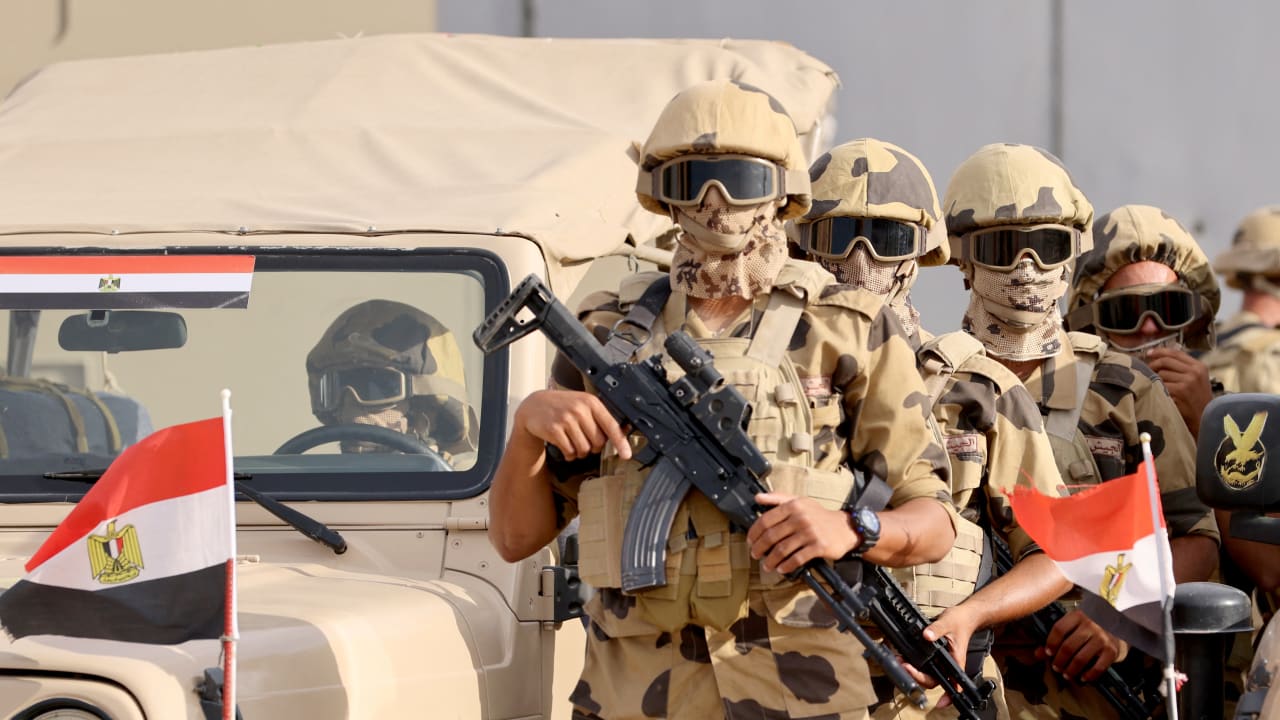
Egypt not only increased the number of soldiers in Sinai, but also brought in heavy weapons, advanced military infrastructure, and even established permanent logistical systems, all contrary to the spirit of the agreement and its language.
Various reports, from both intelligence sources and international publications, indicate that the Egyptian presence is moving closer and closer to the border with Israel. This is a quiet process, almost imperceptible, but one with deep strategic significance. When large, well-equipped forces are located near the border, a situation is created in which any political change or regional crisis could lead to rapid escalation.

Egypt claims military activity needed to combat terrorism
Egypt, for its part, continues to claim that all its activity is part of the fight against terrorism, and that it has no intention of harming the peace agreement. Indeed, it must be acknowledged that the battle against ISIS in Sinai was complex and difficult, and that Egypt ultimately succeeded in significantly reducing the organization’s activity in the area. But it is precisely this success that raises an obvious question: If the threat has declined, why does the increased military presence remain in place?
The concern in Israel does not stem from an assumption that Egypt is planning an immediate war. Quite the opposite. Security cooperation between the countries continues and has even deepened in certain areas, including agreements for the supply of Israeli gas to Egypt. But history teaches that strategic realities can change quickly. Agreements are stable as long as there is political will to preserve them. When conditions change, understandings can erode as well.
Concern is also growing in light of Egypt’s conduct in the international arena, especially at the United Nations. In a series of votes and resolutions in recent years, Egypt has chosen to support initiatives that were critical of and even hostile toward Israel. While this is sometimes a diplomatic move intended to preserve Egypt’s standing in the Arab world, it is difficult to ignore the gap between security cooperation on the ground and Egypt’s political position in the international arena.
This gap creates a sense of discomfort and even mistrust. On one hand, Egypt presents itself as a strategic partner for regional stability. On the other, it acts in international institutions in a way that undermines Israel’s legitimacy. When this is combined with the gradual violations of the agreement in Sinai, a complex and troubling picture emerges.
Some argue that Israel itself quietly agreed to Egypt’s moves, and that this is not a unilateral violation. This argument is not without basis, but it misses the main point: Temporary consent to an emergency situation is not supposed to become a permanent change. If there is indeed a need to update the agreement, it should be done openly, by mutual consent and under supervision, not through a creeping process that undermines its foundations.
The current reality requires renewed thinking. Israel cannot afford to ignore the changes on the ground, even if they are taking place quietly. It must demand transparency, closely monitor developments, and ensure that the agreement is preserved not only formally, but also in its original spirit.
Peace with Egypt is an irreplaceable strategic asset. But, precisely for that reason, it must be protected from slow and dangerous erosion. The history of the Middle East is full of examples of agreements that appeared stable until they no longer were. The question is not whether Egypt intends to violate the agreement, but whether we are prepared for a reality that may change faster than we expect.
Between one slice of salami and the next, an entirely new situation may emerge. The big question is whether we will know how to identify it in time.
The author is the CEO of Radios 100FM, an honorary consul and deputy dean of the consular diplomatic corps, president of the Israeli Radio Communications Association, and a former Galei Tzahal and NBC television correspondent.