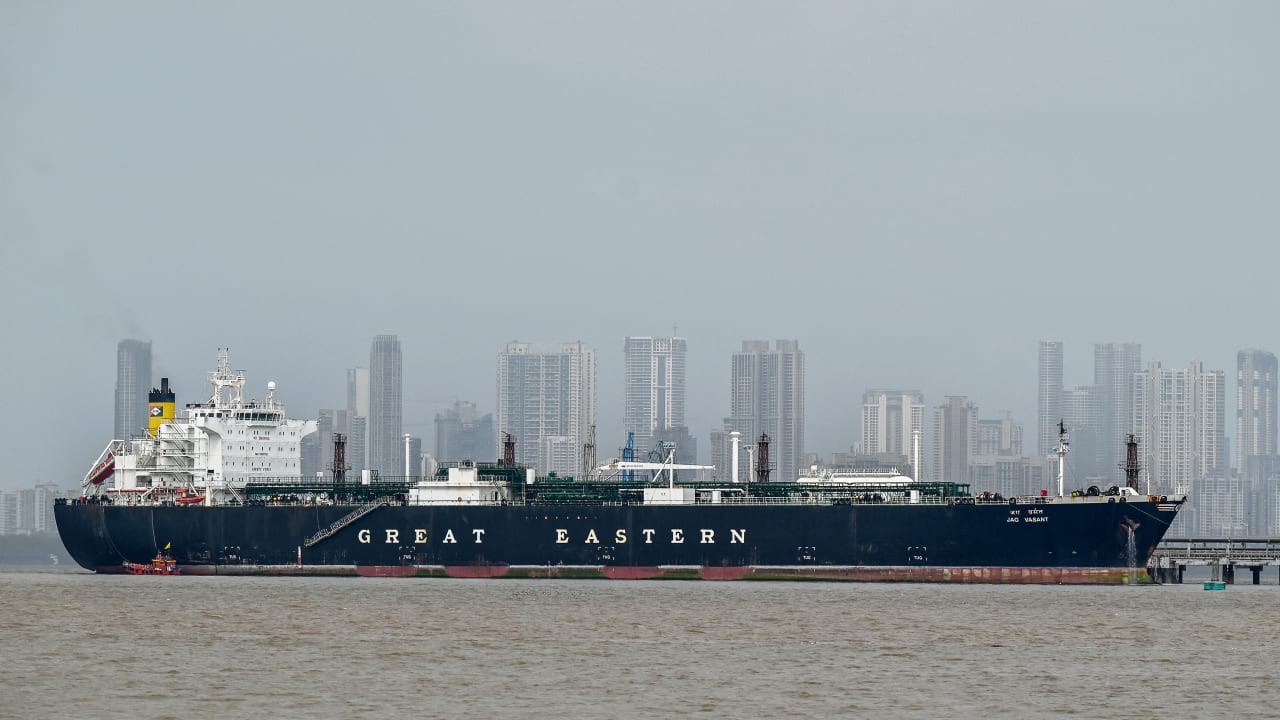
Everything now turns on the Strait of Hormuz.
In 39 days, the US-Israeli campaign killed Iran’s supreme leader Ali Khamenei, wrecked its ballistic missile infrastructure, and forced a regime that spent decades projecting invincibility to accept a ceasefire brokered by Pakistan.
Human Rights Activists in Iran (HRANA) has confirmed at least 1,221 military deaths. Iran International puts the security forces toll at 4,700. The navy in the Gulf of Oman is finished. The nuclear program has been struck twice in under a year.
And the proxy network was already hollowed out before the first bomb fell on February 28, Hezbollah’s command structure gutted, Hamas dismantled in Gaza, the Houthis’ leadership killed last year. By the time US and Israeli jets reached Iran, the axis of resistance existed mostly as a slogan.
US President Donald Trump made the call that mattered most: greenlighting the February 28 strike, even as his own national security establishment was split. His maximum pressure sanctions had cratered Iran’s economy before the first sortie. His deadline brinkmanship, which The Washington Post and The New York Times editorial boards treated as buffoonery, dragged Iran to a ceasefire.

White House Press Secretary Karoline Leavitt was blunt: “This is a victory for the United States that President Trump and our incredible military made happen.”
Prime Minister Benjamin Netanyahu supplied the operational architecture. The pager operation. The Nasrallah strike. The push toward direct US involvement during last June’s Twelve-Day War. Each was a deliberate escalation that the foreign policy establishment said would backfire.
As Nadim Koteich, a prominent UAE-based commentator, told me: “Thanks to Bibi Netanyahu, they lost everything in this war.”
The historical parallel that fits is not Iraq 2003. It is the Cold War. President Ronald Reagan did not tear down the Berlin Wall. He made it impossible to maintain. Decades of pressure made the Soviet system unsustainable, and the people of Eastern Europe did the rest.
Trump, Netanyahu broke Iran's instruments of power
Trump and Netanyahu have applied the same logic to the Islamic Republic: break the regime’s instruments of power, and leave the question of Iran’s future where it belongs, with Iranians. President George W. Bush tried the other approach, building democracy from the sky, and got a generation of chaos.
The question is whether the patient will survive the surgery this time. The January protests were the largest since 1979. The regime massacred thousands to suppress them. But the Islamic Republic also survived the Iran-Iraq war, the Green Movement, and the Mahsa Amini uprising.
What makes this different is scale. None of those earlier crises combined the loss of a supreme leader, the collapse of every proxy network, economic strangulation, and a dynastic succession (Mojtaba Khamenei inheriting his father’s title) that mocks the revolution’s founding mythology. Previous shocks hit one pillar. This hit all of them simultaneously.
Iran, however, found something in the rubble that changes the calculus. “You can’t assassinate Hormuz,” Koteich told me. “You can’t kidnap Hormuz.”
He’s right. Iran lost its proxies, its missiles, its nuclear infrastructure, and in their place discovered a single instrument with more leverage than all of them combined: the ability to shut down a fifth of global oil supply. The US Energy Information Administration (EIA) estimates Gulf production shut-ins hit 7.5 million barrels per day in March. A Pew Research Center survey found 69% of Americans cite gas prices as their top war concern.
Iran bet that domestic pressure would break Trump before the military campaign broke them. It didn’t. But Hormuz is still on the table.
Within hours of the ceasefire announcement, missile attacks hit the UAE, Saudi Arabia, Bahrain, and Kuwait. Iran’s Supreme National Security Council declared “nearly all the objectives of the war” achieved. And the Associated Press reported that the ceasefire terms already allow Iran and Oman to collect shipping fees on transiting vessels. A wartime demand, being formalized before negotiations even start.
Islamabad is where the war’s meaning will be decided. Iran’s publicly circulated 10-point proposal demands a guarantee against future attack, an end to Israeli strikes in Lebanon, sanctions removal, and a $2 million fee for every ship transiting the strait.
The White House has pushed back hard. Trump called the circulating version “fraudulent,” and Leavitt clarified that what he endorsed as “a workable basis to negotiate” is a different document from the one Iran is waving around.
The NYT confirmed the two frameworks differ. But the shipping fee arrangement is already taking shape on the ground, and if Iran walks out of Islamabad with it codified, it will have turned a military disaster into a strategic stalemate.
Gulf officials in Abu Dhabi tell me privately they trust the Israelis more than the Americans to hold the line. Saudi Foreign Minister Prince Faisal bin Farhan Al Saud affirmed solidarity against “Iranian aggression” on April 6. His mid-March warning that trust with Tehran had been “completely shattered” was not diplomatic theater.
A senior Israeli military official I spoke with said the Iranian leaders who survived, the ones who spent weeks in bunkers cut off from electronic communications, may not yet understand how little they have left.
Netanyahu’s Wednesday address put it in public: “We shook the foundations of the regime. We crushed their missile manufacturing plants. The Iranians are firing what’s left in their magazine. It’s running out.” He confirmed Israel had destroyed centrifuge plants and killed additional nuclear scientists.
The military official added, separately, that the IDF needs this pause. The operational tempo since October 7, 2023, has been relentless. The ceasefire buys time that Israel also needs.
The cost ledger cannot be wished away. HRANA documented 1,665 civilian dead as of April 6, at least 15% of them children. The Minab school strike. The B1 bridge on Sizdah Be-dar. The Rafi Niya synagogue on the final night of Passover. If the reporting holds up, these will define this war internationally for a generation. Israel gains nothing by pretending otherwise.
Netanyahu’s insistence that Lebanon is excluded from the ceasefire may be the agreement’s most consequential clause.
Israeli jets hit central Beirut on Wednesday morning. He called it “the hardest blow, perhaps since the pagers,” and framed the ceasefire itself as a station, not a destination: “There are more objectives to complete, and we will achieve them, either by agreement or by resuming fighting. Our finger is on the trigger.”
Koteich’s summary was the sharpest I heard all day: “We did not reach this point to grant Iran a victory.” Iran walks into Islamabad weaker than at any point since 1988. If the negotiations result in Hormuz still being weaponized, everything that has been achieved over the past 39 days will depreciate quickly.
Trump and Netanyahu did not tear down the Islamic Republic. They made it impossible to maintain. Whether the walls actually fall depends on what happens inside Iran, and on whether the diplomacy in Pakistan is prosecuted with the same nerve as the war. The operation was a success. The recovery is someone else’s fight.