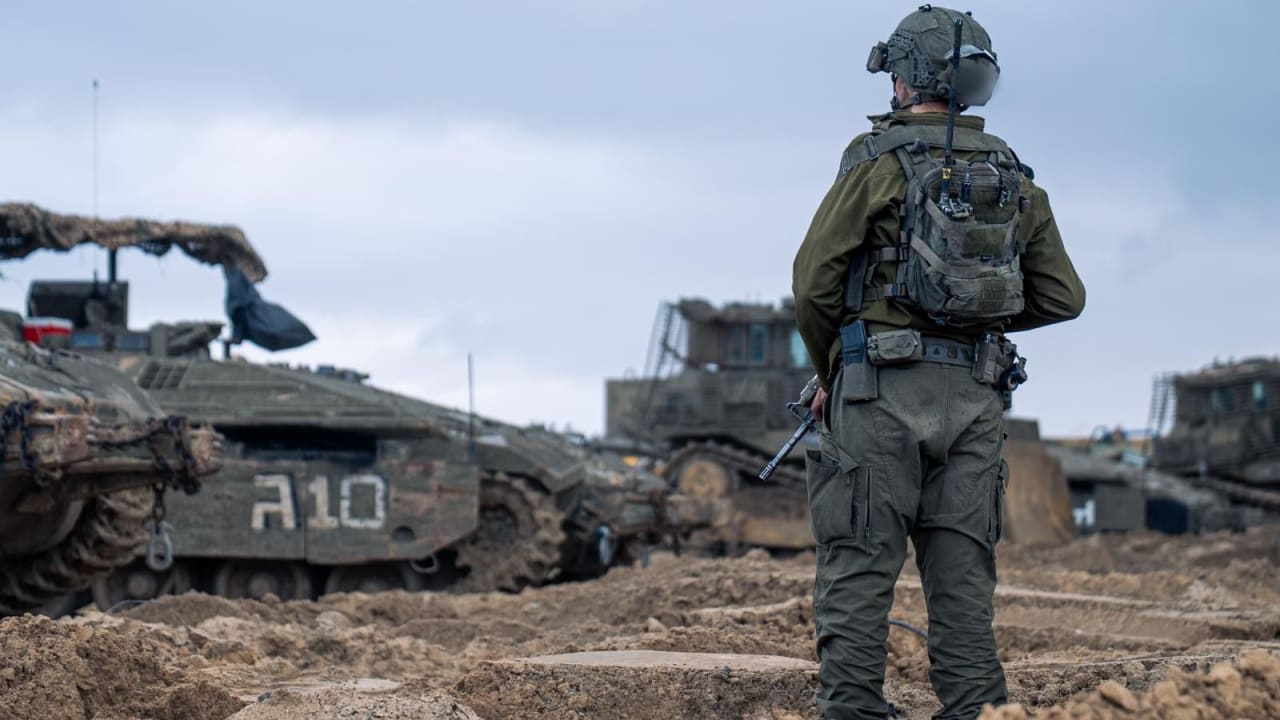
About 26 weeks ago, the Israel-Hamas War officially ended with the signing of the ceasefire agreement between Israel and Hamas on October 10, 2025. Ten weeks ago, Ran Gvili, the last remaining (deceased) Israeli hostage, was retrieved from Gaza, ending the 842-day saga starting on October 7, 2023. About five-and-a-half weeks ago, on February 28, Israel and the United States launched their attack on Iran, and the Middle East is a very different region than it was before.
Before February 28, it might have been possible to say “all eyes are on Gaza”; that is no longer true because now all eyes are on Iran. After President Donald Trump imposed the end of the Israel-Hamas War on Prime Minister Benjamin Netanyahu, and after the Arab Gulf states ensured that Trump’s 20-point peace plan included a path to Palestinian statehood, some of us believed it would be possible to enlist Trump’s support in seriously advancing the two-state solution and putting an end to the Israeli-Palestinian conflict.
Of course, it was clear that this could not be done while Netanyahu remains prime minister. But (hopefully) the Israeli elections are coming, and there is some reason to hope even that reality could change.
Sometime after the end of the war in Gaza and the beginning of the Iran war, from what I heard, the Trump team was willing to continue to talk with the same Hamas leaders who agreed to end the war in order to develop an agreed plan for the takeover of Gaza by the National Committee for the Administration of Gaza (NCAG), the deployment of a new Gaza Palestinian police force, the deployment of the International Stabilization Force (ISF), and the disarmament of Hamas.
However, since the end of that war, about 700 Palestinians have been killed in Gaza by Israeli forces, including 117 women and children who were among the 60%-plus of those killed who were not combatants.

Lack of progress in fighting Israeli ceasefire violations in Gaza
Despite repeated reporting to the Trump team by the mediators (Egypt, Qatar, and Turkey) on mainly Israeli violations of the ceasefire agreement and much fewer by Hamas, little has been done to put an end to the violations. This in itself raises questions on the willingness of Washington to continue to apply pressure on Netanyahu.
The Board of Peace was launched with great fanfare in Davos at the World Economic Forum. The NCAG members were appointed, and Nickolay Mladenov was assigned by the Board of Peace to oversee the process of ending Hamas’s rule in Gaza.
A lot of work has been done, but 26 weeks after the end of the war, Israel controls more than 53% of Gaza, and Hamas has reasserted its unwanted rule over more than two million Gazans living in horrid conditions on less than 47% of the narrow coastal enclave. The Hamas leadership outside of Gaza continues to issue bombastic statements and declarations as if someone in the world cares about what they say.
From Washington’s point of view, Hamas surrendered on October 10, 2025, and when the last hostage was brought back to Israel, Hamas lost any leverage it previously had. As the weeks passed by and the Israeli agreed occupation of 53% of Gaza became more entrenched, the positions of the US and Netanyahu moved closer together.
Israel refused to allow international organizations to deliver aid to Gaza, which have been widely replaced by private sector concerns, sending primarily Israeli goods into Gaza with full US agreement. Israel’s demand to vet all Gazan employees of the international organizations seems reasonable to Washington and is completely opposed to by the international organizations.
Israel has demanded that no reconstruction take place in Gaza without full demilitarization of Hamas. Hamas has agreed to transfer all governing power, including the police force, to NCAG, but has rejected turning over its weapons. Hamas has agreed to turn over all unexploded ordinances in Gaza to NCAG and the Palestinian police but explicitly declares that the “resistance” will not end until the occupation ends. This position is completely rejected by Washington.
Hamas in Gaza, which has elected a new leadership unknown to the Israeli public, has tried to differentiate between an initial period of “recovery” and the period of reconstruction. This is specifically aimed at enabling the transfer of governance to NCAG while remaining an armed force, out of sight but very much still in control.
Hamas in Gaza sees the process as follows: The NCAG is a civilian governing body responsible for services, administration, and public order. NCAG is not responsible for disarmament. Hamas objects the linking of humanitarian relief to its weapons. Hamas is also opposed to linking Israeli redeployment to disarmament.
My assessment is that the US and at least Egypt and Qatar have lost their patience with Hamas and have essentially adopted the position of Washington that Hamas must be totally disarmed. This position has strengthened since the beginning of the war in Iran.
From my talks with officials in the Trump administration, they do sincerely care about the people of Gaza but believe those people must rise against Hamas and force it to disarm. The officials say: We cannot care more about the Palestinians in Gaza than they care about themselves. If they want reconstruction and to live a decent life, Hamas must be disarmed completely – it is not negotiable.
From Washington’s point of view, there is no room left for the so-called resistance (the label Hamas gives itself). If Hamas, according to Washington, does not understand that it is finished, it will pay the price heavily, along with the rest of the Gazans who no longer want Hamas to rule over them.
What I understand from what I hear is that there is a time limit on American patience regarding Hamas disarming. My assumption is that the end of patience will coincide, more or less, with the end of the war in Iran and against Hezbollah.
Sometime after that, Netanyahu will request a green light from Trump to send the Israeli army into the Hamas-controlled part of Gaza and “finish the job.” Disarming Hamas will then be in the hands of Israel, and it will not be an easy task or free from Israeli casualties and countless lives of Gazans.
After the enormous price the wealthy Arab countries have paid in the war against Iran, Gaza and Palestine are no longer in focus as they were prior to the war. The war, at least as understood by Washington, has brought the Arab Gulf countries more in line with Trump’s viewpoint instead of seeing Palestine as the center of conflicts in the Middle East. With all the financial damage done during the Iran war, less money will also be available for Gaza’s reconstruction.
Washington and all Israelis, Palestinians, and others who care about Israel or Palestine – there is only one solution to this conflict, and it remains the two-state solution. Israel will never have security if the Palestinians don’t have freedom, and Palestine will never be free if Israel doesn’t have security. That is the eternal bottom line. Whether seen in Washington or not, it remains the ultimate truth and will not change at any time in the foreseeable future.