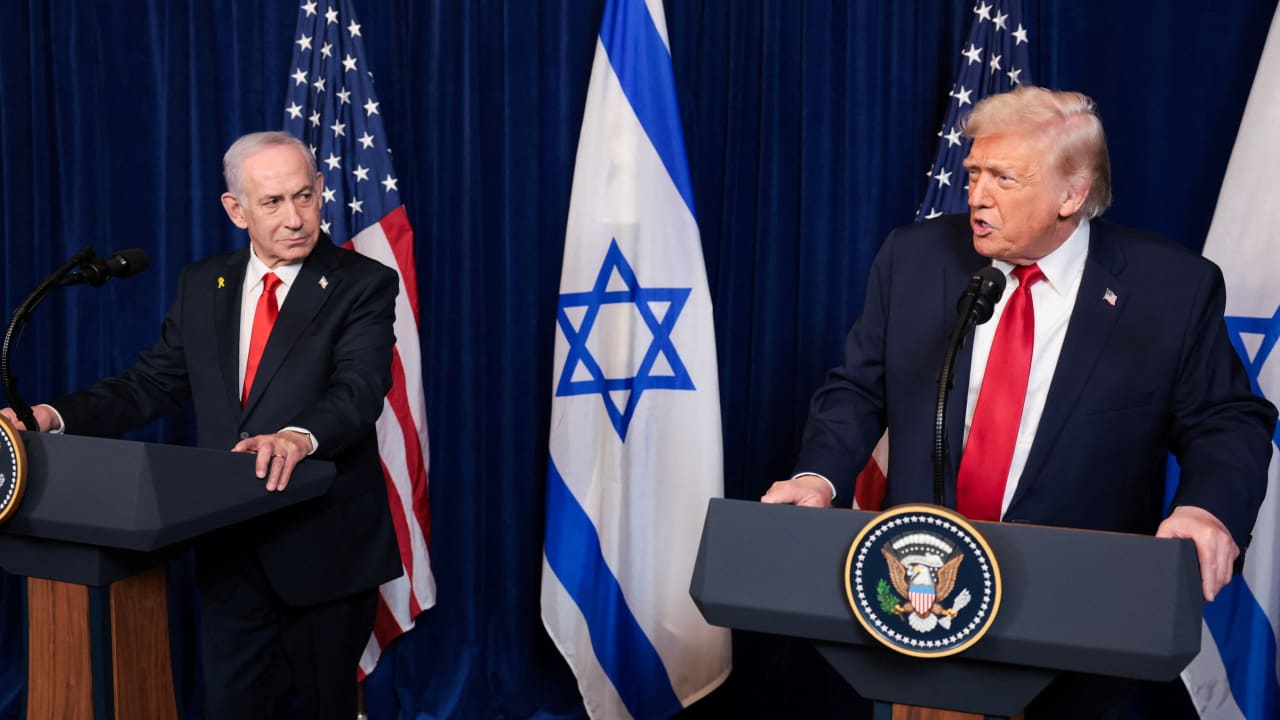
The announcement of a transition to phase two of the Gaza ceasefire has been greeted with familiar language about progress, stabilization, and moving forward. US presidential envoy Steve Witkoff has framed the plan as a shift from war to governance: Authority in Gaza would be transferred to a National Committee for the Administration of Gaza, a 15-member body of Palestinian technocrats led by Ali Shaath and overseen by an international Board of Peace chaired by President Donald Trump.
On paper, the architecture appears orderly and responsible. In practice, it rests on a dangerous misreading of how wars in the Middle East actually end.
Phase two is being sold as realism. In truth, it is an exercise in strategic denial. It assumes that administrative order can precede military resolution, that governance can neutralize ideology, and that international supervision can replace coercive power. These assumptions are not merely optimistic; they are historically unfounded.
Issues in Gaza governance
Gaza is not suffering from a shortage of committees or oversight mechanisms. It is suffering from the continued existence of Hamas as an armed, disciplined, and ideologically committed force that has neither surrendered nor accepted defeat.
This distinction matters. As long as Hamas remains intact, any civilian authority installed in Gaza will operate under its shadow. Technocrats do not displace jihadist organizations; they coexist with them, accommodate them, or are eventually absorbed by them. The problem in Gaza is not who administers electricity, sanitation, or aid distribution. The problem is that a heavily armed movement remains embedded in the population with a strategic objective that has not changed.

The core flaw in phase two is the belief that wars can be ended through management rather than resolution. Ceasefires and transitional arrangements do not conclude conflicts; they freeze them. When a freeze is mistaken for an ending, the result is not peace but postponement. Violence returns once the underlying balance of power reasserts itself.
Hamas has not been broken to the point of submission. It has been damaged, degraded, and disrupted, but not neutralized. Israeli intelligence estimates indicate that the group still commands roughly 20,000 fighters and retains access to as many as 60,000 rifles. This is not a marginal remnant or a criminal fringe. It is an organized armed force capable of reconstituting itself if given time and space.
The disarmament component of phase two further exposes the illusion at work. The Board of Peace is expected to oversee the decommissioning of unauthorized armed personnel and the dismantling of military infrastructure. Yet Hamas has already signaled that it has no intention of disarming and has openly treated the ceasefire as operational breathing space. While international actors discuss reconstruction frameworks and investment figures, Hamas is gathering intelligence, assessing Israeli deployments, and preparing for the next round.
Power in the Middle East
This pattern is neither surprising nor unique. Armed movements that survive wars rarely interpret ceasefires as defeat. They interpret them as proof that endurance works. Every day that governance discussions advance while weapons remain in place reinforces the lesson that violence does not need to be abandoned to yield political dividends.
At a deeper level, phase two misunderstands how power is perceived in the Middle East. Political legitimacy flows from strength, not process. Populations and factions align with actors who demonstrate clarity, dominance, and resolve. When victory is replaced with management, deterrence erodes. When enemies believe they have survived, they believe they can win.
For decades, Western policy in the region has attempted to substitute process for outcome. The language changes – state-building, stabilization, governance – but the result remains the same: unresolved conflicts that metastasize rather than end. Gaza risks becoming the next example of this pattern.
What is being framed as a transition to peace is more accurately a holding pattern. Reconstruction will proceed, funds will be pledged, institutions will be created, and beneath it all, the same armed infrastructure will persist. Sixty thousand rifles do not disappear because a board convenes. They disappear only when the force that holds them is compelled to surrender them.
Phase two does not answer the central question of the war. It avoids it. And wars do not reward avoidance. They punish it – often not immediately, but inevitably. By advancing governance before enforcing defeat, the Board of Peace risks turning Gaza into a more polished, better-funded staging ground for the next catastrophe rather than the last one.
The writer, a fellow at the Middle East Forum, is a policy analyst and writer based in Morocco. Follow him on X: @amineayoubx