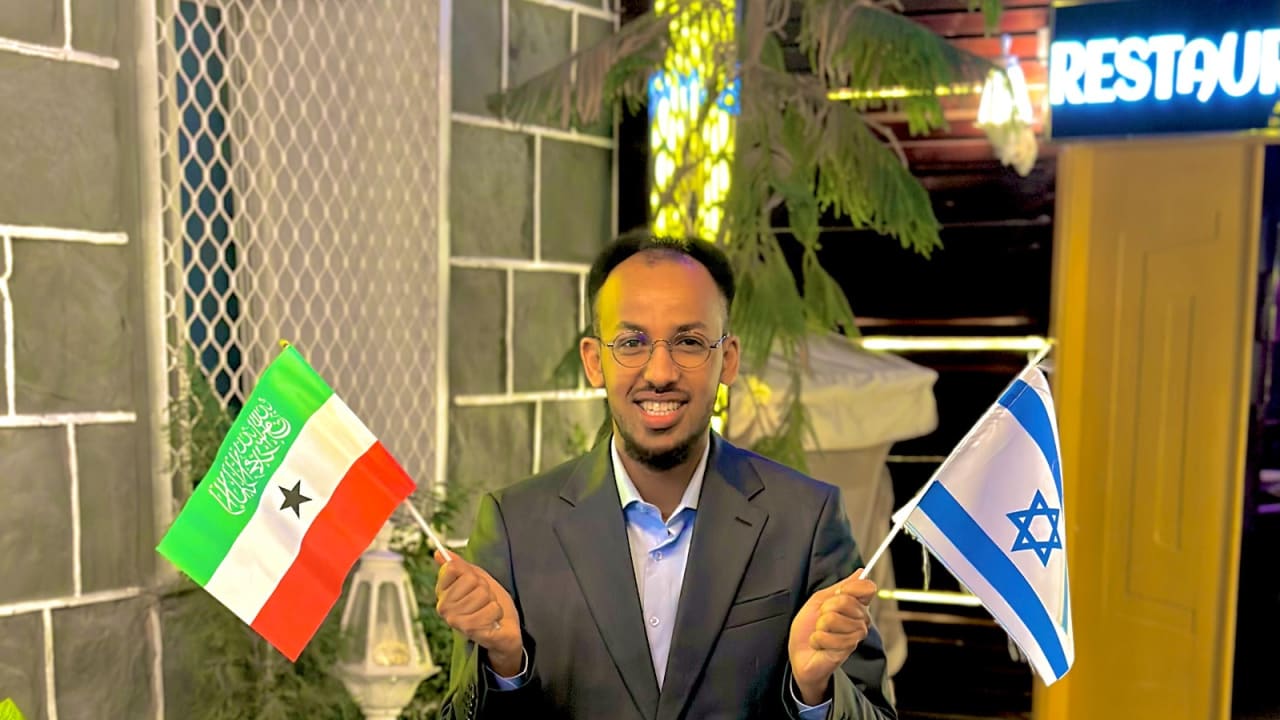
The people of the Republic of Somaliland have walked a rough and often lonely journey for 34 years – building an exemplary nation, while waiting for the world to recognize reality. That journey required extraordinary perseverance, and it paid off last Friday, when Israel officially recognized the Republic of Somaliland, tipping the first domino.
This was not a random act; it was a calculated move.
Since regaining its sovereignty in 1991, Somaliland has achieved what many recognized states have failed to do, despite extensive external support. It disarmed militias through dialogue, reconciled deeply divided communities, drafted a constitution by consensus, and built functioning institutions from the ground up.
Somaliland has held multiple elections, overseen peaceful transfers of power, protected freedom of expression, and maintained the rule of law in a region where these qualities are often the exception rather than the norm.
Somaliland did not inherit legitimacy – it earned it.

Its people waited. They were repeatedly told to be patient.
Patient for negotiations, for regional consensus, and for a “right time” that never seemed to come. Yet through it all, Somaliland continued to demonstrate responsibility, maturity, and self-governance. Few societies have shown such discipline while being denied the basic dignity of recognition.
Israel's place in Somaliland's history
Israel’s decision matters because it recognizes reality over ritual. In doing so, Israel secures a place in Somaliland’s history as a state willing to stand up for justice and acknowledge facts on the ground.
It's no coincidence that this recognition comes from a fellow democracy – one that understands what it means to survive and thrive in a difficult neighborhood.
Israel and Somaliland are two strong democracies amid significant challenges. Both have faced isolation, security threats, and constant regional turbulence. Both responded not by retreating, but by strengthening institutions, investing in resilience, and choosing democracy over disorder. Their mutual recognition reflects shared values as much as strategic calculation.
Somaliland’s importance extends well beyond symbolism. Its strategic location along the Gulf of Aden, with an 850-kilometer coastline overlooking one of the world’s vital maritime corridors, gives it global relevance.
Nearly a third of global trade and a significant share of the world’s energy shipments pass just off its shores. At a time when Red Sea insecurity, piracy risks, and geopolitical competition are rising, Somaliland has quietly played a stabilizing role.
Recognition would allow Somaliland to do more–formalize security cooperation, strengthen maritime governance, and contribute openly to the protection of global trade routes. Stability, when recognized, becomes a force multiplier.
Africa should pay close attention.
The continent frequently speaks of “African solutions to African problems.” Somaliland represents exactly that: a home-grown success built through dialogue, compromise, and accountability. It shows that peace is possible, democracy can take root, and power can change hands without violence. Somaliland is not an anomaly to be ignored; it is an example Africa can be proud of.
This is why Ethiopia and Kenya, in particular, should follow Israel’s lead.
For Ethiopia, Somaliland is a critical neighbor that offers strategic partnership opportunities, including security, trade, and a stable, terrorism-free border. Somaliland is also the most viable access point to the sea for Ethiopia via Berbera, which already contributes to Ethiopia's growing economy.
For Kenya, recognizing Somaliland strengthens regional security, counters extremism, stabilizes trade routes, and aligns with Nairobi’s long-standing interest in a predictable Horn of Africa. Kenya has already experienced the dangers of unresolved Somali irredentism; acknowledging Somaliland helps bring clarity where ambiguity has long fueled tension.
Somaliland exists. It governs. It delivers. It contributes.
Israel has tipped the first domino. Africa – especially Ethiopia and Kenya – should allow the rest to fall.
The writer is a Somaliland diplomat who served as the first secretary of the Republic of Somaliland mission in Kenya.