Israel’s recognition of Somaliland, the first UN member state to do so, is a bold foreign policy move that combines moral clarity with strategic ambition.
Somaliland declared independence in 1991 and has governed itself ever since. A Muslim-majority territory roughly the size of Tunisia, it has held multiple competitive elections, maintained internal stability, and is ranked “Partly Free” by Freedom House, scoring slightly above the African continental average on democratic indicators.
The African Union opposes recognition, arguing it could encourage separatist movements elsewhere on the continent.
Even if that concern were accurate, which is far from clear, it cannot outweigh the reality on the ground. Unlike the recognition of a Palestinian state that rewards terrorism and authoritarianism, Somaliland has demonstrated the attributes of statehood and aligns clearly with Western interests in a region dominated by jihadist and Iranian influence.
It has defined borders, a functioning economy, an elected government, and a standing army. Foreign policy succeeds when it is grounded in reality, not abstract theory or inherited international consensus.

Another argument raised against recognition is that it could complicate cooperation with Somalia in the fight against the terrorist organization al-Shabaab. Somalia has paid a heavy price battling jihadist terror and relies extensively on external support.
Those realities cannot grant Mogadishu a veto over the diplomatic recognition of a neighboring entity that has achieved what Somalia itself has not: sustained internal stability, territorial control, and governance. Somaliland’s record stands on its own merits.
Moral courage is rare
Somaliland has been self-governing for 34 years. In African terms, that is a long time. Somalia itself gained independence only 31 years before Somaliland broke away. That raises an obvious question: why has no country, aside from Taiwan, which is not a UN member state, recognized it? The answer is not that Somaliland failed the test of statehood, but that moral courage is rare and consensus is easier.
That is precisely what makes Israel’s decision so significant: a willingness to stand alone and accept real risks while pursuing significant long-term gains.
Being the first country to recognize Somaliland matters. Its people will remember this decision, much as Singapore remembers Israel’s role in covertly helping build its army after independence in 1965.
Geography adds a critical security dimension. Somaliland is near the Bab al-Mandab chokepoint linking the Indian Ocean and the Red Sea, a position that strengthens intelligence reach, regional coordination, and the ability to help safeguard vital maritime trade routes.
Just across the Gulf of Aden lies Yemen, where Iranian-backed Houthi rebels operate.
The Houthis have proven to be a real and persistent threat to Israeli security, one that Israeli retaliation has so far failed to deter. A cooperative relationship with Somaliland, therefore, offers clear intelligence and strategic advantages in confronting this threat and the wider jihadist network operating in the region.
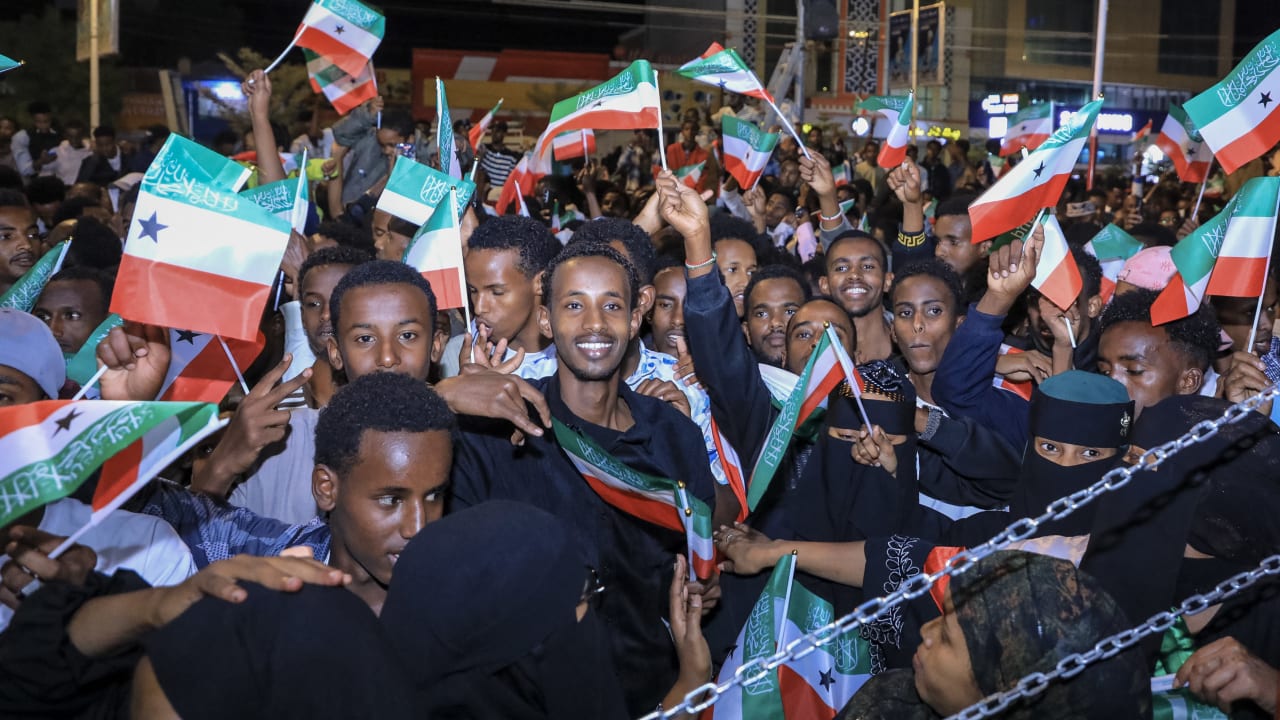
Finally, a Muslim-majority country publicly recognizing Israel is a major diplomatic achievement, especially coming just months after a ceasefire with Hamas. More striking still is the visible enthusiasm among Somaliland’s population, which has celebrated the decision openly. Coming from a Muslim-majority society, that is incredibly rare and should be embraced.
If Somaliland and its people genuinely seek peace and cooperation with Israel, then recognition is the correct decision, even at the cost of manageable diplomatic backlash.
By aligning with a willing partner, leveraging a critical geographic position in the fight against global jihad, and having the courage to move first, Israel has demonstrated the kind of diplomatic creativity and resolve that merits admiration.
Doing the right thing, especially when it is unpopular, is what matters. That is a lesson the Jewish people know all too well.
The writer is the former director of the Jewish Diplomatic Corps of the World Jewish Congress, a global network of 400 Jewish leaders across 60 countries engaged in diplomacy, advocacy, and international policy.