My mother has carried a lot of anxiety since I moved to Israel alone as a 22-year-old. She has had to worry about the fears of having a daughter living away from home in addition to the difficult realities of my being in Israel: terrorism, rockets, and late-night journeys home from Jerusalem after shifts at the office.
After October 7, her anxieties only grew, peaking when she watched testimonies of parents who received final texts from their children before they were murdered or dragged away to Gaza.
While I’ve been living my life in Israel - going to work, seeing friends, and existing in a country battered by decades of terrorism and centuries of violence - my mother has had to learn how to cope from afar.
But on Thursday, the shoe was on the other foot.
I didn’t learn of the attack on Manchester’s Jewish community until nearly an hour after it happened. I had decided to avoid the news for Yom Kippur - a rare privilege for someone who works in journalism. When I finally heard, my mind raced: first to my loved ones in the city, then to the UK’s Jewry in general, and then finally to London - should another “Globalize the Intifada” agitator decide to copycat.

My mother isn’t very observant, though proud to be Jewish and a Zionist but this year she attended synagogue for Yom Kippur with the encouragement of her boyfriend. She had promised me she would answer calls in case of an emergency but she didn’t answer my frantic calls. I phoned her eleven times. I texted her twelve times. I called her boyfriend six times.
For an hour, there was only silence. Her boyfriend was working security at the synagogue, and I knew that if he was aware of the attack, he would reach out. He didn’t. Desperate, I called one of my mum’s non-Jewish friends and asked him to contact the Metropolitan Police, to check whether community liaison officers had informed synagogues directly. He couldn’t get through - neither by phone nor online.
And that’s when my dread deepened because I had no faith.
No faith that the police would instinctively move to protect other synagogues. No faith that they understood the Jewish community well enough to realize observant Jews would not have their phones on. No faith that they cared enough to act.
For a long time, even before October 7, I have lacked faith in Britain’s institutions and authorities to do what is necessary: to protect Jews, British citizens and maintain social harmony.
Eventually, after around an hour and a half, my mum and her partner got in touch to let me know they were fine. Her boyfriend explained that it wasn’t the Met who had warned synagogues, but the Community Security Trust, the mensches that they are, who had informed every security team. Instead of being at home or sat in shul, they spent the holiest day of the Jewish year guarding and protecting their community.
And that left me with two emotions: tremendous gratitude that the CST exists, and tremendous disgust that it needs to. That a Jewish charity must fill the gap where the state refuses to act. Long before October 7, antisemitism in Britain was unbearable. Since then, it has only worsened.
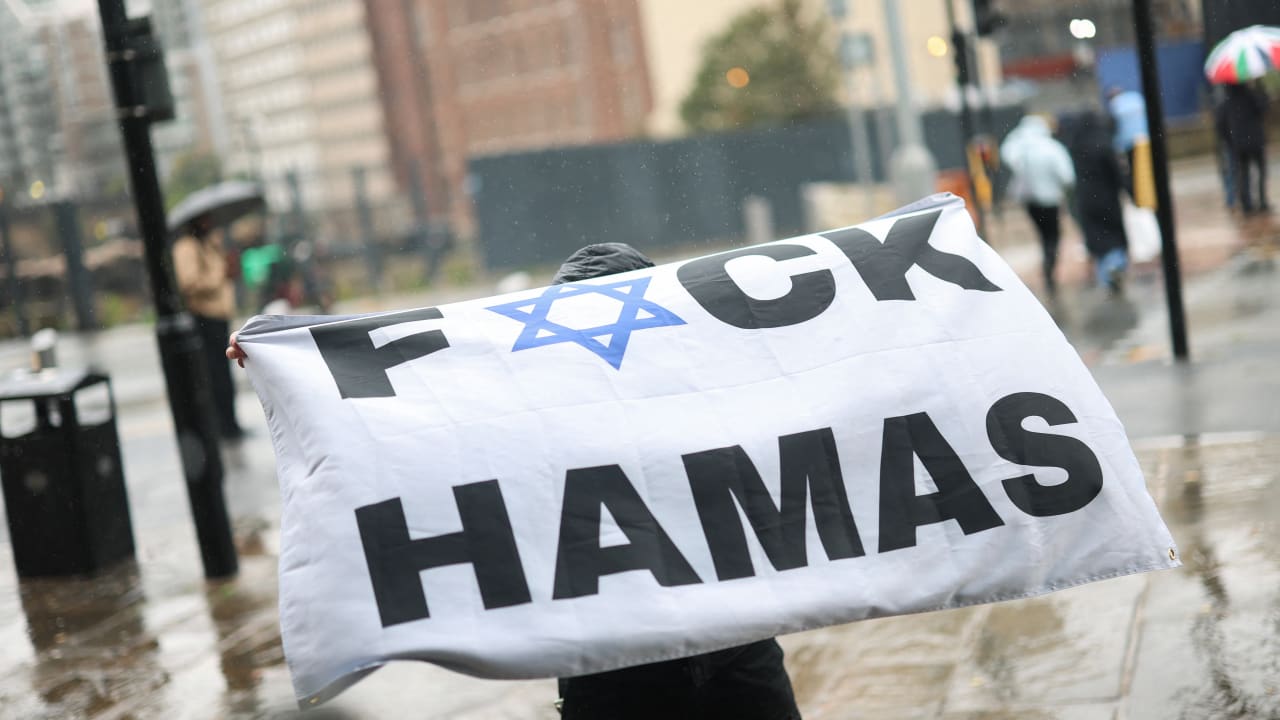
Now, with the news that two people lost their lives to an antisemitic terrorist in Manchester, three more face a potentially long road to recovery, and countless others are left traumatized, I keep thinking about Britain’s disconnect from its Jews. Even on a day when Jews were laying dead in English streets, people were marching for a media-op flotilla with banners calling for an intifada and falsely accusing the Jewish state of genocide.
Right now, Britain is not mourning its citizens who were murdered - it is mourning Jews. Will their faces appear on posters across the country? Will their names be remembered a year from now? Will people march in their memory? I fear not. There is a barrier of separation in Britain that simply doesn’t exist in Israel.
In Israel, regardless of ethnicity or religion, we care when one of our own is killed. We cared when Druze children were murdered by a Hezbollah rocket in Majdal Shams. We cared when Bedouin Israeli Hisham al-Sayed finally returned home after nearly ten years in captivity. We still care, deeply, about the 48 hostages who remain in Hamas’s hands nearly two years after their abduction.
Manchester attack shows: Now is the time to make aliyah
The Manchester attack did not happen in a vacuum. It came after years of apathy and incitement. Yes, members of the royal family, parliament, and Keir Starmer all condemned it, but will their words ever translate into action? I fear not.
Those who know me will say I sound like a broken record when I say this, but now is the time to make aliyah. If you’ve been waiting for a sign, take this as the warning call. When the pro-Hamas crowd realizes how deep the apathy runs - when they see that men can openly chant for the rape of Jewish women and girls in the heart of London’s Jewish community - it will only get worse.
Britain today is in a state of anomie. Its streets and political institutions are increasingly overrun by Islamist extremists, and there is no real future there.
My thoughts and prayers are with the victims of the Manchester attack, their families, and the wider Jewish community. May their memory be a blessing and may their loss be a wake-up call.