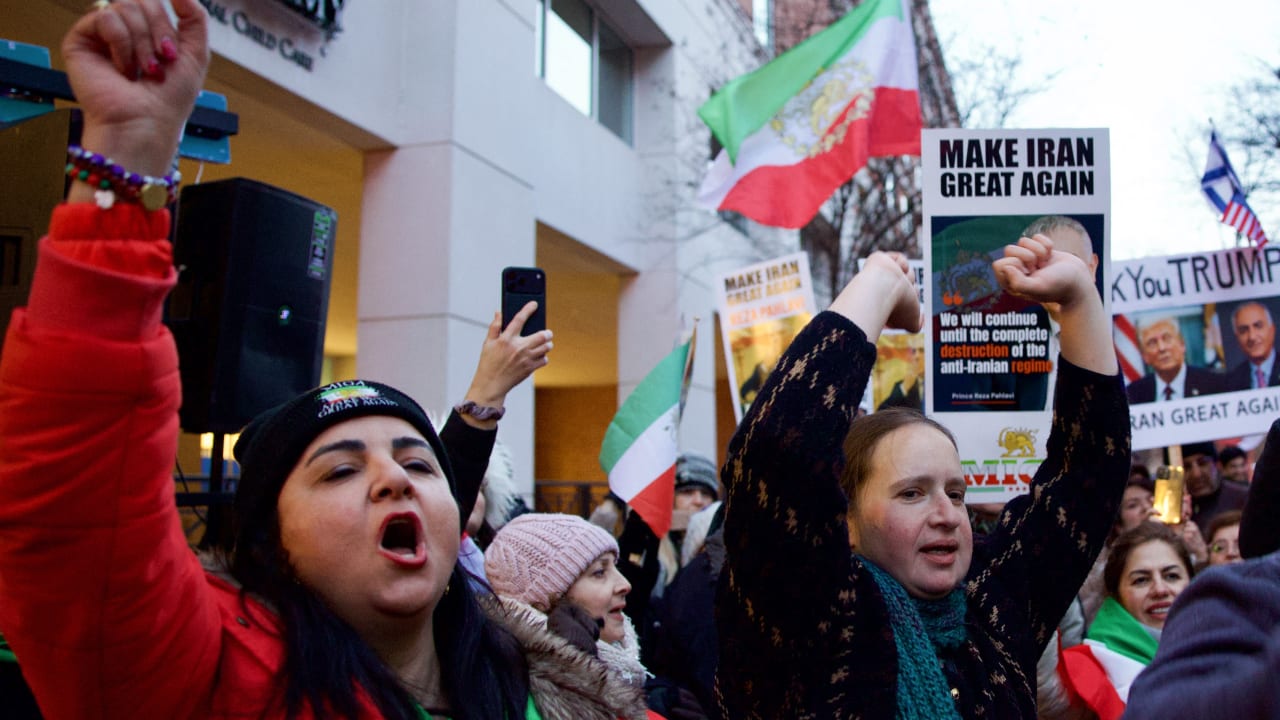
Iranians fear that the two-week ceasefire could stall momentum to topple the Islamic regime, potentially emboldening authorities and worsening repression, diaspora-based Iranians told The Jerusalem Post on Thursday.
Kako Aliyar, a member of the leadership committee of the Kurdish Iranian opposition party Komala, who fled Iran at age 16 and joined the Kurdish opposition at 18, said that while war “is never desirable,” there was “no viable alternative” to removing the Islamic regime.
The war “inevitably carries risks for civilians,” but so too does the regime’s “killing, torturing, and persecution” of its own population, he continued.
“As Kurdish people, we have opposed the Islamic regime in Iran for nearly five decades, often in isolation and without external support,” he explained.
“For this reason, any weakening of the regime is generally perceived positively among us. Although we have had no direct involvement in the current war, there is a widespread sentiment among Kurds and Kurdish political parties that, after almost half a century, the time may have come for us to live freely and secure our legitimate rights within Iran,” Aliyar continued.

The US-based Human Rights Activists News Agency (HRANA) reported that 1,701 civilians have been killed in US and Israeli strikes, while the International Federation of Red Cross and Red Crescent Societies has said that at least 1,900 people have been killed and 20,000 injured.
Ending the war prematurely “could embolden the Iranian authorities, making them more repressive and self-assured,” he warned, pointing to the regime’s killing of thousands of its own citizens during protests in January over economic conditions.
“If the regime emerges from this conflict having withstood pressure from the United States and Israel, they may become even more confident and intensify their domestic repression. Without a decisive outcome that includes fundamental political change, there is a strong likelihood that the current cycle of violence and suppression will continue, potentially with greater confidence,” he continued.
Truska Sadeghi: Struggle would have continued regardless of war
Persian-Kurdish investigative journalist Truska Sadeghi told the Post that, even if Operation Roaring Lion had not commenced, the struggle for a democratic government would have continued after January protests saw thousands killed by the regime’s security forces.
Some Iranians had hoped that the war with the US and Israel would lead to the regime’s fall, though Sadeghi said the conflict has so far yielded limited results and that the ceasefire has left all parties at a standstill.
“This ceasefire has not really produced results for either side. It has left everything in a suspended situation. On one side, uranium remains intact, the IRGC still exists, and Iranian authorities continue increasing executions,” she said.
“On the other side, the United States has not been able to remove this uranium or secure commitments from Iran to stop developing missiles or push Iran to stop supporting militias in the region. As a result, a major concern is a repeated question: what was the outcome of all this cost and conflict?” she continued.
The death of Ayatollah Ali Khamenei has brought little change to the reality of Iranians, she continued, noting that internet shutdowns have persisted and that the regime continues to carry out executions against political prisoners in violation of international law.
“I can say that people are experiencing very serious fear. If they had the ability to express themselves freely, they would show it. People understand that continuing under this regime can be very dangerous and disastrous, and that repression may increase for many reasons,” she said.
“As a journalist, I express my personal view that the survival of the Islamic Republic will likely lead to even greater pressure on people inside the country, on Kurdish parties based in the Kurdistan Region, even more than in the past three years, and could become more dangerous for the stability of Arab countries also,” Sadeghi continued.
The critical next step, Sadeghi said, is for the United States and Israel to make their goals in the war clear.
“If their goal is regime change, they should support the actors that can facilitate that process in a clearer way, so the process would become much easier,” she said. “However, leaving things at this kind of ceasefire effectively means abandoning and forgetting the people, and leaving them to a dangerous fate under even harsher repression than before.”