
Sukkot is known as a time of joy. Ve’samahta be’hagecha, ve’hayita ach same’ah means “You shall rejoice in your festival and be completely happy.”
What’s interesting is that this holiday comes just four days after Yom Kippur, the culmination of 10 days of deep introspection, when we are called to examine our lives, ask forgiveness, and seek a new path forward. Then, almost overnight, we are told to move from solemnity to joy, to step outside and celebrate.
It’s a fascinating transition.
Maybe that is why Sukkot is such a powerful symbol of how joy and mindfulness can come together. Autumn provides the perfect backdrop: a time of gathering crops and fruits, of giving thanks for the land’s bounty. Even today, when most of us are far removed from agriculture, the holiday draws our attention back to gratitude and the cycles of nature.
Sukkot is the ultimate mindful holiday.
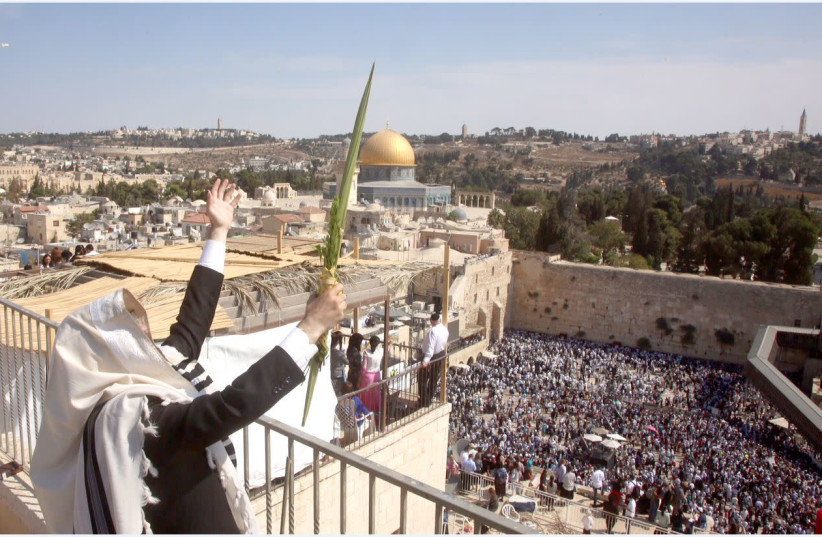
Sitting in the sukkah, we are surrounded by reminders of fragility, impermanence, and blessing. A sukkah is temporary, open to the sky, vulnerable to wind and weather. And yet, it is precisely here, in a place that is not fully secure, that we are told to rejoice.
The message is clear: Happiness does not depend on perfect circumstances but on the ability to notice and appreciate what is here, right now.
The Four Species – etrog (citron), lulav (palm branch), hadas (myrtle), and arava (willow) – strengthen this message. We hold them, smell them, shake them in every direction. It is a sensory way of saying: Life is abundant, and we give thanks. Sukkot urges us to pause, notice, and be grateful.
This mindfulness can extend to our meals as well.
During the holiday, as families gather for festive meals in the sukkah, it can also be a time for mindful eating. Most of us don’t often stop to consider where our food comes from and who planted the seeds, how much sun and rain nourished them, who harvested, packed, and transported them to our tables. Pausing before a bite to reflect on this journey turns a simple meal into a practice of awareness and gratitude.
Another layer of joy comes from the timing of Sukkot.
We have just emerged from Rosh Hashanah and Yom Kippur, holidays that demand introspection and self-examination. Yom Kippur, while serious, is also hopeful. It offers us the chance to release old habits, forgive ourselves and others, and begin again. There is a special joy in fresh starts – in knowing that life offers us the possibility of renewal.
But what really is joy?
The Torah commands us to rejoice on Sukkot, but joy is not always so easy to define. Is it fleeting happiness, like hearing your favorite song on the radio? Is it the thrill of a party, or perhaps the calm contentment of being at home? Is it gratitude, or the deeper sense of meaning that comes from knowing our lives matter? Joy is likely some combination of all of these, woven together differently for each of us.
To cultivate joy, it helps to look at its parts.
Contentment is one. It doesn’t mean ignoring what we lack but appreciating what we do have. You may dream of a larger home, yet find yourself grateful for the ease of a smaller space and the kindness of close neighbors.
Gratitude is another. The simple act of noticing the goodness around us – whether it’s the support of a friend, the warmth of a meal, or a walk under a beautiful night sky.
And then there is meaning. Meaning can be found in daily life: in relationships, in work, in nature, or in caring for others. When we know our lives have significance, joy follows.
Mindfulness helps us nurture all three: contentment, gratitude, and meaning. It is the practice of paying attention to the present moment, gently and without judgment. In slowing down, we become less reactive and more open. We notice the small blessings that might otherwise pass us by: the sound of leaves rustling in the wind, the warmth of a cup of tea, the breath that steadies us. Joy can arise from something as simple as that.
Sukkot teaches us that joy is not something we wait for. It is something we create and cultivate. The sukkah may be fragile, but within it we are called to rejoice. Life may be uncertain, but meaning, gratitude, and connection are always available to us when we stop and notice.
As this new year begins, we can ask ourselves: How will I find joy? Perhaps it will be in a shared meal, a quiet walk, or an unexpected laugh. Perhaps it will be in the chance to start over, to forgive, or to simply be present. Joy doesn’t have to be grand. More often, it’s in the smallest, most ordinary moments – moments that mindfulness helps us see.
As you step into the sukkah, or pause anywhere in your day, may you discover that joy is not distant or elusive. It is here, waiting, in the present moment.
The writer is a psychotherapist and mindfulness-based stress reduction instructor. She leads eight-week MBSR courses in Jerusalem. The next course starts on October 21. For more information: www.mindfulnesswithsusie.com