
As human beings, we are in the process of adaptation from the beginning of life, forming in the womb. We are sensory beings. As amniotic fluid is a greater sound carrier than water, our sensory environment begins in utero.
After birth and throughout our lives, our central nervous system perceives, sorts, chooses, and responds to information received through our sensory system. Over the years, we collect and store these experiences. We construct and form associations and memories. We create meaning.
Change and adaptation
“The only constant is change.” – Heraclitus
Biological adaptation is defined as “a change or the process of change by which an organism or species becomes better suited to its environment.” Human adaptation has a dual capacity. We can take elements from one area of experience and adapt them to another area.
“It’s not the strongest species that survives, nor the smartest that survives. It is the most adaptable to change.” – Charles Darwin
Trauma and resilience
Dutch-American psychiatrist Bessel Van der Kolk defines trauma as “an experience that overwhelms the central nervous system and alters how memories are processed, leading to a feeling of helplessness and terror that can be re-experienced in the present.” Trauma, in his view, is not just a story about the past but a current state of being.
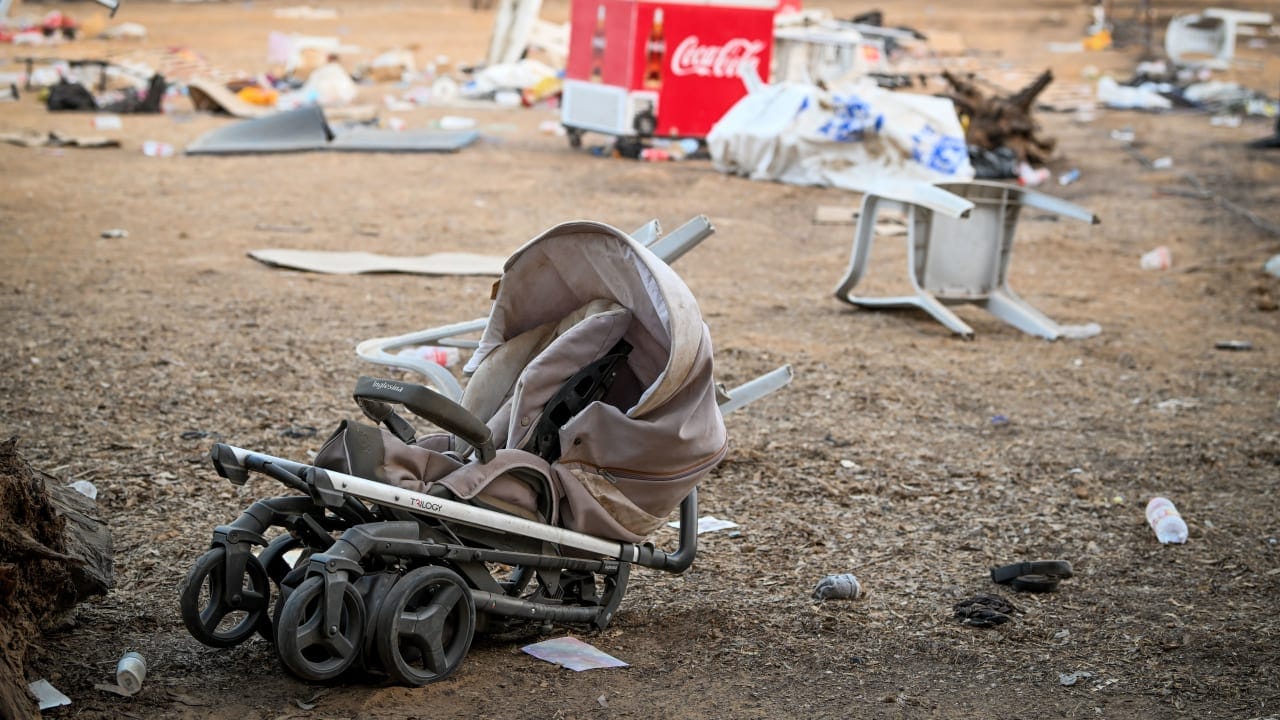
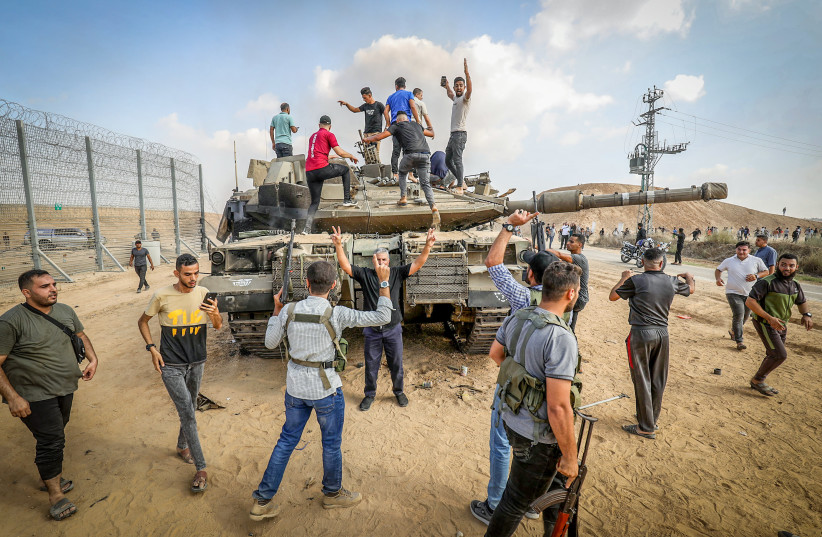
The human capacity for resilience under traumatic experiences is a life-saving one. And we hear of this resilience time and again. The situation in which we still find ourselves since October 7, 2023, continues to challenge every aspect of our being: physical, intellectual, psychological, social, and spiritual. The modern State of Israel has never experienced a war as long as this one. We are feeling tired. We are getting drained.
Today, we are facing a phenomenon that I call “communal fatigue.” For me, it describes what happens to us as a community after experiencing a sleepless night because of sirens, waking up to another day of war, and another day longer for our hostages held in captivity.
This fatigue is different from the individual experience. It is a communal one. It is not just about feeling tired. The communal body is feeling exhausted. The energy we have used in the past, drawn from the mindset of “no other choice,” is running low. Our sense of connecting to our communal body needs to be strengthened.
Awareness and change
We are conscious beings. Being conscious enables us to become aware. Becoming aware enables us to adapt and be resilient.
Awareness is similar to sensing something, a process distinguished from observing and perceiving. Awareness can be described as something that occurs when the brain is activated in certain ways through sensory input.
“Awareness is also associated with consciousness in the sense that it denotes a fundamental experience, such as a feeling or intuition that accompanies the experience of phenomena. Specifically, this is referred to as awareness of experience.
“In philosophy and psychology, awareness is the perception or knowledge of something. The concept is often synonymous with consciousness. The states of awareness are also associated with the states of experience so that the structure represented in awareness is mirrored in the structure of experience.” – excerpted from Wikipedia
We need to shift our awareness from our individual experience to that of attending to the experience of our communal body. This new entity, called the communal experience, is distinguished from engaging in a social experience.
The social experience can be expressed through both leisure and socially conscious activities. For example, going out with friends, attending a protest or vigil, volunteering to help the displaced, preparing food, and delivering supplies to the soldiers.
A communal engagement is experienced as part of the communal body, as part of a whole with its own identity.
Once we become aware of our communal body, we must ensure that its needs are being met. For example, one of the things we can do, when the situation permits, is gather with others to share, learn, and support. Have everyone who comes bring someone from another neighborhood or neighboring town. Share stories, poetry, photographs, music, and, most importantly, food. In nurturing the communal body, you are strengthening your own.
“In order to change, people need to become aware of their sensations and the way their bodies interact with the world around them.” – Bessel Van der Kolk ■
The next installment will be Part Four: How we will adapt in the future.
Sara Jacobovici is a 30-year veteran in the health and mental health fields as a creative arts psychotherapist. She lives and works in Ra’anana.