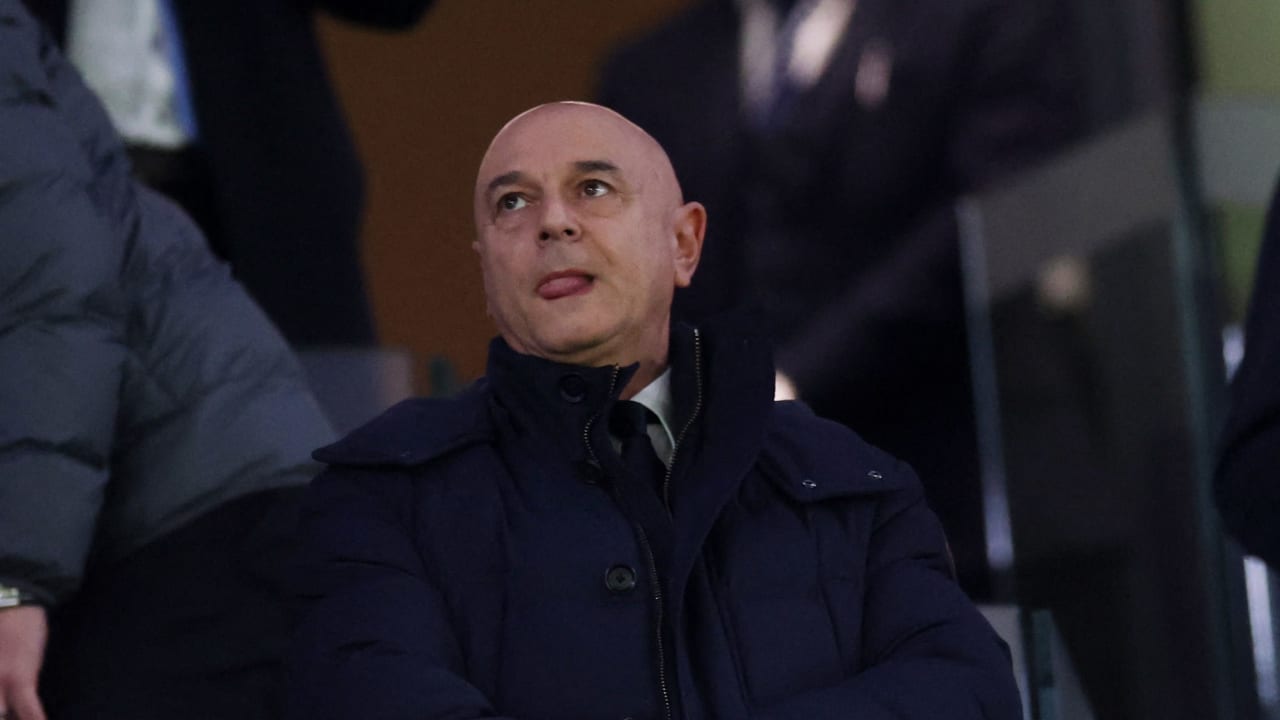
After nearly a quarter of a century at the helm, Daniel Levy is stepping down as executive chairman of Tottenham Hotspur, the Premier League club announced on Thursday.
Levy, who has been one of the most influential Jewish figures in world soccer, leaves behind a complex legacy. His tenure saw both frustration from supporters over missed opportunities on the pitch and widespread admiration for transforming Spurs into a global powerhouse with a state-of-the-art stadium and training facilities.
Tottenham has long been known for its significant Jewish following, particularly in North London, where a large portion of the club’s supporters come from the Jewish community. For many fans, Levy’s leadership carried a symbolic weight – a Jewish chairman guiding a club that has historically been tied to Jewish identity in English soccer.
Under Levy, Spurs captured two trophies: the 2008 League Cup and, more recently, the 2024 Europa League triumph over Manchester United in Bilbao – their first European trophy in more than four decades.
That night, the sight of a Jewish chairman lifting silverware on behalf of a club with such strong Jewish roots resonated far beyond soccer.
In his parting statement, Levy reflected on both the challenges and the successes of his time in charge.
“I am incredibly proud of the work I have done together with the executive team and all our employees. We have built this club into a global heavyweight competing at the highest level,” he said.
Levy took over in February 2001 after ENIC, the company he co-owned, acquired a majority stake from Alan Sugar (who is also Jewish).
Over the years, he developed a reputation as one of soccer’s toughest negotiators in the transfer market – often admired for his financial discipline, but at times criticized for failing to secure the marquee players supporters craved.
Source of pride for Jewish fans
Yet his Jewish identity and his visibility in the game also meant he was a source of pride for Jewish fans, both in London and worldwide. Spurs’ Jewish supporters’ groups often pointed to Levy as a reminder of the community’s historic connection to the club, which has faced both fierce loyalty and, at times, antisemitic abuse from rival fans.
Tottenham confirmed there will be no changes to the club’s ownership or shareholder structure, with Peter Charrington stepping into a new role as non-executive chairman and CEO Vinai Venkatesham continuing to lead the executive team.
“On behalf of the Board, I would like to thank Daniel and his family for their commitment and loyalty to the club over so many years,” Charrington said. “This is a new era of leadership for the club, on and off the pitch.”
As Levy departs, he leaves behind a club financially stronger than ever – Spurs currently rank ninth on Forbes’ global soccer rich list – and one whose Jewish ties remain deeply interwoven with its history and identity. For Tottenham’s Jewish supporters, Levy’s 24 years at the helm were more than just about results; they were about representation at the highest level of the sport.
Reuters contributed to this report.