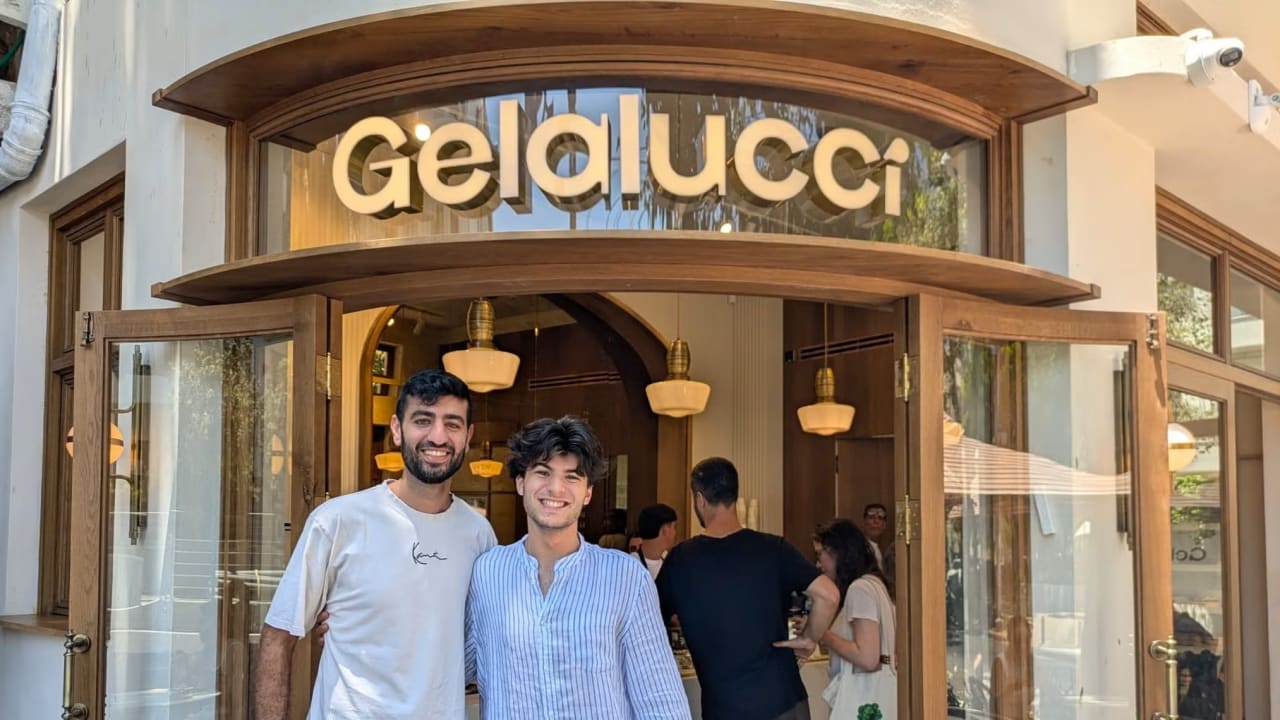
When Gelalucci opened its first Israeli gelateria in Tel Aviv earlier this year, the lines were staggering.
Now, the venture with Italian gelato champion Sergio Colalucci, who shrugged off fears of an anti-Israel backlash in Europe, is expanding, with a second branch opening Thursday in Kiryat Ono, a Tel Aviv suburb.
The initial frenzy surrounding the first branch was no one-day wonder. Weeks after the Tel Aviv opening, customers were still queuing outside the shop on leafy Masaryk Square, off King George Street.
One elderly customer, eating vanilla from a cup, said he had already found what set it apart. “This is the only ice cream in Israel that is not overly sweet. You can taste that it’s good quality,” he said.
Amit Cohen, the branch manager and son of Pini Cohen, a longtime food industry figure and partner in the venture, said the man’s return to the store was more important than any first-day rush.
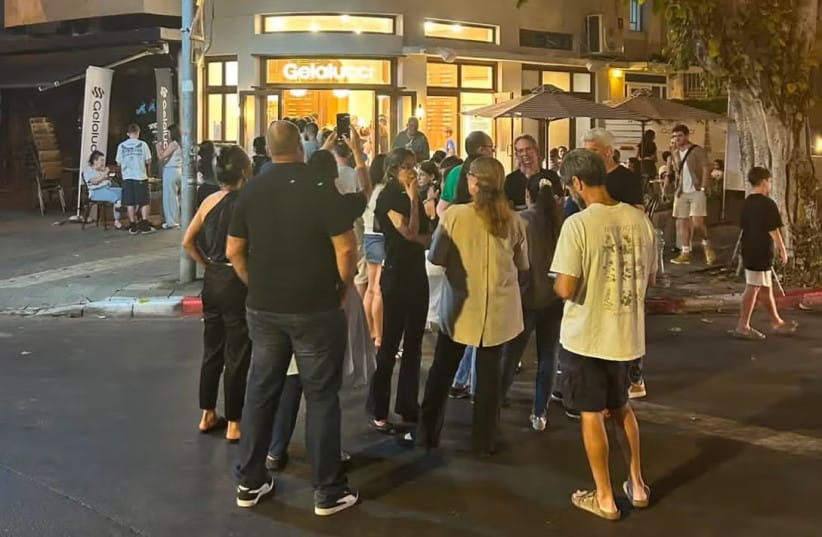
“When people come back again and again, that’s the biggest victory for us,” he said.
The Tel Aviv and Kiryat Ono stores are the first of several Israeli branches planned for Gelalucci, a portmanteau of gelato and Colalucci. The new chain represents a surprising overseas expansion for the entrepreneur, who has operated primarily in Italy and Spain, where anti-Israel sentiment is intense.
Colalucci's gelatto diplomacy
Colalucci served scoops himself on opening day, drawing thousands of customers with an offer of free gelato for the first 500. Before the opening, Ronen Nimni, owner of the Cafe Cafe Group, which partnered with Colalucci to bring Gelalucci to Israel, had been worried that anti-Israel reactions could hurt the Italian gelato maker, whose business also operates in Europe. There are eight branches in Spain, where the backlash against Israel has been especially visible.
But according to Cohen, Colalucci was not deterred.
“He fell in love with Israel,” Cohen said. “He’s become a kind of ambassador for us.”
Even missiles did not appear to shake him. On one visit, Colalucci was driving with Cohen when a siren sounded. The two stopped the car, got out and lay on the ground with their hands over their heads, following Home Front Command instructions, Cohen recalled. Colalucci, he said, remained calm.
“I mean, it was the Houthis, but what does he know?” Cohen quipped, referring to the almost blasé attitude many Israelis have developed toward missiles from Yemen, which are usually intercepted and often regarded as more of a nuisance than a threat.
Colalucci’s son, Francesco, 21, who is also involved in the Israeli launch, stayed in Israel after his father left and found himself caught in a brief flare-up with Iran. Like his father, he did not panic when the missiles came. Nor, he said, was he troubled by criticism of the decision to open in Israel.
“Why would I have a problem to open here? I see a beautiful place with beautiful people,” he said.
Sergio Colalucci also serves as president of the Gelato World Cup. In 2006, he was a member of the Italian team that won with an entry that included his flavor, “Pistachio 26.”
It is one of 26 flavors offered in the Tel Aviv shop, alongside tiramisu, salted caramel, fig and orange ricotta, sorbets and sugar-free scoops, and some added to cater to local preferences, including vanilla and an Oreo-style flavor made with cookies prepared in-house.
The author’s son assists her, breaking ground as an investigative reporter, Tel Aviv, June 12, 2026. (Deborah Danan)
The company has entered a crowded market in a city where frozen treats are widely available. Unlike most local ice cream businesses, Gelalucci’s Israeli operation is built around a fully imported product. The gelato is made at the Colalucci family factory in Nettuno, a seaside town south of Rome, using Italian raw materials and the family’s original recipes, then shipped to Israel for sale.
'If it's good gelato, you're not going to get fat'
The gelato is made without nonkosher ingredients, Cohen said, and any additives are plant-based. The Tel Aviv store, however, does not have Israeli kosher certification because it is open on Shabbat. Cohen said the partners may later seek certification from a kosher authority in Rome or another body that could accommodate the brand’s import-based model, particularly for subsequent branches.
The decision to open in Israel had the backing of the whole family, Francesco Colalucci said, fitting for a business that is very much a family affair. His grandfather opened the first shop in 1974; his father now leads the company and serves as its public face; Francesco runs the flagship store in Nettuno; and his mother, sister, and aunt are also involved.
“My mother always said to my father, you have to remember, we don’t sell gelato, we sell happiness for the people,” he said. “We want to give this same product to the Tel Aviv people. For this, the whole family has to be involved.”
Francesco Colalucci said his father never pushed him into the family business and told him he could choose his own path. But gelato was the atmosphere he grew up in. Mauro Petrini, his father’s mentor, known in the industry as “the engineer of ice cream,” was a formative presence in his childhood.
“Mauro was like an uncle to me,” he said. “When I was around 10, he told me, the more you learn, the more you have learned nothing. From this moment, the passion for it grew inside me.”
It took three years to turn the idea of a Tel Aviv branch into an operating store, slowed by transport, logistics, certification issues and the bureaucracy that foreign businesses often encounter when entering Israel. Francesco Colalucci shrugged off the delays, saying Israel was hardly alone in that respect.
“Bureaucracy is very terrible also in Italy,” he said.
With unmistakable Italian features and an athletic build, Colalucci does not look like a cautionary tale about growing up around ice cream. He says it comes down to balance, protein, fat and sugar in the right proportions, plus restraint.
“If it’s good gelato, you’re not going to get fat,” he said, before adding with a smile, “Just don’t eat too much.”