Any possible agreement between the United States and Iran must be viewed with caution, given Tehran’s record of deception, former senior Israeli defense official and Iran nuclear expert Avner Vilan said Thursday in an interview with 103FM.
Vilan said Iran’s conduct in past confrontations and negotiations leaves ample reason for skepticism, even as discussion grows over a potential deal. “The Iranians are taking their time; these are negotiation tactics. There may be progress, but I would be careful not to jump to conclusions,” he said.
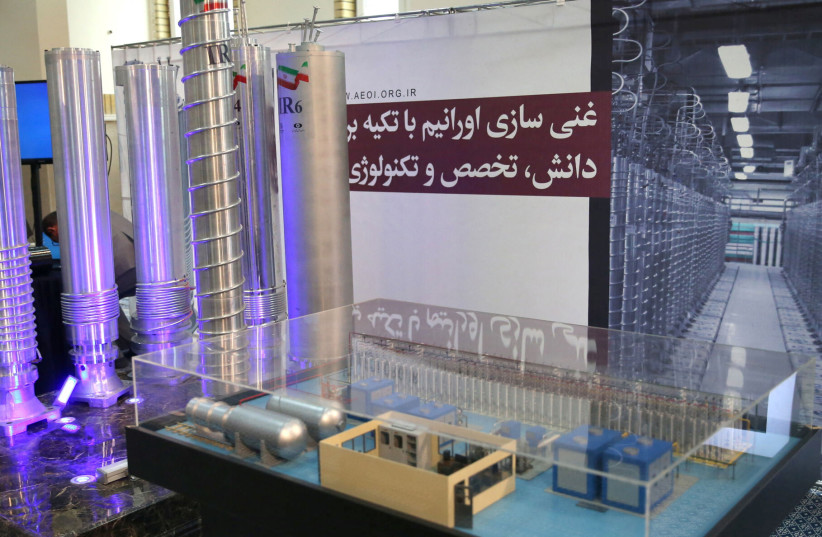
He said the central issue in any such agreement would still be Iran’s stockpile of enriched uranium. According to Vilan, Tehran currently holds about 450 kilograms of enriched uranium produced since 2018.
“It brings them very close to the order of magnitude of 11 or 12 nuclear bombs. This material must be out of Iran or neutralized,” he said.
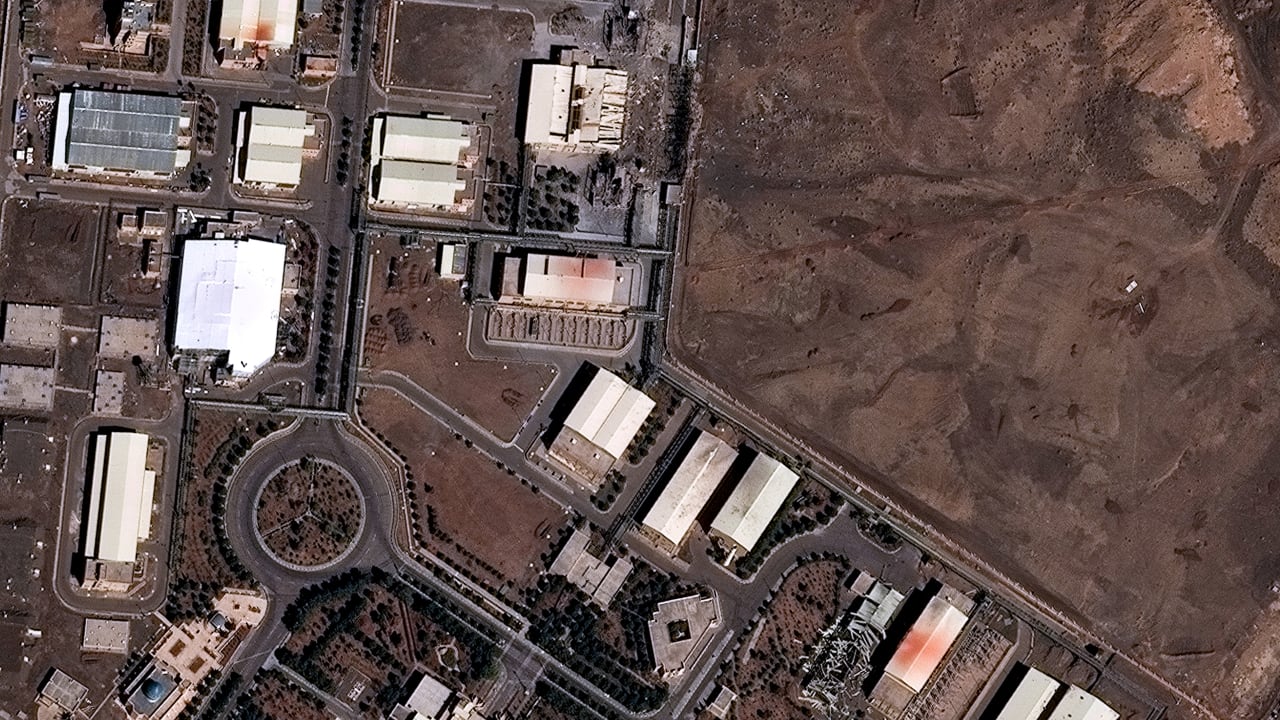
According to Vilan, the enriched uranium is likely stored at three sites that are currently being monitored from the air. He said neutralizing that stockpile is, in his view, a basic American condition for any agreement.
“I do not see an agreement in which the material is not neutralized, at least not declaratively. If that does not happen, there is no agreement from the American side. The Iranians may also show flexibility here because they want to ensure the survival of the regime, and that is a very strong card,” he said.
Tehran must fully disclose all uranium, threatening assets in its possession
Even so, Vilan expressed strong doubt about the credibility of future Iranian declarations. He said any agreement would be vulnerable if Tehran does not fully disclose what it holds.
“They are champions at lying and cheating. I would not be surprised if they say they found only 300 kilograms, and the rest was lost. That would be a very serious situation,” he said.
Asked whether Iran would in fact lie, Vilan answered sharply: “What do you mean? They are Iranians. We saw the story with the mines in Hormuz, when they said they did not know where they were.”
On the question of enrichment, Vilan said Tehran could potentially accept a framework allowing only minimal enrichment in exchange for substantial relief, compensation, and the lifting of sanctions.
He was less optimistic, however, about the possibility of limits on Iran’s ballistic missile program. “There is no international constitutional basis for such a concession. If we are realistic about the nature of the agreement that can be achieved, it will be an agreement that removes the nuclear material,” he said.
Vilan concluded by pointing to the broader political and strategic implications of such an outcome. He suggested that even a limited nuclear agreement could strengthen the regime economically.
“We need to remember the speeches at the start of the operation about creating conditions for the fall of the regime. In the end, the regime may receive a great deal of money that will be its economic lifeline. I am not sure it is possible to achieve anything better from the place we have reached,” he said.