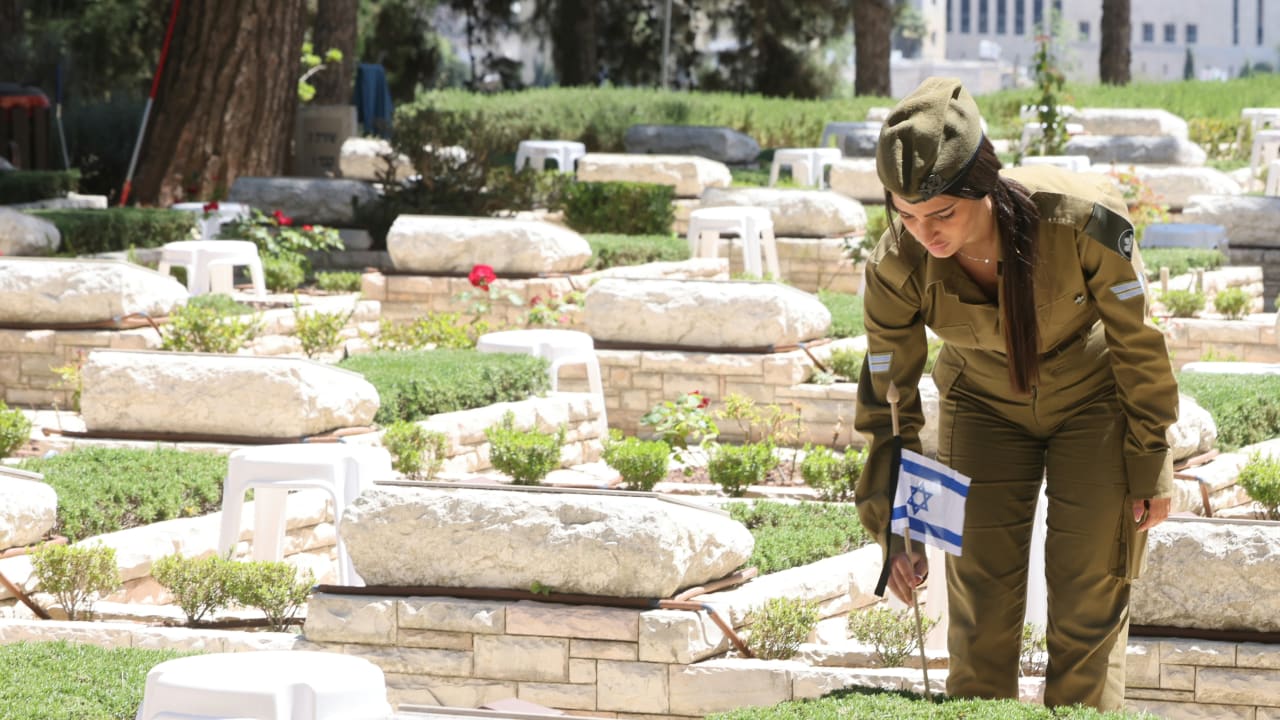
The IDF and the Defense Ministry will recognize civilian suicides as similar to fallen soldiers if the individual killed themselves within two years of their service during the Israel-Hamas War, and if certain criteria apply, they announced on Tuesday.
Until now, the IDF and the ministry have provided psychological and financial support to the families of soldiers who committed suicide during their service, but did not assist the families of soldiers who killed themselves after being discharged.
However, due to the unique nature, intensity, and length of the recent war, a strategic decision was made that greater flexibility must be shown regarding the issue.
For example, there has been a spike in reservists committing suicide months after they undertook a traumatic service period in Gaza or some other front – a phenomenon that was largely unknown until now.

IDF to recognize reservist suicide as fallen soldiers
Previously, nearly all suicides were from mandatory service soldiers.
Reservist soldiers were viewed as more stable, as most of them did not perform lengthy or intensive periods of service.
This changed during the recent war, when many reservists cumulatively fought for well over a year.
IDF sources said that an estimated 15 suicides would be recognized as fallen soldiers through this new process.
To be classified as a suicide case, the suicide must occur within two years of service. In addition, there must be an established connection between the suicide and the soldier’s service. If both of these criteria are met, then the soldier’s family is entitled to psychological and financial support.
While the criteria are not necessarily scientific, a commission headed by Maj.-Gen. (res.) Moti Almoz and many mental health professionals found that standards were required so that the new process would not be abused.
This is precisely why the commission adopted a two-year limit.
They explained that, on one hand, they wanted to show flexibility and to recognize that the emotional processes leading to suicide were sometimes stalled or delayed. On the other hand, they did not think it was reasonable to leave the time window open indefinitely.
Still, IDF sources said that there could be circumstances where the two-year limit might be waived.
This program, for the time being, is limited to victims and families of the 2023-2025 war.
That means that delayed suicides from earlier wars will not receive recognition.
In this new program, the IDF Human Resources Command chief will now have the authority – along with an ad hoc commission – to give preliminary recognition to suicides by reservists who are off-duty. This way, the relevant IDF commander can give an official eulogy at the burial; it would also allow for an official IDF presence and the placement of an IDF wreath at the grave.