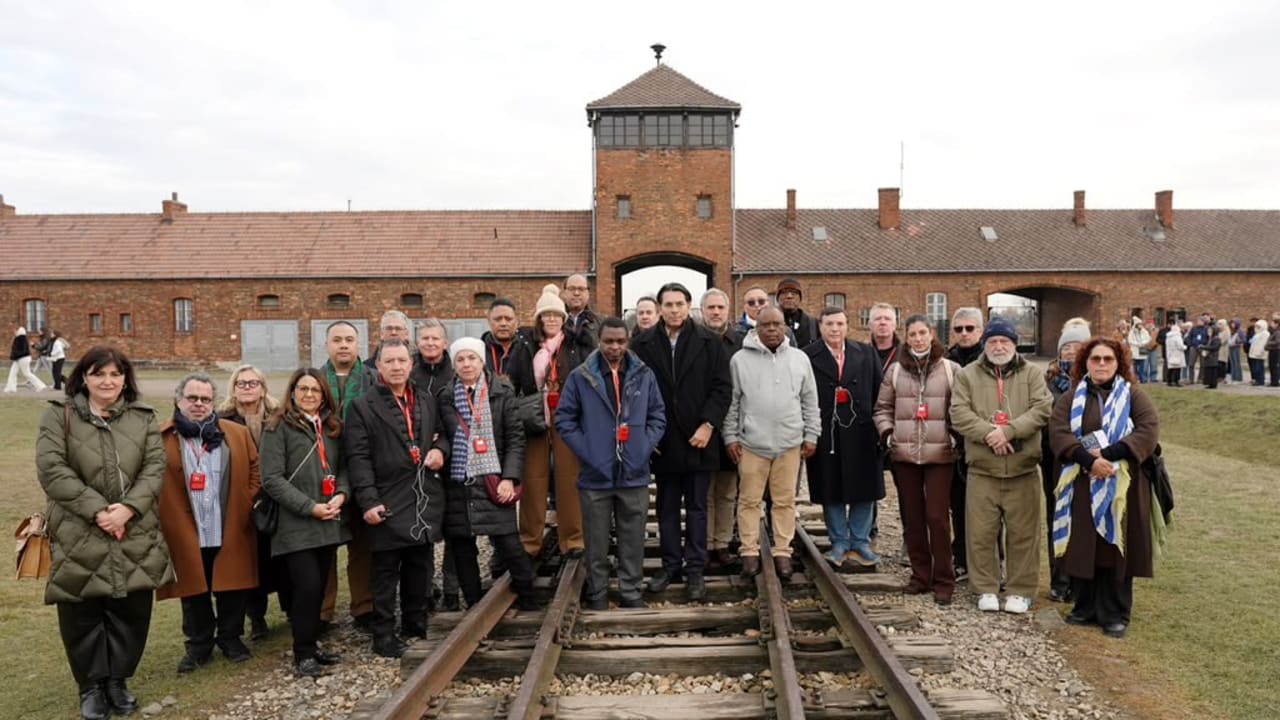
More than 20 countries were represented in the delegation led by Israel’s UN ambassador, including Germany and Trinidad and Tobago, which is set to join the Security Council in January.
Dozens of United Nations ambassadors representing more than 20 countries visited the Auschwitz-Birkenau extermination camp in Poland on Wednesday as part of a delegation led by Israel’s Ambassador to the UN, Danny Danon, who used the occasion to warn against rising antisemitism and Iran’s continued threats against Israel.
For the first time, Germany’s ambassador to the United Nations joined the Israeli-led delegation at the former Nazi death camp, adding particular historical significance to a visit intended to confront international diplomats with the consequences of antisemitism.
The delegation also included the ambassador of Trinidad and Tobago, which will begin a two-year term as a non-permanent member of the UN Security Council on January 1, 2027.
The visit was organized as part of the activities of an international task force established by Danon to combat antisemitism within the United Nations and beyond, with this year’s mission emphasizing practical efforts to confront hatred against Jews.
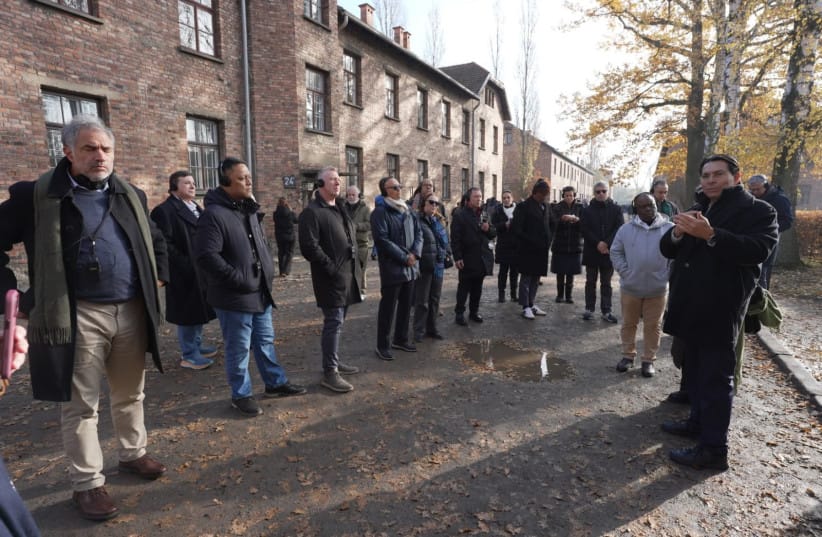
“I brought the world’s ambassadors to Auschwitz today to deliver an unequivocal message,” Danon said.
“We cannot fight today’s antisemitism without understanding its historical significance.”
Danon links lessons of Holocaust to Iranian threats
Standing at the site where Nazi Germany carried out the systematic murder of Jews during the Holocaust, Danon drew a direct connection between the lessons of the past and contemporary threats facing Israel.
“As we stand on this ground, soaked in the blood of our six million brothers and sisters, the Iranian terror regime continues to call for Israel’s destruction,” Danon said.
“The international community cannot mumble ‘Never Again’ while simultaneously granting legitimacy at the United Nations to inciters and murderers.”
The Israeli ambassador’s remarks reflected his ongoing criticism of the international community’s response to Iranian threats and antisemitic incitement.
Danon has repeatedly sought to place antisemitism on the UN’s diplomatic agenda, arguing that statements of condemnation must be accompanied by concrete measures to confront hatred, including within the organization’s own institutions.
The Auschwitz visit was intended to expose diplomats to the historical consequences of antisemitic persecution and underscore the responsibilities of contemporary international institutions.
The participation of Germany’s UN ambassador carried particular symbolism, given the Nazi regime’s responsibility for establishing and operating Auschwitz-Birkenau in German-occupied Poland.
The presence of representatives from more than 20 countries also demonstrated the international scope of the initiative.
Future Security Council member among participants
Among the visiting diplomats was the ambassador of Trinidad and Tobago, whose country was elected in June to serve on the Security Council for the 2027–2028 term.
Its participation provided an opportunity for Israel to engage with a representative of an incoming council member on questions of antisemitism, historical remembrance, and the international response to threats against the Jewish state.
The visit also marked another stage in Danon’s effort to turn the UN task force against antisemitism into an active diplomatic initiative.
For the Israeli mission, the journey to Auschwitz-Birkenau was intended to go beyond Holocaust remembrance.
Its broader message was that the international community must confront contemporary antisemitism and incitement against Jews with the same seriousness it attaches to preserving the memory of the Holocaust.
Danon argued that the promise of “Never Again” must carry practical consequences for the way the United Nations addresses those who threaten Israel and the Jewish people.