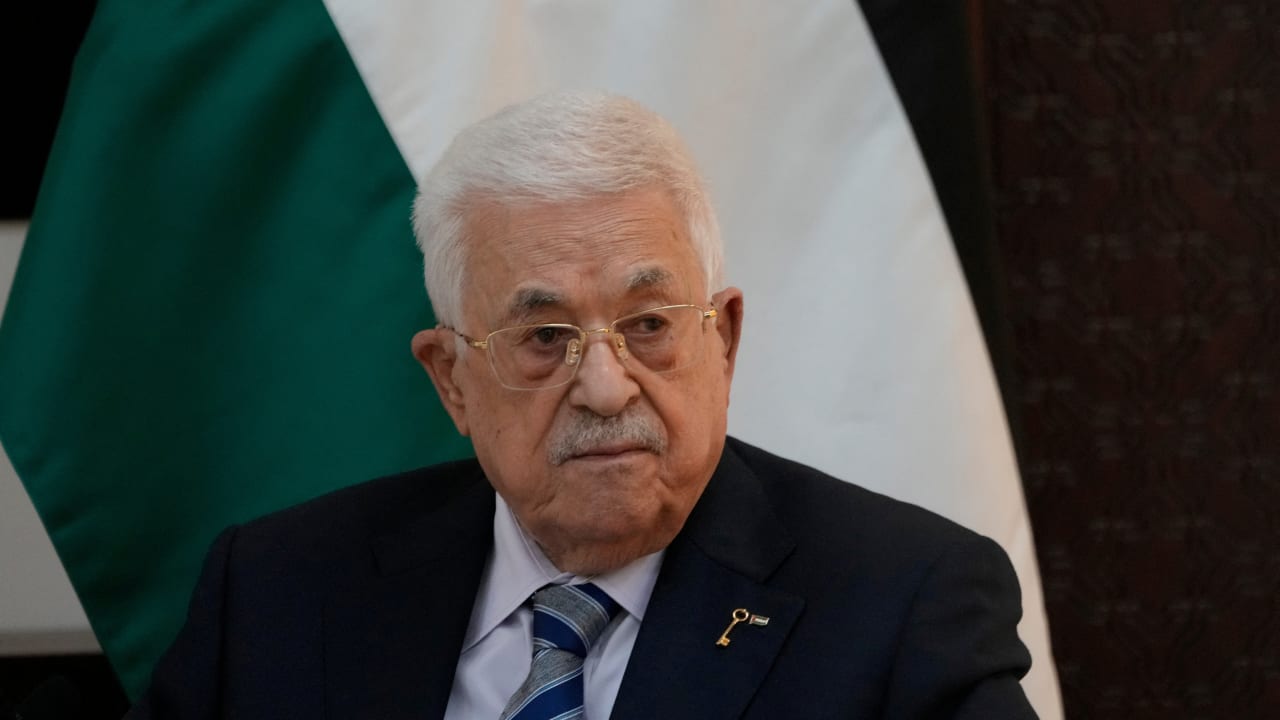
The federal Court of Appeals in New York has reinstated a 2015 judgment that ordered the Palestine Liberation Organization and the Palestinian Authority to pay $655.5 million in damages to victims of terrorism from the period of the Second Intifada.
Last week, a federal Court of Appeals judge ruled to reinstate the original 2015 decision of Sokolow v. the Palestinian Authority.
This reverses the decisions of the Second US Circuit Court of Appeals in New York in August 2016, which ordered the $655.5 million terrorism case to be dismissed, saying that the court system had no jurisdiction over the PA or its sister organization, the PLO, and the US Supreme Court in April 2018.
Since then, Shurat Hadin – Israel Law Center, which led the legal charge and hoped the US Supreme Court would uphold the original district court decision, has been fighting to have the original decision reinstated.
Their central argument is that the PA’s ‘pay for slay’ policy, which rewards Palestinians terrorists and their families for crimes against Jews, incentivizes terrorism and makes the Authority responsible for such acts.
Last week’s successful ruling was largely made possible due to a landmark decision by the US Supreme Court in May 2025, which determined that US courts do have jurisdiction to hear international terrorism claims against the Palestinian Authority for its provision of financial support and resources to attacks against American citizens.
Before then, American courts were unclear over whether they had jurisdiction over cases of American victims of terrorism that were committed outside US soil.

Sokolow case based on Anti-Terrorism Act
The Sokolow case started in 2004, when the families of victims of the Second Intifada filed a lawsuit against the PLO and PA, led by Shurat Hadin.
Among the victims were members of the Gritz, Coulter, Blutstein, and Carter families, who lost their children in the bombing of the Hebrew University Cafeteria in 2002; the Goldberg family, which lost the father in the bus No. 19 bombing in Jerusalem; and victims including Shaina Gold, Jonathan and Alan Bauer, Shaul Mendelcorn, and Mark Sokolow, who were injured in various attacks on Jaffa Road in Jerusalem.
The basis for the Sokolow case was the Anti-Terrorism Act (ATA), which was passed by Congress in 1992. In it, the families argued that the PLO and the PA financed and orchestrated seven separate attacks, and that these specific organizations were responsible for the terrorist attacks between January 2001 and February 2004.
In September 2008, Judge George Daniels at the Southern District of New York dismissed the PLO’s claim that the attacks were acts of war, not acts of terrorism.
A trial for the Sokolow case in an Appeals court began in 2015, and in February, the jury found the PLO guilty. It was required to pay the families $218.5 million.
Due to the ATA reinforcements, this amount was tripled, standing at $655.5m. This was appealed again by the PA, and the case bounced around the courts.
The Sokolow case was later joined by Miriam Fuld, whose husband Ari Fuld was killed in a stabbing attack in 2018 in a shopping center parking lot by a 17-year-old Palestinian terrorist. It was the Fuld case that led to the landmark ruling in May 2025, thus setting a precedent for the earlier Sokolow case.
Because of the success of the Fuld case, the Sokolow case was able to return to trial.
The cases were also aided by the introduction of the Promoting Security and Justice for Victims of Terrorism Act (PSJVTA) in 2019, under which Congress established that certain conduct by foreign entities – including payments linked to terrorist activity and continued activities connected to the United States – may be deemed consent to the jurisdiction of US courts.
It is worth noting that the US courts have no way of enforcing the ruling on the PA and PLO, and cannot make the bodies pay. Instead, Shurat Hadin will begin the process of domesticating the ruling in Israel, made possible by legal treaties between Jerusalem and Washington. Once that happens, it will go through the Israeli court system, whereby it is expected that this will eventually have repercussions for the PA’s tax money.
Attorney Nitsana Darshan-Leitner, founder of Shurat Hadin, said the ruling marks a “historic turning point in the fight against terrorism.”
“Not only does it restore the ability of American victims of terrorism to obtain compensation after years of struggle, but it also changes the rules of the game: from now on, US courts will be able to hear cases that previously could not even be brought before them,” she said. “This is a day of great victory in our determined fight to cut off the financial lifelines of terrorist organizations.”
Dr. Alan Bauer, an American biologist who, along with his son, was severely injured in a 2002 attack in Jerusalem and one of the plaintiffs in the case, said: “Today, we have achieved a precedent-setting victory.”
“I never imagined that the road to justice would be so long and winding. But we refused to give up. We promised ourselves we would see this case through to the very end. We were determined to hold accountable those who carried out acts of terror against us and to finally make them answer for their guilt and their crimes.”
Sarah Ben-Nun contributed to this report.