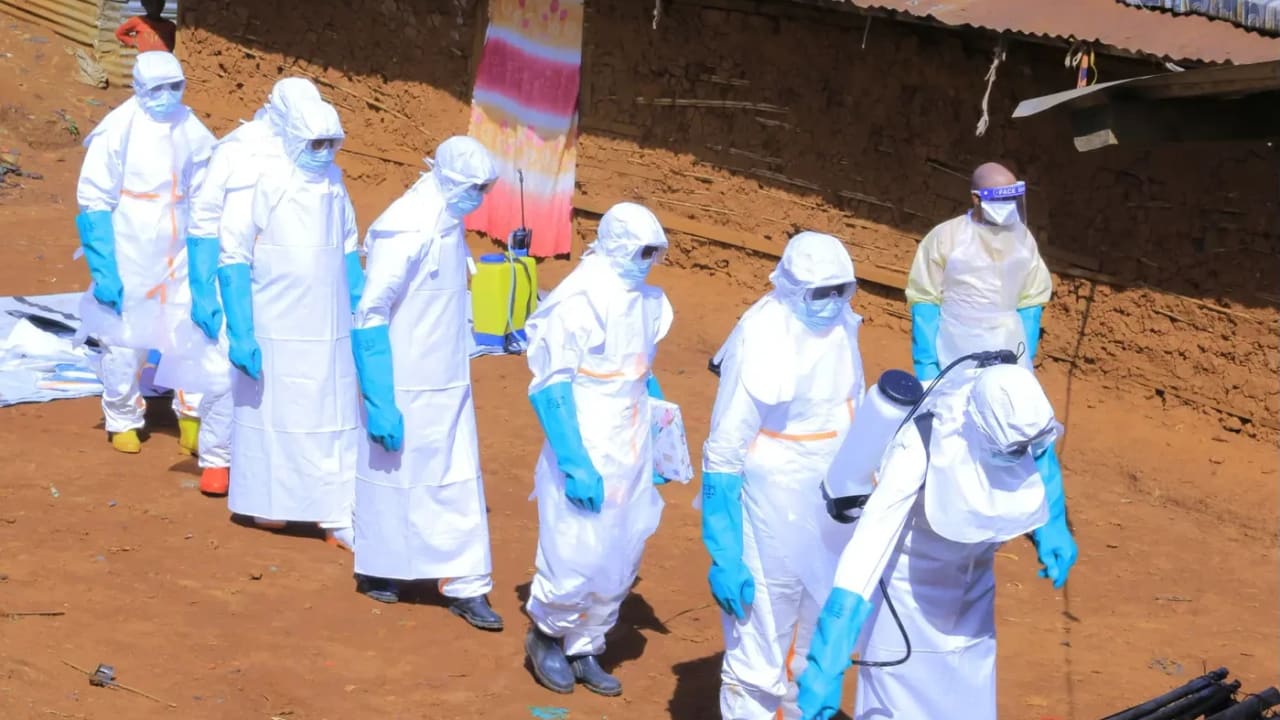
Israel’s Health Ministry recently began preparing hospitals, medical teams, and public health systems following the Ebola outbreak in Central Africa, and prepared a scenario in which a suspected Ebola patient arrives in Israel.
The ministry believes that the risk of an Ebola outbreak remains low, but the rapid spread in the Democratic Republic of the Congo and the arrival of patients in Uganda, the United Arab Emirates, and Germany have led to increased monitoring and emergency preparations.
Israeli health officials discussed, among other things, early patient identification, information sharing with travelers, protective equipment required for medical staff, possible evacuation of a suspected patient, and which hospitals could receive such a patient under isolation conditions.
According to the ministry’s announcement, professional guidelines for medical teams and relevant hospitals are expected to be published in the coming days. The guidelines are expected to include criteria for defining a suspected case, procedures for staff protection, patient isolation, sample collection, transfer of samples to laboratories, and reporting to public health authorities.
Specialized equipment has already been distributed to hospitals, including protective suits and equipment intended for treating highly infectious diseases. The ministry did not disclose which hospitals have been designated to receive suspected patients, the quantity of equipment distributed, how many staff members have undergone practical training, or how quickly isolation systems could be activated in a real event.

The ministry also stated that it is advancing the establishment of dedicated facilities to treat cases suspected of a dangerous infectious disease. At this stage, the locations of these facilities, the timeline for their establishment, and whether they will be permanent units, temporary structures, or adapted hospital facilities have not been disclosed.
What is Israel's Travel Advisory for Central Africa?
A central part of the preparations focuses on travelers returning to Israel. The Health Ministry is developing a mechanism to provide travelers arriving from countries with active transmission with information so they can recognize symptoms and report them promptly. It has not been disclosed whether the information will be provided at the airport, through mobile phone messages, via airlines, or through questionnaires for travelers arriving from high-risk countries.
The Health Ministry recommends avoiding non-essential travel to the Democratic Republic of the Congo and Uganda, particularly to areas with active transmission.
Those who must travel to these areas are asked to consult a travel medicine clinic before departure for personalized advice based on their itinerary, purpose of travel, and duration of stay.
The Health Ministry's recommendation is notably stricter than the position published by the World Health Organization (WHO), which states that there is currently no justification for broad restrictions on travel or trade with Congo and Uganda. The WHO recommends focusing on exit screening from affected areas, contact tracing, and information sharing between countries.
The difference between the recommendations does not stem from a higher risk assessment for Israel but rather from a more cautious approach toward travel that can be postponed.
What Ebola symptoms should people look out for?
Israelis who have returned from Congo or Uganda, especially from areas with known active transmission, are required to monitor their health for 21 days after their return. This is the generally accepted maximum incubation period for the disease.
Anyone who develops fever, unusual weakness, muscle aches, headache, sore throat, vomiting, diarrhea, abdominal pain, or unexplained bleeding must remain at home, avoid contact with others, and immediately call the Health Ministry hotline.
During the first call, patients should explicitly mention that they stayed in an area with Ebola transmission. They should not independently visit a clinic, emergency room, or medical center without prior coordination, as an unplanned arrival could expose patients and healthcare workers before protective and isolation measures are implemented.
How many Ebola cases are there globally?
As of Sunday, the global situation indicates a significant outbreak of Ebola disease caused by the Bundibugyo virus. The outbreak was declared on May 15 in the Democratic Republic of the Congo after the virus was identified in Ituri Province in the northeastern part of the country. Two days later, the WHO declared the situation a public health emergency of international concern due to the rate of spread, cross-border transmission, and the difficulty of interrupting chains of infection.
According to the latest official update published by WHO Director-General Dr. Tedros Adhanom Ghebreyesus on Wednesday, 344 cases have been confirmed in Congo. Some 60 people died from the virus in the Central African country.
Cases have been identified in 24 health zones across three provinces: Ituri, North Kivu, and South Kivu. In Uganda, 15 cases and one death have been confirmed. Some patients were infected in Congo and crossed the border, but Uganda has also documented infections linked to contact with patients and to medical care.
One patient, a resident of Congo, stayed in the United Arab Emirates before arriving in Uganda. The WHO stated that it is working with health authorities in both countries to determine whether additional travelers were exposed during the journey.
An American citizen who worked as a physician in Congo became infected while treating patients and was transported in isolation to Germany. He was discharged from a hospital in Berlin on Sunday after recovering.
The WHO’s risk assessment remains unchanged: very high risk within the Democratic Republic of the Congo, high risk for countries in the region, and low risk globally. However, contact tracing in Congo remains incomplete.
According to the organization, by early June, only about 45% of patient contacts had been identified, whereas monitoring more than 90% is required to effectively interrupt chains of transmission. Armed conflict, refugee movements, open land borders, and mistrust of authorities among some communities are complicating tracing and isolation efforts.
How is Ebola transmitted?
The current outbreak's strain is Bundibugyo, one of the Ebola virus species capable of causing severe disease.
Unlike the Zaire strain, for which vaccines and targeted treatments exist, there is currently no approved vaccine or specific antiviral treatment for Bundibugyo. Treatment is based primarily on fluid administration, correction of electrolyte imbalances, support for blood pressure and body systems, and treatment of accompanying infections or complications.
Ebola is not generally transmitted through the air like measles, influenza, or COVID-19. An infected person is not considered contagious before symptoms appear.
Transmission occurs mainly through direct contact of broken skin or mucous membranes with the blood, vomit, diarrhea, saliva, semen, or other bodily fluids of a symptomatic patient, or through contact with needles, clothing, bedding, and objects contaminated with such secretions. Healthcare workers and family members caring for patients without protective equipment are at increased risk of infections.