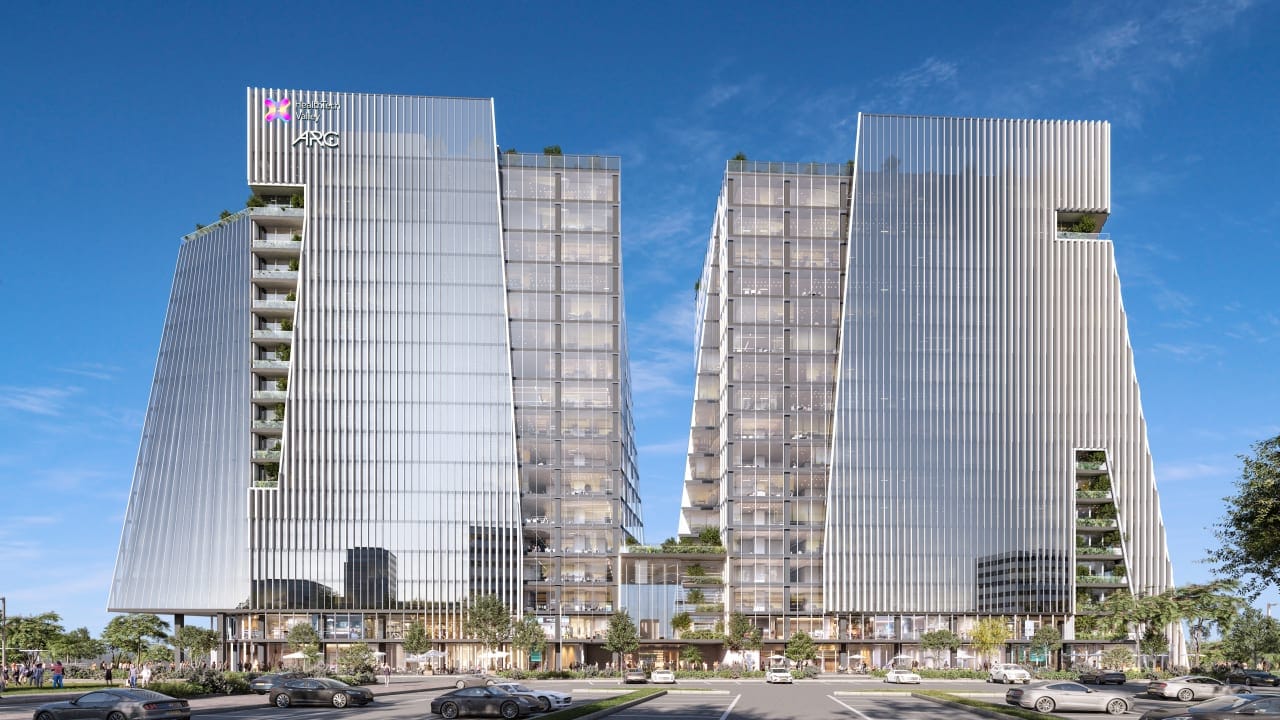
On the outskirts of Ramat Gan, something notably ambitious is emerging in the grounds of Bar-Ilan University's rapidly expanding campus. HealthTech Valley, a joint effort by Bar-Ilan and Sheba, is described by the university President Prof. Arie Zaban as "Israel's most innovative healthcare technology ecosystem." Its aim, to put it simply, is to break down the traditional barriers between the lab bench, the hospital ward, and the industry floor.
As Prof. Zaban put it, "The establishment of this institute fits into the broader picture of Israel's biotechnology boom, which in recent years has become a magnet for public and private investments worth billions of shekels." Zaban, who led the agreement signing alongside Prof. Yitshak Kreiss, Director General of Sheba Medical Center, added that "our collaboration with Sheba will significantly accelerate the transition from laboratory discovery to clinical application."

HealthTech Valley prompts a reconsideration of the roles of universities and medical centers in the 21st century, in other word, it the spot were where clinical needs shape scientific discovery. The traditional model, in which academia generates knowledge and hospitals implement it, is becoming less viable in a world where discovery and application occur nearly simultaneously. Diseases do not wait for grant cycles, and technological innovation crosses institutional boundaries. Instead, Bar-Ilan and Sheba propose a new kind of shared space: a place where real human experiences lead to problems, where solutions can be explored across different floors of the same building, and where success is measured not only by publications but by treatments reaching patients more quickly.
For two senior academics at Bar-Ilan, Prof. Cyrille Cohen, Dean of the Mina and Everard Goodman Faculty of Life Sciences, and Prof. Sharon Ruthstein, Head of the Chemistry Department, this project means much more than just another research center. It arrives at a significant moment, as Bar-Ilan approaches its 70th anniversary, and both researchers describe their sense of possibility with enthusiasm that is both scientific and deeply personal.
"It's exciting," Cohen says without hesitation. "Really exciting. We're building something Israel truly needs – infrastructure that can translate our scientific strength into patient care." Ruthstein expresses it even more simply. "I feel so fortunate," she says. "It's like a dream come true. I didn't believe something like this could actually exist." That combination of emotions is truly a manifestation of the core of HealthTech Valley: not a single breakthrough, but the belief that breakthroughs happen when the right people are, quite literally, on the same floor.
For Cohen, an immunologist whose career was shaped by years at the U.S. National Institutes of Health, the idea brings a specific memory to mind. "At the NIH," he recalls, "one corridor was dedicated to patients, and the parallel corridor was for research. If you needed a clinical sample, you just walked across. If you needed to test a new assay immediately, you walked back. That physical proximity was everything. It accelerated translation."
Researchers and physicians, he emphasizes, often live in different worlds. "People don't always realize that researchers and medical doctors speak different languages. The researcher wants to understand mechanisms, while the doctor wants to help the patient today. To bring them together, to make them speak the same language, you need them in the same space. Not just for sake of innovation, but for the patients’ sake.”
Ruthstein, a physical chemist whose laboratory develops radioactive tracers for cutting-edge medical imaging, describes this same divide from her perspective. "Everyone is in their own box. We are in our labs; they are in their clinics. You can collaborate, but there is always a distance." She smiles as she adds, "But when we're in the same place physically, when we stay in the same building, everything changes."
The change, she says, is not only faster experimentation but more meaningful relevance: "The doctors can say, 'This is the real clinical need.' And they can give us access to human tissues – to actual patient samples, not just cell cultures. It opens doors that simply don't open when each side is far apart, dramatically shorten the development process of new treatments – giving patients better chances, saving lives." Her example of where that matters most is immediate: cancer.
Her lab, which houses a radioactive imaging facility, develops PET-MRI, PET-CT, and SPECT radiotracers that can identify hypoxic (oxygen-poor) tumor environments. "Liver cancer, brain cancer, pancreatic cancer, so many cancers have poor diagnostics and poor treatments. With the HealthTech Valley (HTV) facility, where one floor is for preclinical research, one for clinical research, and one for patient treatment, this process will be so much faster," she says “It gives us a better fighting chance against these health challenges.” The broader institute is designed to serve as a bridge between science and practice, focusing on fields such as cancer research, 3D printing of organs and tissues, and the development of advanced medical devices. It will draw on specialized laboratories for computational biology, AI for medical data, medical robotics, and genetic engineering, while also advancing sensor technologies and microbiome research aimed at more personalized medical treatments.”
“Being next door to the oncology department, being able to test directly on tissues, hearing from doctors what will or won't work – that's how breakthroughs happen," says Prof. Cohen. His excitement flows in a slightly different direction, toward the world of immunotherapy, predictive medicine, and AI-driven diagnostics. "In immunology," he says "the breakthroughs keep coming. Checkpoint inhibitors, CAR-T therapies, the COVID vaccines. And now, with HTV, we can refine treatments not just for cancer, but for a plethora of other issues."
Cohen mentions treating autoimmune diseases and other chronic conditions, lighting up when he describes Bar-Ilan's newest recruit, Dr Oren Avram, a faculty member returning from UCLA. "He can detect patterns in medical images years before symptoms appear. Imagine getting a message on your phone saying that you're at risk for something in ten years. That will be part of our life."
Both researchers view HTV as the natural next step in Bar-Ilan's evolution, and a reflection of its 70-year journey. Cohen notes that Bar-Ilan has long been seen mainly as a humanities-focused university. "But great science is done here. In recent decades we’ve recruited world-class scientists, opened the Azrieli Faculty of Medicine, and we’re now collaborating with Sheba. It's inspiring. Truly inspiring."
Similarly inspired, Ruthstein also emphasizes the structural change: a conscious shift toward interdisciplinarity. "In the past, each department was isolated," she explains. "Chemistry here, physics there, life sciences elsewhere. The first major change was the nanotechnology building, where engineering, life sciences, physics, and chemistry shared space. Now HTV expands this significantly."
She points to the future lineup of scientists: chemists, life scientists, biophysicists, biotechnology engineers, radiochemists, clinicians, and data scientists. "This is exactly Bar-Ilan President Prof. Arie Zaban's vision – breaking barriers, fostering collaboration. It's very smart."
Cohen and Ruthstein also highlight Bar-Ilan's mission of bringing home Israeli scientists who trained abroad. "We send our young scientists to the best labs worldwide," Cohen notes. "And we need to bring them back. HTV is a place that can attract them." What stands out when listening to both researchers is that, when they describe HealthTech Valley, they aren't really focusing on buildings or equipment. They are talking about feelings.
When asked to identify the single emotion guiding them into the project, both answer without hesitation. "Excitement," Cohen says. "It reminds me of what I knew abroad – that fast, collaborative science. And with industry involved, therapies will develop even more quickly." He adds that HTV is not just a Bar-Ilan-Sheba initiative. "It goes beyond the partnership. This is something for the State of Israel. After challenging years, what people still respect about Israel is innovation, our willingness to move boldly forward. HTV will help strengthen and advance research excellence in this country."
”My students and I suddenly feel that we are part of something so big, it's amazing," says Ruthstein. She laughs at her own sincerity. "Really, it's a futuristic vision. But it's not science fiction. It's happening." By the time Bar-Ilan reaches 70, the project will already be reshaping its identity – not as a university reflecting on its founding ideals, but as one looking ahead to a biomedical future that calls for interdisciplinarity, bold experimentation, and close collaboration with the medical field. HealthTech Valley, with its advanced labs, clinical floors, and collaborative design, appears ready to become the place where that future is created.
As Bar-Ilan enters its eight decade, it chooses to focus less on past achievements and more on shaping its future. HTV represents the institution’s commitment to tangible progress, made with walls, windows, corridors, and people walking between them. The everyday moment – a clinician giving a researcher a biopsy sample, a chemist explaining a molecular behavior to an engineer, a student hearing an idea that could change her career, embody the promise of HealthTech Valley.
“Cohen calls it ‘something Israel actually needs.’ Their optimism echoes Bar-Ilan University’s growing reputation as an international academic leader in medicine and life sciences, engineering, AI, chemistry, and physics, fields that form the basis for breakthrough drugs and medical technologies. But together, their voices suggest that HealthTech Valley is primarily a promise.” In this place, the future of medicine may unfold not in isolation, but through conversation, in the shared corridor where science and care finally meet.
Perhaps that is why both Cohen and Ruthstein keep returning, not to technologies or patents, but to the simple magic of human proximity. "The coffee break," Cohen says with a smile, "that's where ideas happen.
Written in cooperation with Bar Ilan University